
Roma beata; letters from the Eternal city
Maud Howe Elliott
THE CLASSIC COLLECTION · 1910
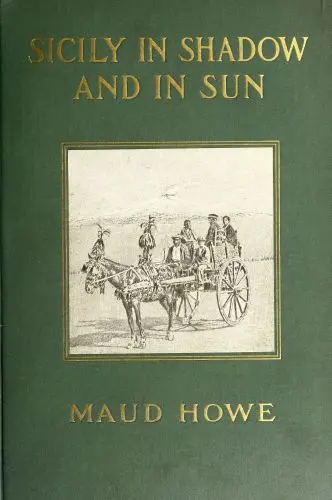
"Sicily in Shadow and in Sun: The Earthquake and the American Relief Work" by Maud Howe is a historical account written in the early 20th century. This work delves into the catastrophic events surrounding the devastating earthquake in Messina, detailing the destruction and the subsequent American relief efforts to aid the victims. The narrative aims to provide a profound understanding of the disaster's impact on both the land and its people. The opening portion of the text sets a dramatic and somber tone, recounting a dinner party on December 28, 1908, where the characters discuss an earthquake in Calabria, unaware of the impending tragedy that would soon ravage Messina. The narrative swiftly shifts to the aftermath of the earthquake, as the guests learn of the widespread destruction and the immense suffering in the region. Emphasizing the horror and chaos experienced in the aftermath, the section highlights the urgent need for aid and the intense emotional turmoil faced by those who felt the tremors of disaster, establishing a poignant backdrop for the relief efforts that will follow in the rest of the work.
Introduction adapted from the source catalogue; source summaries may be automatically generated.
Free to read · English · 97,883 words · No account needed
MAKE TIME FOR A GOOD BOOK
On by default. Untick to stop anonymous reading totals. Each page counts after 10 seconds in view. How this works.
Anonymous counting is on unless you have switched it off.
“February 26th: I got up at six o’clock this morning and went ashore for the first time since we arrived. I have been drawing the plans for the houses, making working drawings and tracings, and literally have not had one moment to call my own. I made a photograph this morning of the first house, one of the forty-nine portable houses Massachusetts sent. I don’t want to quit this job till it’s finished and it’s only just begun. In a way it’s much harder work than the ‘Bayern’ because it’s head work. I have had to design an hotel two stories high, to remodel entirely the plans sent from America--a difficult task--to design a church on a primitive plan. The high altar end is to be in a little house but the main body of the church is to be roofed in only, no sides. I have in mind the ‘only place where the cannibals are!’ Do you remember the great shed in the Midway Pleasance at the Chicago World’s Fair, where the King of Dahomey sat? Chanler turned up this morning, lunched on board, and left this afternoon for Reggio with his little band. I was glad to see him, but quite glad he didn’t stay as that would have meant one more in our cabin, and we can only dress one at a time. I had to make a set of drawings for Chanler to take to Reggio to show the General; but after I had swatted for an hour and a half to get them finished for him, he went off and forgot them. Rome seems like a dream; I feel as if I had always lived on board ship!
“February? I think this is the last day of the month. I know it is Sunday, but all days are alike and all go so quickly. I literally have no time for anything unless I steal it as I am doing now. I never felt so sorry for architects before. It seems to me I have made hundreds of drawings (of course I haven’t) and all of them have to be changed either by the prefect, the Capo Ingegnere, the captain, or the carpenters; but it’s all in the day’s work. One cannot make such a good showing, however, when one drawing after another is either altered or discarded. I am sitting down to write this--the first time I have sat down, except to eat, since I came aboard. The sailors squat on the deck and write letters, using their knees as a desk. It looks all right but, as the decks are made of iron, one’s feet will slip away from one. Letter day on board is a sight to be seen. Remember that post cards have a peculiar fascination for sailor men, who haven’t been home since Lord knows when, many of them; we shipped a lot, forty or so, who were on their way home from the Pacific cruise, and brought them here. It’s blowing great guns, and all the ships are strengthening their moorings to keep from being blown into their neighbors. Hugh has just looked in to bring me a letter from you. Captain Belknap is in a hurry to get the hotel design finished. Most of the changes that are made are to save wood, so as to have enough to build with; but if rafters, composts, floor-beams, studs, and even sills, are cut out continually, a day’s work soon disappears in respacing them. I hope you will carry out your plan of coming down to Taormina. The hotels are all closing for lack of business, sending their guests to one (‘The Timeo’), and even that is not half full. You ought to see Sicily, you ought to get some idea of the earthquake’s work, for no matter how wild your idea may be, it will be tame beside the real thing. Wood and Bowdoin are at Taormina, working like slaves to relieve the villages between here and there--they suffered fearfully--and you could see and do much. We have had quite a lively time since I began this. It is blowing a gale and things are happening. Our anchor lost its hold and dragged until we were not more than six metres from the bows of the steamer alongside of us. I didn’t know anything out of the way was happening till I heard quick commands and sailor men running; when I looked out and saw they had sent the steam launch over to an Italian man-of-war with a hawser, which was made fast on board of her and the other end was hauled in by the donkey engine, and we were pulled away just in time to prevent a collision--how they did it all without my assistance, I can’t quite make out! They are getting over another anchor now for safety’s sake, and they will probably need it as the wind seems little inclined to quiet down. It’s very warm here; I haven’t worn my overcoat since the first day. I doubt if you will be able to see much of me if you come, but they will probably let me come to Taormina for a day. In about ten days we go ashore and live in the first twelve houses, and this ship goes away. The ship’s doctor went ashore and found a spring of water up a hillside near the camp, and it will be brought down in breakers every day, in a dear little painted donkey cart like the one I brought you from Palermo, and not so much bigger. The first bag of mail, sent on to Messina by the ‘Scorpion,’ was returned by the postal authorities here, hence the long delay in hearing from Rome.
Your reading position is saved on this browser. Take it to another device with a library code. Reading pages adapt to text, rather than matching a printed edition.
Maud Howe Elliott
Maud Howe Elliott
Maud Howe Elliott

Maud Howe Elliott
BEHIND THE BOOK
This eBook is for the use of anyone anywhere in the United States and most other parts of the world at no cost and with almost no restrictions whatsoever. You may copy it, give it away or re-use it under the terms of the Project Gutenberg License included with this eBook or online at www.gutenberg.org. If you are not located in the United States, you will have to check the laws of the country where you are located before using this eBook. Read the source licence.
The original source file, including credits and licence, is retained by this library. Request an original-format copy at no charge. Please include the book title and Project Gutenberg identifier #58455.
KEEP YOUR CURIOSITY GOING
Cécile Tormay

Moritz Busch
John L. Ransom
Frances Wright
Cécile Tormay

Mabel Potter Daggett