THE CLASSIC COLLECTION✦An account of the giants lately discoveredCLASSIC FREE BOOKS
An account of the giants lately discovered
Horace Walpole
THE CLASSIC COLLECTION · 1903
"Shorter Novels, Eighteenth Century" by Johnson, Beckford, and Walpole is a collection of classic novels written during the later years of the eighteenth century. The volume includes notable works like Johnson’s "Rasselas", Walpole’s "The Castle of Otranto", and Beckford’s "Vathek", showcasing a mixture of philosophical reflection, Gothic terror, and Oriental fantasy. The collection illustrates a key transitional period in literature, where traditional themes began to give way to the emotions and imaginations celebrated in Romantic literature. The opening of the book introduces "Rasselas, Prince of Abyssinia", which centers on Prince Rasselas, who lives in a paradise-like valley but grows discontented with the pleasures and comforts of his life. Despite the lavish lifestyle provided to him and his siblings, Rasselas has an insatiable yearning to explore the world outside, leading him to reflect on the nature of happiness. His growing melancholy sets the stage for his eventual quest for meaning, as he grapples with existential questions about fulfillment and the human condition.
Introduction adapted from the source catalogue; source summaries may be automatically generated.
Free to read · English · 127,261 words · No account needed
MAKE TIME FOR A GOOD BOOK
On by default. Untick to stop anonymous reading totals. Each page counts after 10 seconds in view. How this works.
Anonymous counting is on unless you have switched it off.
"Thou art as much too good for this world," said Isabella, "as Manfred is execrable--but think not, lady, that thy weakness shall determine for me. I swear, hear me all ye angels----"
"Stop, I adjure thee," cried Hippolita: "remember thou dost not depend on thyself; thou hast a father----"
"My father is too pious, too noble," interrupted Isabella, "to command an impious deed. But should he command it; can a father enjoin a cursed act? I was contracted to the son, can I wed the father?--No, madam, no; force should not drag me to Manfred's hated bed. I loathe him, I abhor him: divine and human laws forbid; and, my friend, my dearest Matilda, would I wound her tender soul by injuring her adored mother? my own mother--I never have known another."
"Oh, she is the mother of both," cried Matilda: "can we, can we,
Isabella, adore her too much?"
"My lovely children," said the touched Hippolita, "your tenderness overpowers me; but I must not give way to it. It is not ours to make election for ourselves; Heaven, our fathers, and our husbands, must decide for us. Have patience until you hear what Manfred and Frederic have determined. If the marquis accepts Matilda's hand, I know she will readily obey. Heaven may interpose and prevent the rest. What means my child?" continued she, seeing Matilda fall at her feet with a flood of speechless tears.--"But no; answer me not, my daughter; I must not hear a word against the pleasure of thy father."
"Oh, doubt not my obedience, my dreadful obedience to him and to you!" said Matilda. "But can I, most respected of women, can I experience all this tenderness, this world of goodness, and conceal a thought from the best of mothers?"
"What art thou going to utter?" said Isabella, trembling. "Recollect
thyself, Matilda."
"No, Isabella," said the princess, "I should not deserve this incomparable parent, if the inmost recesses of my soul harboured a thought without her permission--nay, I have offended her; I have suffered a passion to enter my heart without her avowal; but here I disclaim it; here I vow to Heaven and her----"
"My child! my child!" said Hippolita, "what words are these? what new calamities has fate in store for us? Thou, a passion! Thou, in this hour of destruction!"
"Oh, I see all my guilt," said Matilda. "I abhor myself, if I cost my mother a pang: she is the dearest thing I have on earth. Oh, I will never, never behold him more!"
"Isabella," said Hippolita, "thou art conscious to this unhappy secret,
whatever it is. Speak!"
Your reading position is saved on this browser. Take it to another device with a library code. Reading pages adapt to text, rather than matching a printed edition.
Horace Walpole
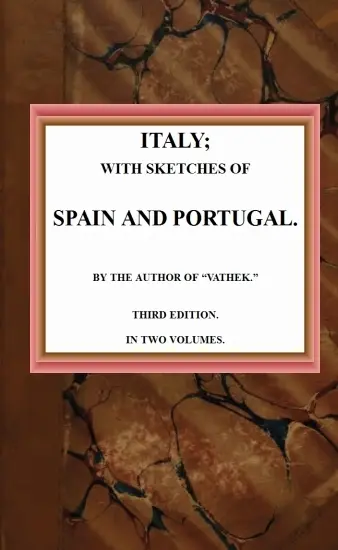
William Beckford
Robert Jephson & Horace Walpole
Horace Walpole
BEHIND THE BOOK
This eBook is for the use of anyone anywhere in the United States and most other parts of the world at no cost and with almost no restrictions whatsoever. You may copy it, give it away or re-use it under the terms of the Project Gutenberg License included with this eBook or online at www.gutenberg.org. If you are not located in the United States, you will have to check the laws of the country where you are located before using this eBook. Read the source licence.
The original source file, including credits and licence, is retained by this library. Request an original-format copy at no charge. Please include the book title and Project Gutenberg identifier #34766.
KEEP YOUR CURIOSITY GOING
Coulson Kernahan

Maurice Baring
Frances Wright
Cécile Tormay

Frederic Jesup Stimson

W. H. P. (William Henry Pope) Jarvis