THE CLASSIC COLLECTION✦A Prince of SwindlersCLASSIC FREE BOOKS
A Prince of Swindlers
Guy Boothby
THE CLASSIC COLLECTION · 1897
"Sheilah McLeod: A Heroine of the Back Blocks" by Guy Boothby is a novel written during the late 19th century. The story is set in Australia and centers around the lives and adventures of Jim Heggarstone and Sheilah McLeod, whose paths intertwine through various challenges, including a devastating bushfire and complex family dynamics. The book appears to explore themes of love, loyalty, and personal growth against the backdrop of the rugged Australian landscape. At the start of the narrative, we are introduced to Jim Heggarstone, who reflects on his solitary life as a white man on a South Sea island while awaiting the arrival of a trading schooner. The prologue sets up the story dramatically, showcasing Jim’s conflicts with outsiders, notably a missionary, and foreshadowing the presence of threats to both his and Sheilah's lives. Following this, the story unfolds with Jim's recollections of his childhood, the arrival of Sheilah and her father after a flood, and their developing friendship. The opening chapters emphasize their early bond amidst the beauty and dangers of their environment, ultimately hinting at the growth of deeper feelings as they face threats together.
Introduction adapted from the source catalogue; source summaries may be automatically generated.
Free to read · English · 66,467 words · No account needed
MAKE TIME FOR A GOOD BOOK
On by default. Untick to stop anonymous reading totals. Each page counts after 10 seconds in view. How this works.
Anonymous counting is on unless you have switched it off.
'At the Coroner's inquest it was proved to be that of Jarman!'
'How was that proved?'
'By means of certain cards in a case,' the man answered, 'the name on the linen, certain letters in the pockets, and the inscription inside the cover of the watch.'
The witness then stepped down, and certain other people, strangers to me, were called. They affirmed that they had seen and identified the body as that of the Sydney detective, James Jarman.
Only one more witness remained to be examined, and he was now called. He informed the Court that he was a swagman, and that, on the night in question, he was camped near the main track on the outskirts of Barranda township. About a quarter past twelve o'clock, as nearly as he could fix it, he was awakened by the sound of horses approaching him at a smart pace. There was sufficient light for him to see that it was a man riding one horse and leading two others. The pack-horse on the right was loaded in the usual way; that on the left had a bulky package upon his back, and what looked very much like a shovel fastened to the top of it. On being asked by our counsel how he knew all this, he stated that he was lying under a tree scarcely ten yards distant from where the man passed. He could not say that he would know the rider again.
A doctor having given evidence as to the manner in which death had been caused, the case for the prosecution was at an end. For the defence a number of witnesses were called, particularly as to my character, and an attempt was made to prove that it was a matter of impossibility for me to have ridden from Barranda by the Blackfellow's Well track, dug the grave, buried the body, delivered up the horse, and reached the cattle camp at the time I did. Both our counsels made eloquent speeches, and just as dusk was falling, the Judge began his summing up. He drew the particular attention of the jury to the way in which all the circumstances of the case dovetailed into one another. The murdered man was at the house for the express purpose of arresting the prisoners on a charge of horse-stealing; he had last been seen alive by the woman who acted as housekeeper to the elder prisoner when he was sitting in that prisoner's dining-room. That was about a quarter past ten o'clock. It must be remembered by the jury, His Honour pointed out, that the younger prisoner, Heggarstone, was not present on the last occasion that she entered the room. From ten o'clock to ten-thirty it had been proved that he was in his father's house, evidently the worse for liquor. It would probably have taken him fully ten minutes in the state he was then in to walk back to the elder prisoner's house, which would bring it up to the time when another witness heard, or, more strictly speaking, thought he heard a scream come from the house. Then there were the two particulars about the burning of the tablecloth which had been used that night to be carefully considered, also the stain upon the cuff of the younger prisoner's coat, which he had gone back to his father's house to change at half-past eleven o'clock. Then it must be noted that at or about a quarter-past twelve o'clock a man was seen by another witness riding swiftly from the township on one horse, leading two others, one of which carried a peculiarly shaped burden with a shovel strapped upon it. At one-twenty, or thereabouts, the younger prisoner was met by another witness and relieved of one horse. That horse turned out to be stolen, by whom His Honour could not say, but without a doubt with the elder prisoner's knowledge and sanction. It was necessary for him to point out that there were two other cases on record against the prisoner Dempster of horse and cattle stealing in Queensland and one in the Colony of New South Wales. For each he had suffered terms of imprisonment. The police had obtained possession of the horse and pack-saddle, and the latter was found to be stained with blood. Since that time the police had discovered the shovel, marked with the prisoner's brand, at the bottom of the well near where the horse was handed over to the selector from the Warrego River; also the body of the murdered man buried beneath a rock on the hillside. The identification had been complete. In conclusion, he would draw their attention to the fact that there was a third man concerned in the case who had not yet been brought to justice, but who, doubtless, soon would be. It only remained for him to caution the jury to carefully weigh the evidence that had been submitted to them, giving the prisoners the benefit of every doubt that existed in their minds, and then to ask them to bring in a verdict in accordance with those beliefs.
Your reading position is saved on this browser. Take it to another device with a library code. Reading pages adapt to text, rather than matching a printed edition.
Guy Boothby
Guy Boothby
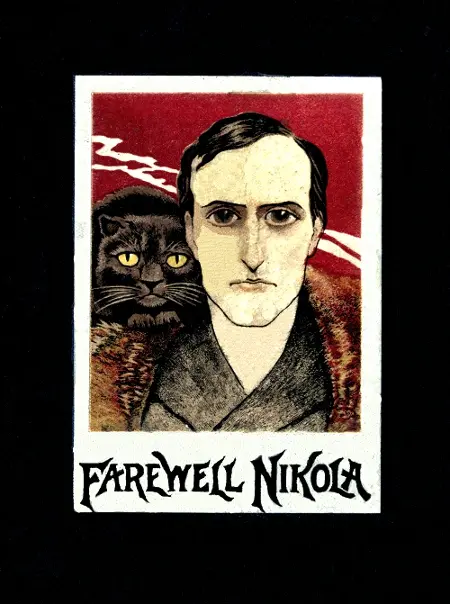
Guy Boothby
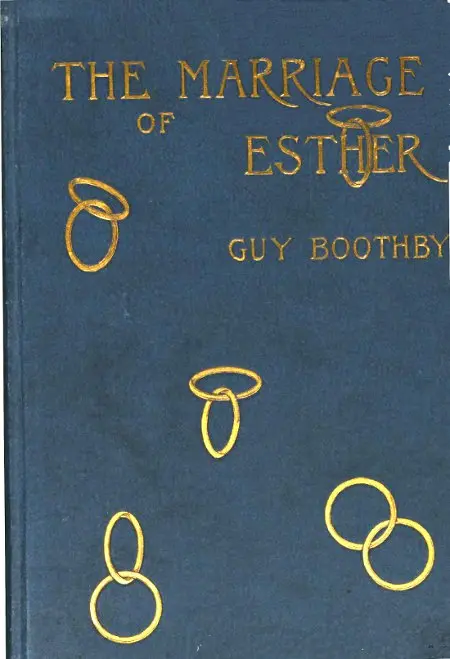
Guy Boothby
BEHIND THE BOOK
This eBook is for the use of anyone anywhere in the United States and most other parts of the world at no cost and with almost no restrictions whatsoever. You may copy it, give it away or re-use it under the terms of the Project Gutenberg License included with this eBook or online at www.gutenberg.org. If you are not located in the United States, you will have to check the laws of the country where you are located before using this eBook. Read the source licence.
The original source file, including credits and licence, is retained by this library. Request an original-format copy at no charge. Please include the book title and Project Gutenberg identifier #41269.
KEEP YOUR CURIOSITY GOING
Coulson Kernahan

Maurice Baring
Frances Wright
Cécile Tormay

Frederic Jesup Stimson

W. H. P. (William Henry Pope) Jarvis