
Lucia in London
E. F. (Edward Frederic) Benson
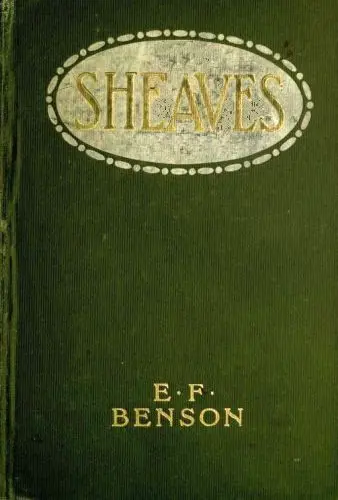
THE CLASSIC COLLECTION · 1907
"Sheaves" by E. F. Benson is a novel written in the early 20th century. The storyline appears to focus on the lives of several characters, including Hugh Grainger, a trader who seems to have met a mysterious fate at the hands of Native Americans, and his interactions with two children, Jim and Daisy Rye, who playfully engage with him in storytelling and imaginative games. This hints at a blend of humor, family dynamics, and perhaps a critique of social norms during the time. The opening of the novel introduces a whimsical scene where the supposedly deceased Hugh Grainger maintains a lively conversation with the children, offering humorous ghostly commentary on their burial customs. As Hugh narrates a silly story about three quirky old men living in a castle made of strawberries, the narrative establishes a playful tone. We also meet Lady Rye, who appreciates the innocence of childhood play while providing depth to the adult interactions as they reflect on societal expectations and personal desires. The excerpt sets the stage for a story that intertwines the frivolous with the poignant, delving into themes of family life, childhood imagination, and the complexities of adult relationships.
Introduction adapted from the source catalogue; source summaries may be automatically generated.
Free to read · English · 123,927 words · No account needed
MAKE TIME FOR A GOOD BOOK
On by default. Untick to stop anonymous reading totals. Each page counts after 10 seconds in view. How this works.
Anonymous counting is on unless you have switched it off.
Toby had finished his second helping of soufflée, refused dessert, and drank a glass of strictly forbidden port.
“I see Hugh Grainger will sing at the opera next year,” he said; “it was announced in the Daily Something.”
Peggy, on whose tongue remonstrance with regard to the port was rising,
threw off at this.
“What!” she said. “Hugh is going to sing? Why, only a few weeks ago he told me that he had made up his mind not to!”
“Ah, but Hugh is one of those people to whom an enormous number of things happen in a few weeks,” said he.
For one moment Peggy felt a little hurt that Hugh had not told her. She hated that public papers should be the means of communication between herself and her friends. But on the instant she smothered her resentment.
“That is splendid news!” she said. “I must remember to tell Edith. Hugh told us that the syndicate had approached him, and she was so frantic at the idea of his refusal. I wonder what has made him change his mind.”
Then she recollected something.
“I dare say he has already told her,” she added; “I know he was going down to Mannington last Friday.”
“To stay with her?” asked Arthur.
“Oh, no! with his sister, Mrs. Alington. But probably he and Edith met. In fact, he promised to go and see her! They are great friends.”
Peggy heard nothing more of her sister, and so could not meet any train for her at Cookham next day. Both Arthur Crowfoot and her husband, who was going to attend something grandly masonic, went up to town next morning, and as Toby would not be back that night she planned a gorgeously inactive day for herself, intending in the morning to punt herself up not quite so far as Cookham lock, and to tie up under the trees there till lunch-time, with a book that had to be first cut, and then read. She meant to lunch with the children, and to take them down the river toward Maidenhead, and make tea in the punt. The lighting of the spirit-lamp, indeed, would be the only effort she would be called upon to make in the afternoon, for Jim and Daisy, with shrill recrimination, and a good deal of circular movement in mid-Thames, would be responsible for the locomotion, and also for the setting out of tea, all except this lighting of the spirit-lamp, while she would sit still, and be splashed, at not infrequent intervals, for paddles, not punt poles, which were too sensational, were the implements to be applied by the children. And even though their verdict had been that she did not “play” nearly as well as Hugh, this depreciatory criticism did not spoil her own pleasure in being alone all the afternoon with these darling children, and in being real again herself, their mother. London, of course, with its friends, its manifold businesses into which all her time and energies went, was quite real too, but after the months and the fatigue of it, the incessant rush, the froth and bubble in which she so delighted, she felt more real somehow when Jim at the prow and Daisy at the helm abused each other in shrill trebles and appealed to her for decision. Woman of the world as she was to her finger-tips, she was yet woman of the home, and when all was said and done, and all her energies, which were so much a part of her, relaxed, there was still nothing so much a part of her as the children. Often for days together in town she hardly set eyes on them; but that was a fault not of hers, but of her environment, and to live in accordance with that, to slave and toil for that, was her duty also.
Your reading position is saved on this browser. Take it to another device with a library code. Reading pages adapt to text, rather than matching a printed edition.
E. F. (Edward Frederic) Benson
E. F. (Edward Frederic) Benson
E. F. (Edward Frederic) Benson

E. F. (Edward Frederic) Benson
BEHIND THE BOOK
This eBook is for the use of anyone anywhere in the United States and most other parts of the world at no cost and with almost no restrictions whatsoever. You may copy it, give it away or re-use it under the terms of the Project Gutenberg License included with this eBook or online at www.gutenberg.org. If you are not located in the United States, you will have to check the laws of the country where you are located before using this eBook. Read the source licence.
The original source file, including credits and licence, is retained by this library. Request an original-format copy at no charge. Please include the book title and Project Gutenberg identifier #60241.
KEEP YOUR CURIOSITY GOING
Coulson Kernahan

Maurice Baring
Frances Wright
Cécile Tormay

Frederic Jesup Stimson

W. H. P. (William Henry Pope) Jarvis