
Lucia in London
E. F. (Edward Frederic) Benson
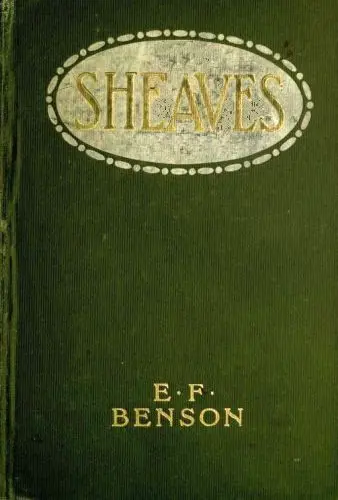
THE CLASSIC COLLECTION · 1907
"Sheaves" by E. F. Benson is a novel written in the early 20th century. The storyline appears to focus on the lives of several characters, including Hugh Grainger, a trader who seems to have met a mysterious fate at the hands of Native Americans, and his interactions with two children, Jim and Daisy Rye, who playfully engage with him in storytelling and imaginative games. This hints at a blend of humor, family dynamics, and perhaps a critique of social norms during the time. The opening of the novel introduces a whimsical scene where the supposedly deceased Hugh Grainger maintains a lively conversation with the children, offering humorous ghostly commentary on their burial customs. As Hugh narrates a silly story about three quirky old men living in a castle made of strawberries, the narrative establishes a playful tone. We also meet Lady Rye, who appreciates the innocence of childhood play while providing depth to the adult interactions as they reflect on societal expectations and personal desires. The excerpt sets the stage for a story that intertwines the frivolous with the poignant, delving into themes of family life, childhood imagination, and the complexities of adult relationships.
Introduction adapted from the source catalogue; source summaries may be automatically generated.
Free to read · English · 123,927 words · No account needed
MAKE TIME FOR A GOOD BOOK
On by default. Untick to stop anonymous reading totals. Each page counts after 10 seconds in view. How this works.
Anonymous counting is on unless you have switched it off.
London, which never remembers anything clearly for long, never wholly forgets, and this spring when Edith Allbutt had appeared again, staying at Rye House with her sister, it faintly recollected these facts and commented on them. It really was almost worth while to live twelve years with a dreadful little man like that if at the end you came out at the age of over forty looking like Juno. She was so pleasant too, so agreeable, she had such distinction of a kind that was rather rare nowadays, when everybody played bridge with one hand while they played croquet with the other, and talked all the time with their mouths full of a vegetarian diet. She was the sort of person--magnetic, is it not?--of whom one is always conscious. In a way utterly opposite to Peggy’s, she gave the impression of immense vitality. What had she been doing with herself during these three years in the country, where nobody had seen her, to make her like that? Above all, what was she going to do with herself now?
It seemed then that, dissimilar as the two sisters were, the family likeness between them did exist somewhere very essentially, for if there was one thing for which Peggy was distinguished it was vitality of a kind that made everybody else seem rather like molluscs. And though very differently manifested, this vitality seemed to be equally characteristic of her sister, who had not retired to a bath-chair or a cemetery, but had come out again unimpaired and serenely splendid from what would have driven most women out of their minds.
The little house where this tiny party of four, not counting the two wild Indians, was assembled was Peggy’s own particular pied-à-terre, though, as she justly observed, there was on the whole less land about it than water. It stood separated only by its own lawn from the loveliest reach of all Thames-side, just below Odney Weir and opposite the woods of Cliveden, which rose in a hundred spires and finials of varied green up the steep hillside. The tow-path crossed the river to the other bank just below it, so that the lawn went down to the water’s edge, and no riband of dusty thoroughfare tarnished or smirched the liquidness of the place. On one side a hedge, no mere gauze of twigs and leaves as transparent as a wire fence, but a real compact growth of hawthorn eight feet high and a yard in solid, comfortable breadth, separated it from the meadow; while on the other a mill-stream, flowing strong and steady, and combing the soft green waterweeds as it passed over them in ropes of woven crystal, made an inviolable peninsula, on which stood paddock and house and garden. The house itself held not more than half a dozen guests, and it was just for this privacy and smallness that Peggy so loved it, and the very rarity of the occasions on which she could manage to escape from the businesses which her incredible energy involved her in made her feel like a child on a holiday. It had a veranda all along the front side of it, and a dozen climbing roses which had swarmed up to the very chimneys of the house made the walls and much of the roof invisible under the red and cream of their blossoming. On the lawn a thicket of lilac and syringa fenced off the paddock and kitchen garden, a couple of big elms offered their grave shade against the noonday heat, and lower down close to the mill-stream and facing the river stood a big plane with moulting bark, elbowed branches, and clean-cut, geometric leaf. Down the centre of the lawn strayed a narrow gravel path, bordered on each side by beds where Madonna lilies were just now beginning to open their wax-like petals and make the air swoon with heavy exquisite fragrance; while at their feet, turning dying eyes to their successors in the torch-race of flower-life, the irises of late spring were beginning to wither. And everywhere, here between the lilies in standards, and near the hedge in large square spaces of garden-bed, growing from the native root, the triumph of rose-time was assured. Spring had held no early promise, to be forsworn with frosts of May; no blight this year had come to the advanced buds the caterpillars had spared, and no intangible sickness--that despair of gardener-souls--had vexed the assurance of early summer. Week by week, from the first frail tentative buds to the swollen chalice that held the rose, and from the bursting chalice to the fullspread magical flower, the growth had gone on to the perfection that was now here. For a week before the weather had erred on the side of dryness, then had followed twelve hours of plumping rain, then had followed a hot, moist day, then had followed a day of pervading, beneficent sun. And, as if he was the conductor of some garden symphony, all the roses had responded, as when a hundred bows are ready resting on the strings, to that baton beat, and had leapt on to a fortissimo. There was old-fashioned cabbage-rose, homely to the eye but steadfast as a friend to the nostril; La France was there, perfect in line and scent; Baroness Rothschild was pinker and more perfect in form, but with no other appeal; Richardson sprawled, desiring fresh trellises, where he could wrestle with the loose carmine pillar; Beauté Inconstante showed copper, and yet maintained its value against the purer gold of Dijon; Captain Christie found an anchorage on this stormless margin of the Thames; and a company of alien ladies, Madame Vidal, Madame Rivot, Madame Résal, agreed with Lady Folkestone on the pleasantness of this Thames lawn. They all, like the human inhabitants of the house, felt so much at home there, and so, like all sensible people, being at home, they flowered and flourished.
Your reading position is saved on this browser. Take it to another device with a library code. Reading pages adapt to text, rather than matching a printed edition.
E. F. (Edward Frederic) Benson
E. F. (Edward Frederic) Benson
E. F. (Edward Frederic) Benson

E. F. (Edward Frederic) Benson
BEHIND THE BOOK
This eBook is for the use of anyone anywhere in the United States and most other parts of the world at no cost and with almost no restrictions whatsoever. You may copy it, give it away or re-use it under the terms of the Project Gutenberg License included with this eBook or online at www.gutenberg.org. If you are not located in the United States, you will have to check the laws of the country where you are located before using this eBook. Read the source licence.
The original source file, including credits and licence, is retained by this library. Request an original-format copy at no charge. Please include the book title and Project Gutenberg identifier #60241.
KEEP YOUR CURIOSITY GOING
Coulson Kernahan

Maurice Baring
Frances Wright
Cécile Tormay

Frederic Jesup Stimson

W. H. P. (William Henry Pope) Jarvis