
Lucia in London
E. F. (Edward Frederic) Benson
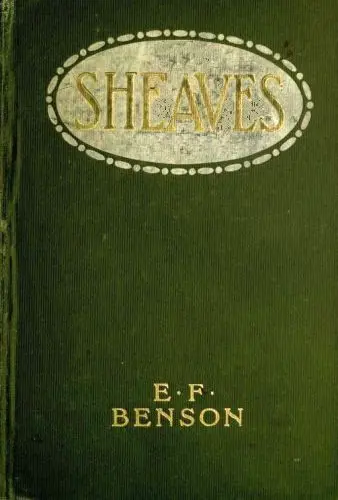
THE CLASSIC COLLECTION · 1907
"Sheaves" by E. F. Benson is a novel written in the early 20th century. The storyline appears to focus on the lives of several characters, including Hugh Grainger, a trader who seems to have met a mysterious fate at the hands of Native Americans, and his interactions with two children, Jim and Daisy Rye, who playfully engage with him in storytelling and imaginative games. This hints at a blend of humor, family dynamics, and perhaps a critique of social norms during the time. The opening of the novel introduces a whimsical scene where the supposedly deceased Hugh Grainger maintains a lively conversation with the children, offering humorous ghostly commentary on their burial customs. As Hugh narrates a silly story about three quirky old men living in a castle made of strawberries, the narrative establishes a playful tone. We also meet Lady Rye, who appreciates the innocence of childhood play while providing depth to the adult interactions as they reflect on societal expectations and personal desires. The excerpt sets the stage for a story that intertwines the frivolous with the poignant, delving into themes of family life, childhood imagination, and the complexities of adult relationships.
Introduction adapted from the source catalogue; source summaries may be automatically generated.
Free to read · English · 123,927 words · No account needed
MAKE TIME FOR A GOOD BOOK
On by default. Untick to stop anonymous reading totals. Each page counts after 10 seconds in view. How this works.
Anonymous counting is on unless you have switched it off.
It was that sort of thing that so often during these weeks made his heart bleed. He knew--how well he knew--that it was not she who spoke, but only this hideous disease. He never confused the one with the other, for he knew Edith too well for that. All these weeks she had been fighting her battle, desperately, splendidly, and all these weeks she had been constantly impatient with him, irritated by him. And quietly, proudly, he wore that like a decoration. It was just because she loved him that she was like that with him. With her nurse, whom she detested, she was studiously, evenly polite, thanking her for all sorts of infinitesimal services, hoping she was not tired, fearing to disturb her. But Hugh divined the cause of her impatience with him, and knew that she divined it too.
Then swiftly came the rest of the heavenly change. Edith, utterly weary, had gone to bed one night while the snow still fell, and Hugh, not long after, though it was still early, had followed. The drowsiness of snow was on him and he slept heavily, expecting even in sleep to awaken to that numb, torpid pain of soul that had been his all these weeks. But he did not wake thus.
It was a new heaven and a new earth. Sun and frost had entered. Blue
weather.
Trouble had passed, and joy came with that morning. It came in all manners, big and small. The kitchen of the possible house proved to be palatial. Peggy, by the morning post, announced that she and Jim and Daisy would all come out for Christmas. And Edith, so she said, when he went to her, felt different.
“Oh, Hughie! the sun has come,” she said as he entered; “and how good the air smells. I don’t feel nearly so tired, either.”
“And that is the top of the morning,” said he.
She looked at him, then avoided his eye.
“I have been horrible to you all these weeks,” she said quietly. “I knew it perfectly well. Have I hurt you, Hughie?”
That was one of the bad moments.
“How could you hurt me?” he asked. “You have never hurt me.”
She still did not look at him, but lay with her cheek on the pillow. She felt that he had more to say, though the words ceased.
“Yes?” she said. “Go on.”
“Oh, whenever I thought you hurt me, I knew at once it was not you,” he
said.
Then she looked at him.
“No, my darling, it was not,” she said. “Do try to remember that.”
“There is no trying and no remembering,” he said.
Your reading position is saved on this browser. Take it to another device with a library code. Reading pages adapt to text, rather than matching a printed edition.
E. F. (Edward Frederic) Benson
E. F. (Edward Frederic) Benson
E. F. (Edward Frederic) Benson

E. F. (Edward Frederic) Benson
BEHIND THE BOOK
This eBook is for the use of anyone anywhere in the United States and most other parts of the world at no cost and with almost no restrictions whatsoever. You may copy it, give it away or re-use it under the terms of the Project Gutenberg License included with this eBook or online at www.gutenberg.org. If you are not located in the United States, you will have to check the laws of the country where you are located before using this eBook. Read the source licence.
The original source file, including credits and licence, is retained by this library. Request an original-format copy at no charge. Please include the book title and Project Gutenberg identifier #60241.
KEEP YOUR CURIOSITY GOING
Coulson Kernahan

Maurice Baring
Frances Wright
Cécile Tormay

Frederic Jesup Stimson

W. H. P. (William Henry Pope) Jarvis