THE CLASSIC COLLECTION✦Heu-Heu, or The monsterCLASSIC FREE BOOKS
Heu-Heu, or The monster
H. Rider (Henry Rider) Haggard
THE CLASSIC COLLECTION · 1886
"She" by H. Rider Haggard is a Gothic novel published in 1887. The story follows Cambridge professor Horace Holly and his ward Leo Vincey on a perilous journey into the African interior, where they seek a lost kingdom. There they encounter the Amahagger people and their mysterious ruler—a powerful white sorceress named Ayesha, known as "She-who-must-be-obeyed." Possessing immortality and supernatural powers, Ayesha has waited over two thousand years for her lost lover's return. A groundbreaking work that established conventions of the lost world genre.
Introduction adapted from the source catalogue; source summaries may be automatically generated.
Free to read · English · 113,137 words · No account needed
MAKE TIME FOR A GOOD BOOK
On by default. Untick to stop anonymous reading totals. Each page counts after 10 seconds in view. How this works.
Anonymous counting is on unless you have switched it off.
Thus the letter, which was unsigned and undated, abruptly ended.
“What do you make of that, Uncle Holly,” said Leo, with a sort of gasp, as he replaced it on the table. “We have been looking for a mystery, and we certainly seem to have found one.”
“What do I make of it? Why, that your poor dear father was off his head, of course,” I answered, testily. “I guessed as much that night, twenty years ago, when he came into my room. You see he evidently hurried his own end, poor man. It is absolute balderdash.”
“That’s it, sir!” said Job, solemnly. Job was a most matter-of-fact specimen of a matter-of-fact class.
“Well, let’s see what the potsherd has to say, at any rate,” said Leo, taking up the translation in his father’s writing, and commencing to read:—
“I, Amenartas, of the Royal House of the Pharaohs of Egypt, wife of Kallikrates (the Beautiful in Strength), a Priest of Isis whom the gods cherish and the demons obey, being about to die, to my little son Tisisthenes (the Mighty Avenger). I fled with thy father from Egypt in the days of Nectanebes,[1] causing him through love to break the vows that he had vowed. We fled southward, across the waters, and we wandered for twice twelve moons on the coast of Libya (Africa) that looks towards the rising sun, where by a river is a great rock carven like the head of an Ethiopian. Four days on the water from the mouth of a mighty river were we cast away, and some were drowned and some died of sickness. But us wild men took through wastes and marshes, where the sea fowl hid the sky, bearing us ten days’ journey till we came to a hollow mountain, where a great city had been and fallen, and where there are caves of which no man hath seen the end; and they brought us to the Queen of the people who place pots upon the heads of strangers, who is a magician having a knowledge of all things, and life and loveliness that does not die. And she cast eyes of love upon thy father, Kallikrates, and would have slain me, and taken him to husband, but he loved me and feared her, and would not. Then did she take us, and lead us by terrible ways, by means of dark magic, to where the great pit is, in the mouth of which the old philosopher lay dead, and showed to us the rolling Pillar of Life that dies not, whereof the voice is as the voice of thunder; and she did stand in the flames, and come forth unharmed, and yet more beautiful. Then did she swear to make thy father undying even as she is, if he would but slay me, and give himself to her, for me she could not slay because of the magic of my own people that I have, and that prevailed thus far against her. And he held his hand before his eyes to hide her beauty, and would not. Then in her rage did she smite him by her magic, and he died; but she wept over him, and bore him thence with lamentations: and being afraid, me she sent to the mouth of the great river where the ships come, and I was carried far away on the ships where I gave thee birth, and hither to Athens I came at last after many wanderings. Now I say to thee, my son, Tisisthenes, seek out the woman, and learn the secret of Life, and if thou mayest find a way slay her, because of thy father Kallikrates; and if thou dost fear or fail, this I say to all thy seed who come after thee, till at last a brave man be found among them who shall bathe in the fire and sit in the place of the Pharaohs. I speak of those things, that though they be past belief, yet I have known, and I lie not.”
Your reading position is saved on this browser. Take it to another device with a library code. Reading pages adapt to text, rather than matching a printed edition.
H. Rider (Henry Rider) Haggard
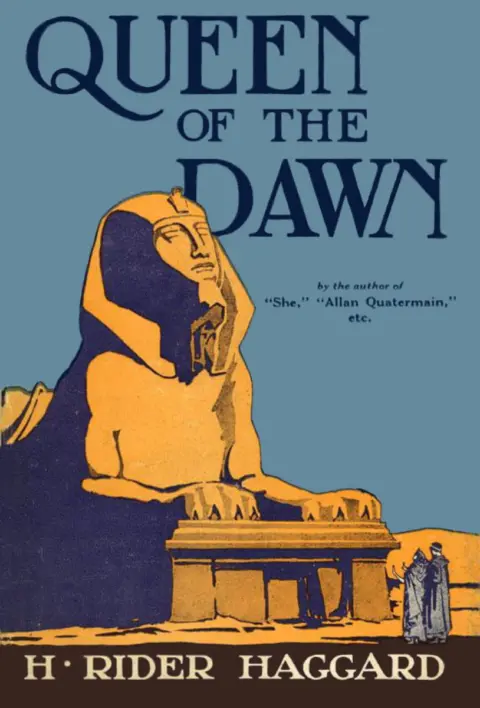
H. Rider (Henry Rider) Haggard
H. Rider (Henry Rider) Haggard
H. Rider (Henry Rider) Haggard
BEHIND THE BOOK
This eBook is for the use of anyone anywhere in the United States and most other parts of the world at no cost and with almost no restrictions whatsoever. You may copy it, give it away or re-use it under the terms of the Project Gutenberg License included with this eBook or online at www.gutenberg.org. If you are not located in the United States, you will have to check the laws of the country where you are located before using this eBook. Read the source licence.
The original source file, including credits and licence, is retained by this library. Request an original-format copy at no charge. Please include the book title and Project Gutenberg identifier #3155.
KEEP YOUR CURIOSITY GOING
Coulson Kernahan

Maurice Baring
Frances Wright
Cécile Tormay
Francis Greenleaf Allinson & Anne C. E. (Anne Crosby Emery) Allinson

Frederic Jesup Stimson