THE CLASSIC COLLECTION✦StormCLASSIC FREE BOOKS
Storm
Halliwell Sutcliffe
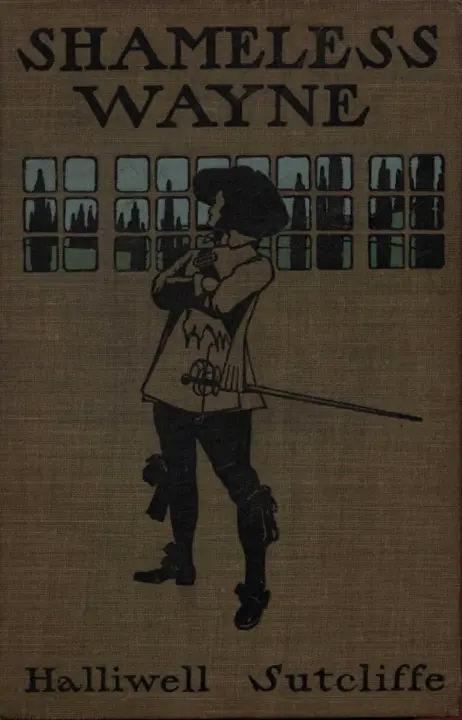
THE CLASSIC COLLECTION · 1899
"Shameless Wayne: A Romance of the last Feud of Wayne and Ratcliffe" by Halliwell Sutcliffe is a historical novel written in the late 19th century. The story unfolds against the backdrop of a fierce family feud on the moors, centered around the titular character, Shameless Wayne, and his family's long-standing rivalry with the Ratcliffes. The narrative introduces themes of love, honor, and vengeance as the characters navigate the tumultuous landscape of their intertwined fates. The opening of the narrative sets a foreboding tone as the Sexton’s wife tolls the death bell for Anthony Wayne, the patriarch of the Wayne family, while expressing contempt for his wife who seems indifferent to his passing. As the storm rages outside, Nell Wayne, his daughter, arrives to mourn her father and prepare for his funeral, revealing her inner turmoil and resolve for revenge against Dick Ratcliffe, who she believes is responsible for her father's death. A moment of tension occurs when Nell decides to confront Ratcliffe directly, armed with a dagger, while also grappling with complicated family dynamics that include her brother Shameless Wayne, who has been drinking and is unaware of the tragedy. The opening chapters effectively engage the reader's interest in the personal and familial struggles that will unfold in the wake of this tragedy.
Introduction adapted from the source catalogue; source summaries may be automatically generated.
Free to read · English · 138,009 words · No account needed
MAKE TIME FOR A GOOD BOOK
On by default. Untick to stop anonymous reading totals. Each page counts after 10 seconds in view. How this works.
Anonymous counting is on unless you have switched it off.
The night was wearing late meanwhile, and the farm-folk got to their feet at length and shuffled out by twos and threes--some to return to outlying farms or shepherds' huts far up the moor, others to less distant farms. Martha came to the gate to give them a God-speed, with Hiram Hey beside her, and it was long before the last shout of farewell died echoing up the moor.
Perhaps it was the ale he had drunk; perhaps it was Martha's flouting of him throughout the evening in favour of shepherd Jose; but for one cause or the other Hiram showed less than his wonted hesitation as he drew nearer to her in the moonlit yard. Their faces were turned sideways to the Master, and neither noted his quiet figure leaning against the wall.
"Martha, 'tis a drear house, this, I'm thinking," said Hiram.
"Ay, but it's all the roof I've getten."
"'Tis as full o' dead men's ghosts as it can hod, an' nobbut to-neet there war one more ligged quiet beside th' gate, as if th' owd place fare went hungering for bloodshed an' sudden death."
"Well, Hiram?"
He pointed down the fields to where, in a snug-sheltered hollow, the gable-end of his own farm climbed up into the moon-mists.
"Yond's a likelier spot, an' quieter, for a wench," he said.
"Sakes, Hiram! Tha'rt noan so backard-like i' coming forrard, when
all's said."
Hiram was quiet for a space, and the Master could see a laughable air of doubt steal into his face as he ruffled the frill of hair that framed his smooth-shaved chin.
"An' then," put in Martha softly, "there's even a quieter spot nor yond that mud varry weel be mine for th' axing."
Hiram Hey ceased doubting. "What, dost mean that owd fooil Jose wod like to tak thee to th' wind-riven barn he calls a house?"
"Summat o' th' sort, Hiram--ay, he'd be fain, wod shepherd Jose. An' if th' house be i' a wildish spot--well, 'tis farther out o' harm's way."
"That sattles it. Wilt wed me afore th' corn ripens, lass, an' come to yond snug bigging dahn i' th' hollow?"
"I reckon I will, lad. Why didst not axe me plain afore?"
Then Hiram kissed her, under the left ear; and the Master, forgetting that they did not count upon a listener, laughed outright. Martha turned, with cheeks aflame like the peonies newly-opened in the garden place behind her; and Hiram lost his calmness for the moment.
"Thou dost well, Hiram," said the Master drily. "Love while thou canst, for thou'd'st better make the most of what few years are left thee."
Your reading position is saved on this browser. Take it to another device with a library code. Reading pages adapt to text, rather than matching a printed edition.
Halliwell Sutcliffe
Halliwell Sutcliffe
Halliwell Sutcliffe
Halliwell Sutcliffe
BEHIND THE BOOK
This eBook is for the use of anyone anywhere in the United States and most other parts of the world at no cost and with almost no restrictions whatsoever. You may copy it, give it away or re-use it under the terms of the Project Gutenberg License included with this eBook or online at www.gutenberg.org. If you are not located in the United States, you will have to check the laws of the country where you are located before using this eBook. Read the source licence.
The original source file, including credits and licence, is retained by this library. Request an original-format copy at no charge. Please include the book title and Project Gutenberg identifier #47674.
KEEP YOUR CURIOSITY GOING
Cécile Tormay

Moritz Busch
Coulson Kernahan
John L. Ransom

Maurice Baring
Frances Wright