THE CLASSIC COLLECTION✦An outlaw’s diary: the CommuneCLASSIC FREE BOOKS
An outlaw’s diary: the Commune
Cécile Tormay
THE CLASSIC COLLECTION · 1896
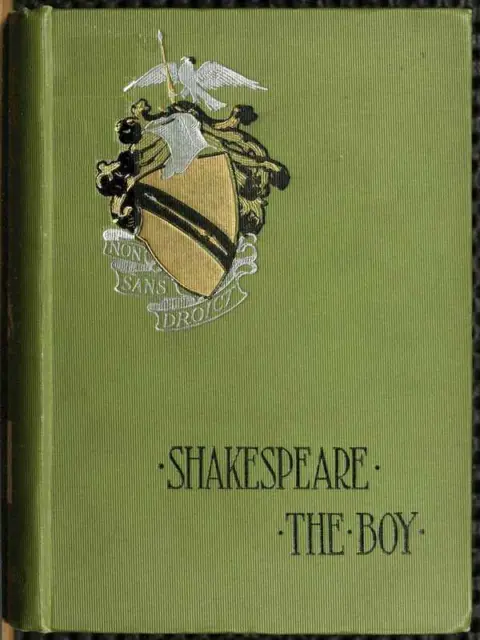
"Shakespeare the Boy" by W. J. Rolfe is a historical account written in the late 19th century. The book explores the early life of William Shakespeare, delving into the environment of his upbringing in Stratford-on-Avon, including aspects of his home life, education, and the cultural context of his childhood. The author aims to provide insights into how Shakespeare's formative years influenced his works and character. The opening of the volume introduces the region of Warwickshire as the heart of England and provides an overview of the important landmarks and historical figures associated with it. Rolfe paints a vivid picture of Shakespeare’s hometown, detailing its significance and the influence of local geography and history on the young playwright. The text discusses various attractions of the area, such as Warwick Castle and Kenilworth, and hints at the historical narratives that Shakespeare may have been exposed to during his youth, suggesting these elements played a key role in shaping his literary genius.
Introduction adapted from the source catalogue; source summaries may be automatically generated.
Free to read · English · 64,182 words · No account needed
MAKE TIME FOR A GOOD BOOK
On by default. Untick to stop anonymous reading totals. Each page counts after 10 seconds in view. How this works.
Anonymous counting is on unless you have switched it off.
To "bid a base," or "the base," was a common phrase for challenging to a game of this kind, and we often find it used figuratively; as in Venus and Adonis, 303, in the spirited description of the horse, which, like many other passages, shows Shakespeare's interest in the animal:--
"Sometimes he scuds far off, and there he stares; Anon he starts at stirring of a feather; To bid the wind a base he now prepares, And whether he run or fly they know not whether, For through his mane and tail the high wind sings, Fanning the hairs, who wave like feather'd wings."
In the Two Gentlemen of Verona (i. 2. 97), Lucetta says to Julia, with a pun upon the phrase: "Indeed, I bid the base for Proteus."
Drayton, in the Poly-Olbion, includes this game with others that have been described above: "At hood-wink, barley-brake, at tick [that is, tag], or prison-base"; and Spenser in the Shepherd's Calendar (October) refers to it among rustic pastimes: "In rymes, in ridles, and in bydding base."
Foot-ball is mentioned by Shakespeare in the Comedy of Errors (ii. 1. 82), where Dromio of Ephesus says to his mistress Adriana, who has been chiding him:--
"Am I so round with you as you with me, That like a foot-ball you do spurn me thus? You spurn me hence, and he will spurn me hither; If I last in this service, you must case me in leather."
In Lear (i. 4. 95), Oswald says to Kent, "I'll not be struck, my
lord!" and Kent replies, "Nor tripped neither, you base foot-ball
player."
The game was popular with the common people of England at least as early as the reign of Edward III., for in 1349 it was prohibited by royal edict--not, apparently, from any particular objection to the game in itself, but because it was believed to interfere with the popular interest in archery.
The sport was, however, a rough one then as now. Alexander Barclay, who died in 1552, in one of his Eclogues, tells how
"The sturdie plowman, lustie, strong, and bold, Overcometh the winter with driving the foote-ball, Forgetting labour and many a grievous fall."
Edmund Waller, in the next century, writes:--
"As when a sort [company] of lusty shepherds try Their force at foot-ball; care of victory Makes them salute so rudely breast to breast, That their encounter seems too rough for jest."
King James I., in his Basilicon--a set of rules for the nurture and conduct of Henry, Prince of Wales, the heir-apparent to the throne--says:--
Your reading position is saved on this browser. Take it to another device with a library code. Reading pages adapt to text, rather than matching a printed edition.
BEHIND THE BOOK
This eBook is for the use of anyone anywhere in the United States and most other parts of the world at no cost and with almost no restrictions whatsoever. You may copy it, give it away or re-use it under the terms of the Project Gutenberg License included with this eBook or online at www.gutenberg.org. If you are not located in the United States, you will have to check the laws of the country where you are located before using this eBook. Read the source licence.
The original source file, including credits and licence, is retained by this library. Request an original-format copy at no charge. Please include the book title and Project Gutenberg identifier #54151.
KEEP YOUR CURIOSITY GOING
Cécile Tormay

Moritz Busch
John L. Ransom
Frances Wright
Cécile Tormay

Mabel Potter Daggett