THE CLASSIC COLLECTION✦An outlaw’s diary: the CommuneCLASSIC FREE BOOKS
An outlaw’s diary: the Commune
Cécile Tormay
THE CLASSIC COLLECTION · 1896
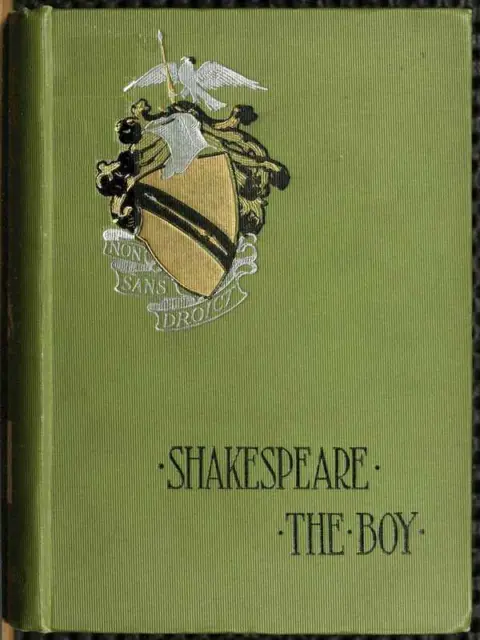
"Shakespeare the Boy" by W. J. Rolfe is a historical account written in the late 19th century. The book explores the early life of William Shakespeare, delving into the environment of his upbringing in Stratford-on-Avon, including aspects of his home life, education, and the cultural context of his childhood. The author aims to provide insights into how Shakespeare's formative years influenced his works and character. The opening of the volume introduces the region of Warwickshire as the heart of England and provides an overview of the important landmarks and historical figures associated with it. Rolfe paints a vivid picture of Shakespeare’s hometown, detailing its significance and the influence of local geography and history on the young playwright. The text discusses various attractions of the area, such as Warwick Castle and Kenilworth, and hints at the historical narratives that Shakespeare may have been exposed to during his youth, suggesting these elements played a key role in shaping his literary genius.
Introduction adapted from the source catalogue; source summaries may be automatically generated.
Free to read · English · 64,182 words · No account needed
MAKE TIME FOR A GOOD BOOK
On by default. Untick to stop anonymous reading totals. Each page counts after 10 seconds in view. How this works.
Anonymous counting is on unless you have switched it off.
It was not a long walk that our seven-year-old boy had to take in going to school. Turning the corner of Henley Street, where his father lives (compare the map, page 42 above), he passes into the High Street, on which (though the street changes its name twice before we get there) the Guildhall is situated. The adjoining Guild Chapel is separated only by a narrow lane from the "great house," as it was called, the handsomest in all Stratford.
The child, as he passes that grand mansion, little dreams that, some twenty-five years later, he will buy it for his own residence.
The school-room probably looks much the same to-day as it did when William studied there, the modern plastered ceiling which hid the oak roof of the olden time having been removed. The wainscoted walls, with the small windows high above the floor, are evidently ancient. An old desk, which may have been the master's, and a few rude forms, or benches, are now the only furniture; for the school was long since removed to ampler and more convenient quarters. A desk, said with no authority whatever to have been used by Shakespeare, is preserved in the Henley Street house.
What did William study in the Grammar School? Not much except arithmetic and Latin, with perhaps a little Greek and a mere smattering of other branches.
His first lessons in Latin were probably from two well-known books of the time, the Accidence and the Sententiæ Pueriles. The examination of Master Page by the Welsh parson and schoolmaster, Sir Hugh Evans, in The Merry Wives of Windsor (iv. 1) is taken almost verbally from the Accidence. Mrs. Page, accompanied by her son and the illiterate Dame Quickly, meets Sir Hugh in the street, and this dialogue ensues:--
"Mrs. Page. How now, Sir Hugh! no school to-day?
Evans. No; master Slender is get the boys leave to play.
Quickly. Blessing of his heart!
Mrs. Page. Sir Hugh, my husband says, my son profits nothing in the world at his book. I pray you, ask him some questions in his accidence.
Evans. Come hither, William; hold up your head; come.
Mrs. Page. Come on, sirrah; hold up your head; answer your
master, be not afraid.
Evans. William, how many numbers is in nouns?
William. Two.
Quickly. Truly, I thought there had been one number more,
because they say, 'od's nouns.
Evans. Peace your tattlings!--What is fair, William?
William. Pulcher.
Quickly. Pole-cats! there are fairer things than pole-cats,
sure.
Evans. You are a very simplicity 'oman; I pray you peace.--What
is lapis, William?
William. A stone.
Evans. And what is a stone, William?
William. A pebble.
Your reading position is saved on this browser. Take it to another device with a library code. Reading pages adapt to text, rather than matching a printed edition.
BEHIND THE BOOK
This eBook is for the use of anyone anywhere in the United States and most other parts of the world at no cost and with almost no restrictions whatsoever. You may copy it, give it away or re-use it under the terms of the Project Gutenberg License included with this eBook or online at www.gutenberg.org. If you are not located in the United States, you will have to check the laws of the country where you are located before using this eBook. Read the source licence.
The original source file, including credits and licence, is retained by this library. Request an original-format copy at no charge. Please include the book title and Project Gutenberg identifier #54151.
KEEP YOUR CURIOSITY GOING
Cécile Tormay

Moritz Busch
John L. Ransom
Frances Wright
Cécile Tormay

Mabel Potter Daggett