THE CLASSIC COLLECTION✦An outlaw’s diary: the CommuneCLASSIC FREE BOOKS
An outlaw’s diary: the Commune
Cécile Tormay
THE CLASSIC COLLECTION · 1896
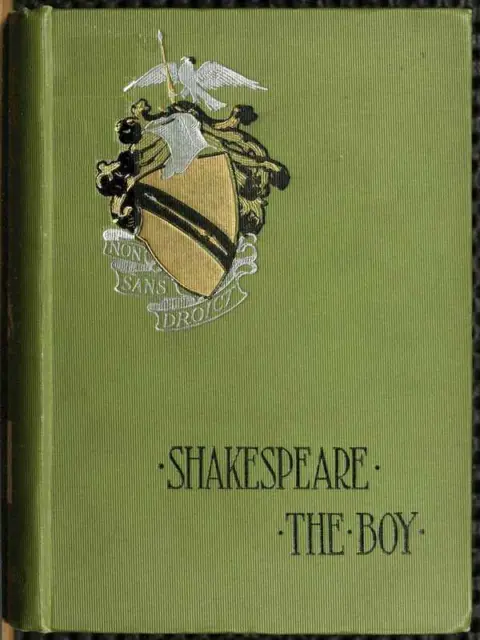
"Shakespeare the Boy" by W. J. Rolfe is a historical account written in the late 19th century. The book explores the early life of William Shakespeare, delving into the environment of his upbringing in Stratford-on-Avon, including aspects of his home life, education, and the cultural context of his childhood. The author aims to provide insights into how Shakespeare's formative years influenced his works and character. The opening of the volume introduces the region of Warwickshire as the heart of England and provides an overview of the important landmarks and historical figures associated with it. Rolfe paints a vivid picture of Shakespeare’s hometown, detailing its significance and the influence of local geography and history on the young playwright. The text discusses various attractions of the area, such as Warwick Castle and Kenilworth, and hints at the historical narratives that Shakespeare may have been exposed to during his youth, suggesting these elements played a key role in shaping his literary genius.
Introduction adapted from the source catalogue; source summaries may be automatically generated.
Free to read · English · 64,182 words · No account needed
MAKE TIME FOR A GOOD BOOK
On by default. Untick to stop anonymous reading totals. Each page counts after 10 seconds in view. How this works.
Anonymous counting is on unless you have switched it off.
The children had their stories to tell, like their elders; and Shakespeare has pictured a home scene in The Winter's Tale (ii. 1. 21) which may have been suggested by his own experience as a boy. As Mr. Charles Knight asks, "may we not read for Hermione, Mary Shakespeare, and for Mamillius, William?"
"Hermione. What wisdom stirs amongst you? Come, sir, now
I am for you again; pray you, sit by us,
And tell 's a tale.
Mamillius. Merry, or sad shall 't be?
Hermione. As merry as you will.
Mamillius. A sad tale 's best for winter. I have one
Of sprites and goblins.
Hermione. Let's have that, good sir. Come on, sit down; come on, and do your best To fright me with your sprites; you're powerful at it.
Mamillius. There was a man--
Hermione. Nay, come, sit down; then on.
Mamillius. Dwelt by a churchyard:--I will tell it softly; Yond crickets shall not hear it.
Hermione. Come on, then,
And give 't me in mine ear."
Just then his father, Leontes, comes in, and the tale is
interrupted, never to be resumed.
Mr. Knight assumes, with a good degree of probability, that William had access to some of the books from which he drew material for the story of his plays later in life, and that he may have told these tales, whether "merry or sad," to his brothers and sisters at home.
"He had," says this genial biographer, "a copy, well thumbed from his first reading days, of 'The Palace of Pleasure, beautified, adorned, and well furnished with pleasant histories and excellent novelles, selected out of divers good and commendable authors; by William Painter, Clarke of the Ordinaunce and Armarie.' In this book, according to the dedication of the translator to Ambrose Earl of Warwick, was set forth 'the great valiance of noble gentlemen, the terrible combats of courageous personages, the virtuous minds of noble dames, the chaste hearts of constant ladies, the wonderful patience of puissant princes, the mild sufferance of well-disposed gentlewomen, and, in divers, the quiet bearing of adverse fortune.' Pleasant little apothegms and short fables were there in the book; which the brothers and sisters of William Shakespeare had heard him tell with marvellous spirit, and they abided therefore in their memories. There was Æsop's fable of the old lark and her young ones, wherein 'he prettily and aptly doth premonish that hope and confidence of things attempted by man ought to be fixed and trusted in none other but himself.' There was the story, most delightful to a child, of the bondman at Rome, who was brought into the open place upon which a great multitude looked, to fight with a lion of a marvellous bigness; and the fierce lion, when he saw him, 'suddenly stood still, and afterwards by little and little, in gentle sort, he came unto the man as though he had known him,' and licked his hands and legs; and the bondman told that he had healed in former time the wounded foot of the lion, and the beast became his friend. These were for the younger children; but William had now a new tale, out of the same storehouse, upon which he had often pondered, the subject of which had shaped itself in his mind into dialogue that almost sounded like verse in his graceful and earnest recitation. It was a tale which Painter translated from the French of Pierre Boisteau.... It was 'The goodly history of the true and constant love between Romeo and Julietta.' ... From the same collection of tales had the youth before half dramatized the story of 'Giletta of Narbonne,' who cured the King of France of a painful malady, and the king gave her in marriage to the Count Beltramo, with whom she had been brought up, and her husband despised and forsook her, but at last they were united, and lived in great honor and felicity.
Your reading position is saved on this browser. Take it to another device with a library code. Reading pages adapt to text, rather than matching a printed edition.
BEHIND THE BOOK
This eBook is for the use of anyone anywhere in the United States and most other parts of the world at no cost and with almost no restrictions whatsoever. You may copy it, give it away or re-use it under the terms of the Project Gutenberg License included with this eBook or online at www.gutenberg.org. If you are not located in the United States, you will have to check the laws of the country where you are located before using this eBook. Read the source licence.
The original source file, including credits and licence, is retained by this library. Request an original-format copy at no charge. Please include the book title and Project Gutenberg identifier #54151.
KEEP YOUR CURIOSITY GOING
Cécile Tormay

Moritz Busch
John L. Ransom
Frances Wright
Cécile Tormay

Mabel Potter Daggett