THE CLASSIC COLLECTION✦An outlaw’s diary: the CommuneCLASSIC FREE BOOKS
An outlaw’s diary: the Commune
Cécile Tormay
THE CLASSIC COLLECTION · 1896
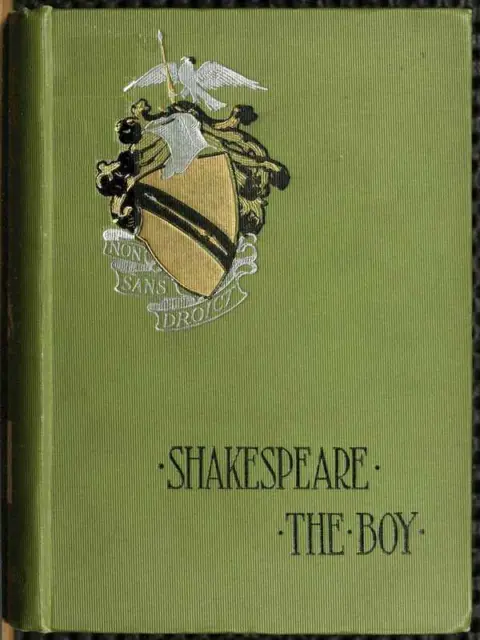
"Shakespeare the Boy" by W. J. Rolfe is a historical account written in the late 19th century. The book explores the early life of William Shakespeare, delving into the environment of his upbringing in Stratford-on-Avon, including aspects of his home life, education, and the cultural context of his childhood. The author aims to provide insights into how Shakespeare's formative years influenced his works and character. The opening of the volume introduces the region of Warwickshire as the heart of England and provides an overview of the important landmarks and historical figures associated with it. Rolfe paints a vivid picture of Shakespeare’s hometown, detailing its significance and the influence of local geography and history on the young playwright. The text discusses various attractions of the area, such as Warwick Castle and Kenilworth, and hints at the historical narratives that Shakespeare may have been exposed to during his youth, suggesting these elements played a key role in shaping his literary genius.
Introduction adapted from the source catalogue; source summaries may be automatically generated.
Free to read · English · 64,182 words · No account needed
MAKE TIME FOR A GOOD BOOK
On by default. Untick to stop anonymous reading totals. Each page counts after 10 seconds in view. How this works.
Anonymous counting is on unless you have switched it off.
=Page 196.=--Paul Hentzner. He was a native of Silesia
(1558-1623) who wrote a Journey through Germany, France, Italy,
etc.
Matthew Stevenson wrote several other books in prose and verse, published between 1654 and 1673.
The furmenty-pot. The word furmenty is a corruption of frumenty (see page 197), which is derived from the Latin frumentum, meaning wheat. The hulled wheat, boiled in milk and seasoned, was a popular dish in England, as it still is in the rural districts.
Robert Herrick (1591-1674) was an English lyric poet. The Hesperides was his most important work. A complete edition of his poems, edited by Mr. Grosart, was published in 1876.
=Page 197.=--A mawkin. A kitchen-wench, or other menial servant. The word is only a phonetic spelling of malkin, which Shakespeare has in Coriolanus, ii. 1. 224: "the kitchen malkin." Compare Tennyson, The Princess, v. 25:--
"If this be he,--or a draggled mawkin, thou, That tends her bristled grunters in the sludge;"
that is, a female swineherd.
Prank them up. Adorn themselves.
The fill-horse. The word fill, for the thills or shafts of a vehicle, used by Shakespeare and other writers of that day, is now obsolete in England, though still current in New England. Cross means to make the sign of the cross upon or over the animal.
=Page 199.=--Sheffield whittles. Knives made at Sheffield. Chaucer, in the Canterbury Tales (3931) refers to a "Shefeld thwitel," or whittle. Compare Shakespeare, Timon of Athens, v. 1. 173: "There's not a whittle in the unruly camp," etc.
Rings with posies. Rings with mottoes inscribed inside them. Posy is the same word as poesy, which we also find used in this sense. Compare Hamlet, iii. 2. 162: "Is this a prologue, or the poesy of a ring?" The fashion of putting such posies on rings prevailed from the middle of the 16th century to the close of the 17th. In 1624 a little book was published with the title, Love's Garland, or Posies for Rings, Handkerchiefs, and Gloves; and such pretty tokens, that lovers send their loves. Compare page 53 above.
=Page 201.=--Qui est la? Who is there? (French). The reply is,
"Peasants, poor French people."
Whipped three market-days. For some petty offence he had
committed.
=Page 202.=--Wick-yarn. For making wicks for the oil-lamps then in common use. It was a familiar article in this country fifty years ago, when whale-oil was used for household illumination.
Napery. Linen for domestic use, especially table-linen.
Your reading position is saved on this browser. Take it to another device with a library code. Reading pages adapt to text, rather than matching a printed edition.
BEHIND THE BOOK
This eBook is for the use of anyone anywhere in the United States and most other parts of the world at no cost and with almost no restrictions whatsoever. You may copy it, give it away or re-use it under the terms of the Project Gutenberg License included with this eBook or online at www.gutenberg.org. If you are not located in the United States, you will have to check the laws of the country where you are located before using this eBook. Read the source licence.
The original source file, including credits and licence, is retained by this library. Request an original-format copy at no charge. Please include the book title and Project Gutenberg identifier #54151.
KEEP YOUR CURIOSITY GOING
Cécile Tormay

Moritz Busch
John L. Ransom
Frances Wright
Cécile Tormay

Mabel Potter Daggett