THE CLASSIC COLLECTION✦An outlaw’s diary: the CommuneCLASSIC FREE BOOKS
An outlaw’s diary: the Commune
Cécile Tormay
THE CLASSIC COLLECTION · 1896
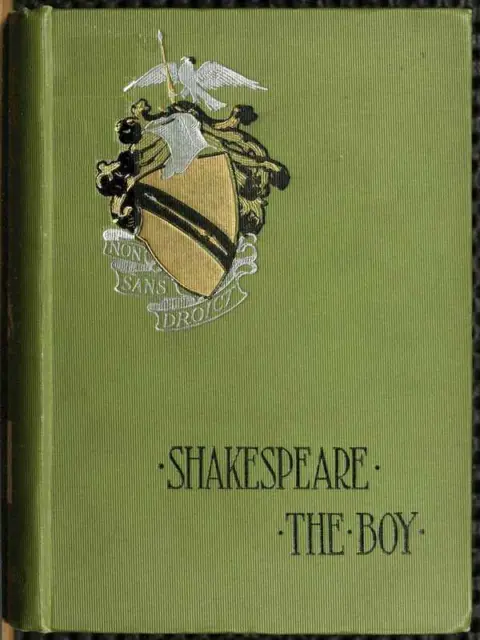
"Shakespeare the Boy" by W. J. Rolfe is a historical account written in the late 19th century. The book explores the early life of William Shakespeare, delving into the environment of his upbringing in Stratford-on-Avon, including aspects of his home life, education, and the cultural context of his childhood. The author aims to provide insights into how Shakespeare's formative years influenced his works and character. The opening of the volume introduces the region of Warwickshire as the heart of England and provides an overview of the important landmarks and historical figures associated with it. Rolfe paints a vivid picture of Shakespeare’s hometown, detailing its significance and the influence of local geography and history on the young playwright. The text discusses various attractions of the area, such as Warwick Castle and Kenilworth, and hints at the historical narratives that Shakespeare may have been exposed to during his youth, suggesting these elements played a key role in shaping his literary genius.
Introduction adapted from the source catalogue; source summaries may be automatically generated.
Free to read · English · 64,182 words · No account needed
MAKE TIME FOR A GOOD BOOK
On by default. Untick to stop anonymous reading totals. Each page counts after 10 seconds in view. How this works.
Anonymous counting is on unless you have switched it off.
=Page 171.=--Ambrose Dudley. He was born about 1530, made Earl of Warwick when Elizabeth came to the throne, and died in 1589.
=Page 172.=--The Cage. This house, on the corner of Fore Bridge Street (see map on page 42), was occupied by Thomas Quiney after he married Judith Shakespeare. "The house has long been modernized, the only existing portions of the ancient building being a few massive beams supporting the floor over the cellar" (Halliwell-Phillipps).
=Page 173.=--Sir Thomas Browne (1605-1682) was an eminent physician and author. Among his books were the Religio Medici (1643), Vulgar Errors (1646), etc.
Sir John Suckling (baptized Feb. 10, 1609, and supposed to have died by suicide at Paris about 1642) was a Royalist poet in the Court of Charles I. He wrote some plays, but is best known by his minor poems, one of the most noted of which is the Ballad upon a Wedding.
=Page 174.=--Izaak Walton (1593-1683) is famous as the author of The Complete Angler (1653), one of the classics of our literature. He also wrote Lives of Donne, Hooker, Herbert, and other English divines.
Richard Hooker (1553?-1600) was a celebrated theologian, author of Laws of Ecclesiastical Polity, four books of which appeared in 1592, a fifth in 1597, and the remaining three after his death.
=Page 180.=--Warner's Albion's England. William Warner (1558?-1609) was the author of Albion's England (1586), a rhymed history of the country, and the translator of the Menæchmi of the Latin dramatist Plautus (1595), on which Shakespeare founded the plot of the Comedy of Errors.
=Page 182.=--Watchet-colored. Light blue. Compare Spenser, F. Q. iii. 4. 40: "Their watchet mantles frindgd with silver rownd."
Like a wild Morisco. That is, a morris-dancer. The quotation is from 2 Henry VI. iii. 1. 365:--
"I have seen
Him caper upright like a wild Morisco,
Shaking the bloody darts as he his bells."
=Page 183.=--The featliest of dancers. The most dexterous. Compare The Winter's Tale, iv. 4. 176: "She dances featly"; and The Tempest, i. 2. 380: "Foot it featly," etc.
William Browne (1591-1643?) published book i. of Britannia's
Pastorals in 1613. He also wrote The Shepherd's Pipe (1614) and
other poems.
=Page 184.=--A carved hook, that is, a shepherd's crook (called a "sheep-hook" in The Winter's Tale, iv. 4. 431), as the scrip is his pouch or wallet. Compare As You Like It (iii. 2. 171), where Touchstone says to Corin: "Come, shepherd, let us make an honourable retreat; though not with bag and baggage, yet with scrip and scrippage."
John Aubrey (1626-1697), besides assisting Anthony Wood in his Antiquities of Oxford (1674), wrote Miscellanies, a collection of short stories and other tales of the supernatural.
Your reading position is saved on this browser. Take it to another device with a library code. Reading pages adapt to text, rather than matching a printed edition.
BEHIND THE BOOK
This eBook is for the use of anyone anywhere in the United States and most other parts of the world at no cost and with almost no restrictions whatsoever. You may copy it, give it away or re-use it under the terms of the Project Gutenberg License included with this eBook or online at www.gutenberg.org. If you are not located in the United States, you will have to check the laws of the country where you are located before using this eBook. Read the source licence.
The original source file, including credits and licence, is retained by this library. Request an original-format copy at no charge. Please include the book title and Project Gutenberg identifier #54151.
KEEP YOUR CURIOSITY GOING
Cécile Tormay

Moritz Busch
John L. Ransom
Frances Wright
Cécile Tormay

Mabel Potter Daggett