THE CLASSIC COLLECTION✦An outlaw’s diary: the CommuneCLASSIC FREE BOOKS
An outlaw’s diary: the Commune
Cécile Tormay
THE CLASSIC COLLECTION · 1896
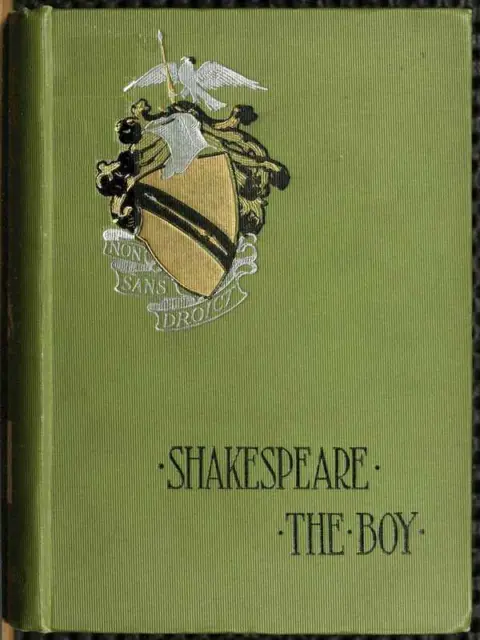
"Shakespeare the Boy" by W. J. Rolfe is a historical account written in the late 19th century. The book explores the early life of William Shakespeare, delving into the environment of his upbringing in Stratford-on-Avon, including aspects of his home life, education, and the cultural context of his childhood. The author aims to provide insights into how Shakespeare's formative years influenced his works and character. The opening of the volume introduces the region of Warwickshire as the heart of England and provides an overview of the important landmarks and historical figures associated with it. Rolfe paints a vivid picture of Shakespeare’s hometown, detailing its significance and the influence of local geography and history on the young playwright. The text discusses various attractions of the area, such as Warwick Castle and Kenilworth, and hints at the historical narratives that Shakespeare may have been exposed to during his youth, suggesting these elements played a key role in shaping his literary genius.
Introduction adapted from the source catalogue; source summaries may be automatically generated.
Free to read · English · 64,182 words · No account needed
MAKE TIME FOR A GOOD BOOK
On by default. Untick to stop anonymous reading totals. Each page counts after 10 seconds in view. How this works.
Anonymous counting is on unless you have switched it off.
So flew'd, so sanded. Having the same large hanging chaps and the
same sandy color.
Like bells. That is, like a chime of bells.
Tender well. Take good care of.
Emboss'd was a hunter's term for foaming at the mouth in
consequence of hard running.
Brach. The word properly meant a female hound, but came to be applied to a particular kind of scenting-dog.
=Page 147.=--In the coldest fault. When the scent was coldest (or faintest), and the hounds most at fault. Compare the quotation from Venus and Adonis, page 150 below: "the cold fault."
He cried upon it at the merest loss. He gave the cry when the scent seemed utterly lost. See the passage just referred to. Mere was formerly used in the sense of absolute or complete. Compare Othello, ii. 2. 3: "the mere perdition of the Turkish fleet" (its entire destruction); Henry VIII. iii. 2. 329: "the mere undoing of the kingdom" (its utter ruin), etc.
A youthful Work of Shakespeare's. It was first published in 1593, when he was twenty-nine years of age; and some critics believe that it was written several years earlier, perhaps before he went to London.
=Page 148.=--Glisters. Glistens. Both Shakespeare and Milton use glister several times, glisten not at all.
Told the steps. Counted them. Compare The Winter's Tale, iv. 4. 185: "He sings several tunes faster than you'll tell money." The teller in a bank is so called because he does this.
=Page 149.=--The hairs, who wave, etc. Who was often used where we should use which, and which (see on page 108 above) where we should use who.
It yearn'd my heart. That is, grieved it. Compare Henry V. iv. 3. 26: "It yearns me not when men my garments wear," etc.
=Page 150.=--Jauncing. Riding hard.
Musits. Holes (in fence or hedge) for creeping through. The word, also spelled muset, is a diminutive of the obsolete muse, which means the same. Amaze here means bewilder.
Wat. A familiar name for a hare, as Reynard for a fox, etc.
=Page 151.=--Mr. John R. Wise. Compare page 26 above.
=Page 155.=--The cut is a fac-simile of one in The Booke of Falconrie (1575), by George Turbervile, or Turberville (1520?-1595?), an English poet, translator, and writer on hunting, hawking, etc.
=Page 156.=--Cotgrave. Randle Cotgrave, an English lexicographer, who died about 1634. His French-English Dictionary (first published in 1611) is still valuable in the study of French and English philology.
=Page 159.=--John Skelton. An English scholar and poet, a protégé of Henry VII. and the tutor of Henry VIII. He was born about 1460, and probably died in 1529. "His rough wit and eccentric character made him the hero of a book of 'merry tales.'"
Your reading position is saved on this browser. Take it to another device with a library code. Reading pages adapt to text, rather than matching a printed edition.
BEHIND THE BOOK
This eBook is for the use of anyone anywhere in the United States and most other parts of the world at no cost and with almost no restrictions whatsoever. You may copy it, give it away or re-use it under the terms of the Project Gutenberg License included with this eBook or online at www.gutenberg.org. If you are not located in the United States, you will have to check the laws of the country where you are located before using this eBook. Read the source licence.
The original source file, including credits and licence, is retained by this library. Request an original-format copy at no charge. Please include the book title and Project Gutenberg identifier #54151.
KEEP YOUR CURIOSITY GOING
Cécile Tormay

Moritz Busch
John L. Ransom
Frances Wright
Cécile Tormay

Mabel Potter Daggett