THE CLASSIC COLLECTION✦An outlaw’s diary: the CommuneCLASSIC FREE BOOKS
An outlaw’s diary: the Commune
Cécile Tormay
THE CLASSIC COLLECTION · 1896
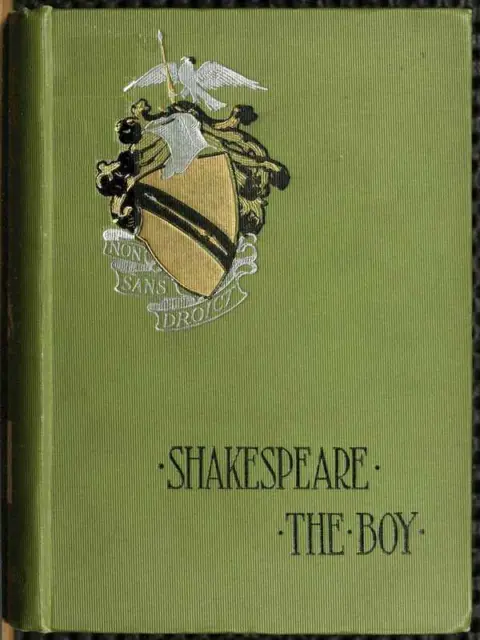
"Shakespeare the Boy" by W. J. Rolfe is a historical account written in the late 19th century. The book explores the early life of William Shakespeare, delving into the environment of his upbringing in Stratford-on-Avon, including aspects of his home life, education, and the cultural context of his childhood. The author aims to provide insights into how Shakespeare's formative years influenced his works and character. The opening of the volume introduces the region of Warwickshire as the heart of England and provides an overview of the important landmarks and historical figures associated with it. Rolfe paints a vivid picture of Shakespeare’s hometown, detailing its significance and the influence of local geography and history on the young playwright. The text discusses various attractions of the area, such as Warwick Castle and Kenilworth, and hints at the historical narratives that Shakespeare may have been exposed to during his youth, suggesting these elements played a key role in shaping his literary genius.
Introduction adapted from the source catalogue; source summaries may be automatically generated.
Free to read · English · 64,182 words · No account needed
MAKE TIME FOR A GOOD BOOK
On by default. Untick to stop anonymous reading totals. Each page counts after 10 seconds in view. How this works.
Anonymous counting is on unless you have switched it off.
Webster's White Devil. John Webster, who wrote in the early part of the 17th century, was a dramatist noted for his tragedies, among which The White Devil (1612) is reckoned one of the best. Of his biography nothing worth mentioning is known.
Burton, in his Anatomy of Melancholy. See on page 57 above.
Reginald Scot, who died in 1599, is chiefly known by his
Discoverie of Witchcraft, the main facts concerning which are
given here.
=Page 91.=--Wierus. The Latin form of the name of Weier, a German physician, who in 1563 published a book (De Præstigiis Demonum) in which the general belief in magic and witchcraft was attacked.
We infer that Shakespeare had read Scot's book. However this may be, we are sure that he had read a book by Dr. Samuel Harsnet (1561-1631) entitled Declaration of Egregious Popish Impostures, etc., under the pretence of casting out devils (1603), from which he took the names of some of the devils in Lear (iii. 4).
=Page 96.=--Henry Peacham. "A travelling tutor, musician, painter, and author," who wrote on drawing and painting, etiquette, education, etc. His father, whose name was the same, was also an author, and it is doubtful whether certain books were written by him or by his son.
Roger Ascham (1515-1568) was a noted classical scholar and author. He was tutor to Elizabeth (1548-1550), and Latin Secretary to Mary and Elizabeth (1553-1568). His chief works were the Toxophilus (1545) and the Scholemaster (see page 115 below).
=Page 97.=--Took on him as a conjurer. Pretended to be a
conjurer. Compare 2 Henry IV. iv. 1. 60: "I take not on me here
as a physician."
=Page 98.=--Who could speak Latin, etc. Latin, the language of the church, was used in exorcising spirits. Compare Hamlet (i. 1. 42), where, on the appearance of the Ghost, Marcellus says: "Thou art a scholar; speak to it, Horatio." So in Much Ado About Nothing (ii. 1. 264), Benedick, after comparing Beatrice to "the infernal Ate," adds: "I would to God some scholar would conjure her!" See also Beaumont and Fletcher, The Night-Walker, ii. 1:--
"Let's call the butler up, for he speaks Latin,
And that will daunt the devil."
=Page 99.=--Transparent horn. Used to protect the paper, as explained in the quotation from Shenstone on page 101. The horn-book was really "of stature small," the figure on page 100 being of the exact size of the specimen described. One delineated by Mr. Halliwell-Phillipps is of about the same size. See Chambers's Book of Days, vol. i. p. 46.
=Page 101.=--Shenstone. William Shenstone (1714-1763) was
educated at Pembroke College, Oxford. His best-known work is The
Schoolmistress.
Your reading position is saved on this browser. Take it to another device with a library code. Reading pages adapt to text, rather than matching a printed edition.
BEHIND THE BOOK
This eBook is for the use of anyone anywhere in the United States and most other parts of the world at no cost and with almost no restrictions whatsoever. You may copy it, give it away or re-use it under the terms of the Project Gutenberg License included with this eBook or online at www.gutenberg.org. If you are not located in the United States, you will have to check the laws of the country where you are located before using this eBook. Read the source licence.
The original source file, including credits and licence, is retained by this library. Request an original-format copy at no charge. Please include the book title and Project Gutenberg identifier #54151.
KEEP YOUR CURIOSITY GOING
Cécile Tormay

Moritz Busch
John L. Ransom
Frances Wright
Cécile Tormay

Mabel Potter Daggett