THE CLASSIC COLLECTION✦An outlaw’s diary: the CommuneCLASSIC FREE BOOKS
An outlaw’s diary: the Commune
Cécile Tormay
THE CLASSIC COLLECTION · 1896
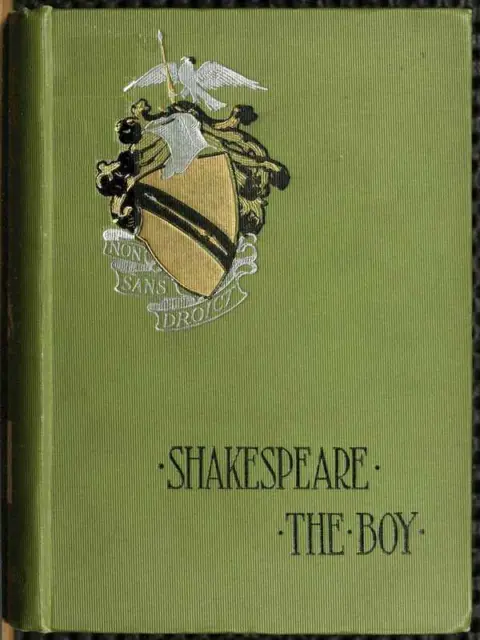
"Shakespeare the Boy" by W. J. Rolfe is a historical account written in the late 19th century. The book explores the early life of William Shakespeare, delving into the environment of his upbringing in Stratford-on-Avon, including aspects of his home life, education, and the cultural context of his childhood. The author aims to provide insights into how Shakespeare's formative years influenced his works and character. The opening of the volume introduces the region of Warwickshire as the heart of England and provides an overview of the important landmarks and historical figures associated with it. Rolfe paints a vivid picture of Shakespeare’s hometown, detailing its significance and the influence of local geography and history on the young playwright. The text discusses various attractions of the area, such as Warwick Castle and Kenilworth, and hints at the historical narratives that Shakespeare may have been exposed to during his youth, suggesting these elements played a key role in shaping his literary genius.
Introduction adapted from the source catalogue; source summaries may be automatically generated.
Free to read · English · 64,182 words · No account needed
MAKE TIME FOR A GOOD BOOK
On by default. Untick to stop anonymous reading totals. Each page counts after 10 seconds in view. How this works.
Anonymous counting is on unless you have switched it off.
Much forder. We find d and th used interchangeably in many
words in old writers; as fadom and fathom, murder and
murther, etc.
=Page 64.=--To charge thee with than. We find than for then in Shakespeare, Lucrece, 1440:--
"To Simois' reedy banks the red blood ran,
Whose waves to imitate the battle sought
With swelling ridges; and their ranks began
To break upon the galled shore, and than
Retire again," etc.
Here, it will be seen, the word rhymes with ran and began. On the other hand, than in the early eds. of Shakespeare and other writers of the time is generally then.
=Page 65.=--Utterly detest. That is, detested. The omission of -ed in the participles of verbs ending in d and t (or te) was formerly not uncommon in prose as well as poetry. Cf. Bacon, Essay 16: "Their means are less exhaust"; and Essay 38: "They have degenerate." See also Richard III., iii. 7. 179: "For first was he contract to Lady Lucy," etc.
=Page 66.=--To enter children. To begin their training. The word is now obsolete in this sense of introducing to, or initiating into, anything. Cf. Ben Jonson, Epicœne, iii. 1: "I am bold to enter these gentlemen in your acquaintance"; Walton, Complete Angler: "to enter you into the art of fishing," etc.
Thorow. Thorough and through were originally the same word, and we find them and their derivatives used interchangeably in Shakespeare and other old writers. Cf. A Midsummer-Night's Dream, ii. 1. 3:--
"Over hill, over dale,
Thorough bush, thorough brier,
Over park, over pale,
Thorough flood, thorough fire."
So we find thoroughly and throughly (Hamlet, iv. 5. 36,
etc.), thoroughfares and throughfares (Merchant of Venice,
ii. 7. 42, etc.).
=Page 67.=--The Ship of Fools. A translation (with original modifications) of the Narrenschiff of Sebastian Brandt (or Brant), a German satire (1494) upon the follies of different classes of men. It was made in 1508 by Alexander Barclay, who died at an advanced age in 1552. He was educated at Oxford, became a priest, and was vicar of several parishes in England before he was promoted to that of All Saints, Lombard Street, London, a few weeks previous to his death. The Ship of Fools was the first English book in which any mention is made of the New World.
Strutt. Joseph Strutt (1742-1802) was an eminent English antiquarian, who wrote several valuable works in that line of literature and others. The first edition of his Sports and Pastimes of the People of England appeared in 1801.
=Page 69.=--Taylor the Water Poet. John Taylor (1580-1654), a waterman who afterwards became a collector of wine duties in London. He wrote much in prose and verse, and was very popular in his day.
Your reading position is saved on this browser. Take it to another device with a library code. Reading pages adapt to text, rather than matching a printed edition.
BEHIND THE BOOK
This eBook is for the use of anyone anywhere in the United States and most other parts of the world at no cost and with almost no restrictions whatsoever. You may copy it, give it away or re-use it under the terms of the Project Gutenberg License included with this eBook or online at www.gutenberg.org. If you are not located in the United States, you will have to check the laws of the country where you are located before using this eBook. Read the source licence.
The original source file, including credits and licence, is retained by this library. Request an original-format copy at no charge. Please include the book title and Project Gutenberg identifier #54151.
KEEP YOUR CURIOSITY GOING
Cécile Tormay

Moritz Busch
John L. Ransom
Frances Wright
Cécile Tormay

Mabel Potter Daggett