THE CLASSIC COLLECTION✦An outlaw’s diary: the CommuneCLASSIC FREE BOOKS
An outlaw’s diary: the Commune
Cécile Tormay
THE CLASSIC COLLECTION · 1896
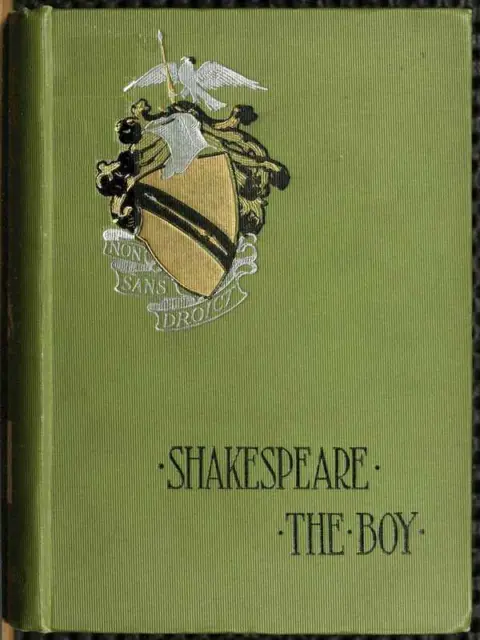
"Shakespeare the Boy" by W. J. Rolfe is a historical account written in the late 19th century. The book explores the early life of William Shakespeare, delving into the environment of his upbringing in Stratford-on-Avon, including aspects of his home life, education, and the cultural context of his childhood. The author aims to provide insights into how Shakespeare's formative years influenced his works and character. The opening of the volume introduces the region of Warwickshire as the heart of England and provides an overview of the important landmarks and historical figures associated with it. Rolfe paints a vivid picture of Shakespeare’s hometown, detailing its significance and the influence of local geography and history on the young playwright. The text discusses various attractions of the area, such as Warwick Castle and Kenilworth, and hints at the historical narratives that Shakespeare may have been exposed to during his youth, suggesting these elements played a key role in shaping his literary genius.
Introduction adapted from the source catalogue; source summaries may be automatically generated.
Free to read · English · 64,182 words · No account needed
MAKE TIME FOR A GOOD BOOK
On by default. Untick to stop anonymous reading totals. Each page counts after 10 seconds in view. How this works.
Anonymous counting is on unless you have switched it off.
"But yet I run before my horse to market: Clarence still breathes, Edward still lives and reigns; When they are gone, then must I count my gains."
He means, in the language of a more familiar proverb, that he is counting his chickens before they are hatched; that is, he is too hasty in reckoning upon the success of his plans.
In 1 Henry VI. (iii. 2) Joan of Arc gets into Rouen with her soldiers in the guise of countrymen bound for market:--
"Enter La Pucelle, disguised, and Soldiers dressed like countrymen, with sacks upon their backs.
Pucelle. These are the city gates, the gates of Rouen, Through which our policy must make a breach. Take heed, be wary how you place your words; Talk like the vulgar sort of market-men, That come to gather money for their corn. If we have entrance--as I hope we shall-- And that we find the slothful watch but weak, I'll by a sign give notice to our friends That Charles the Dauphin may encounter them.
1 Soldier. Our sacks shall be a mean to sack the city, And we be lords and rulers over Rouen; Therefore we'll knock. [Knocks.
Guard. [Within.] Qui est la?
Pucelle. Paisans, pauvres gens de France: Poor market-folks, that come to sell their corn.
Guard. [Opening the gates.] Enter, go in; the market-bell
is rung.
Pucelle. Now, Rouen, I'll shake thy bulwarks to the
ground."
The "market-bell" was rung at the hour when the market was to begin.
In the same play (v. 5. 54), when a dower is proposed for Margaret, who is to marry Henry, Suffolk says:--
"A dower, my lords! disgrace not so your king, That he should be so abject, base, and poor, To choose for wealth, and not for perfect love. Henry is able to enrich his queen, And not to seek a queen to make him rich: So worthless peasants bargain for their wives, As market-men for oxen, sheep, or horse."
In 2 Henry VI. (v. 2. 62), when Cade has said boastingly, "I am able to endure much," Dick makes the comment, aside: "No question of that; for I have seen him whipped three market-days together."
There are many other allusions to markets, market-men,
market-maids, etc., in the plays, but these will suffice for
illustration here.
Your reading position is saved on this browser. Take it to another device with a library code. Reading pages adapt to text, rather than matching a printed edition.
BEHIND THE BOOK
This eBook is for the use of anyone anywhere in the United States and most other parts of the world at no cost and with almost no restrictions whatsoever. You may copy it, give it away or re-use it under the terms of the Project Gutenberg License included with this eBook or online at www.gutenberg.org. If you are not located in the United States, you will have to check the laws of the country where you are located before using this eBook. Read the source licence.
The original source file, including credits and licence, is retained by this library. Request an original-format copy at no charge. Please include the book title and Project Gutenberg identifier #54151.
KEEP YOUR CURIOSITY GOING
Cécile Tormay

Moritz Busch
John L. Ransom
Frances Wright
Cécile Tormay

Mabel Potter Daggett