THE CLASSIC COLLECTION✦An outlaw’s diary: the CommuneCLASSIC FREE BOOKS
An outlaw’s diary: the Commune
Cécile Tormay
THE CLASSIC COLLECTION · 1896
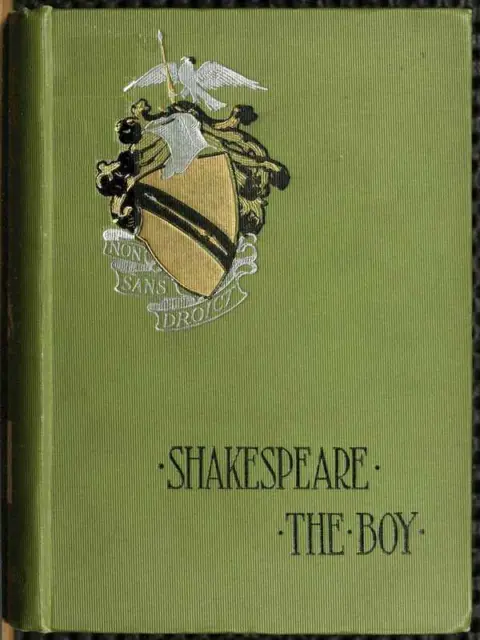
"Shakespeare the Boy" by W. J. Rolfe is a historical account written in the late 19th century. The book explores the early life of William Shakespeare, delving into the environment of his upbringing in Stratford-on-Avon, including aspects of his home life, education, and the cultural context of his childhood. The author aims to provide insights into how Shakespeare's formative years influenced his works and character. The opening of the volume introduces the region of Warwickshire as the heart of England and provides an overview of the important landmarks and historical figures associated with it. Rolfe paints a vivid picture of Shakespeare’s hometown, detailing its significance and the influence of local geography and history on the young playwright. The text discusses various attractions of the area, such as Warwick Castle and Kenilworth, and hints at the historical narratives that Shakespeare may have been exposed to during his youth, suggesting these elements played a key role in shaping his literary genius.
Introduction adapted from the source catalogue; source summaries may be automatically generated.
Free to read · English · 64,182 words · No account needed
MAKE TIME FOR A GOOD BOOK
On by default. Untick to stop anonymous reading totals. Each page counts after 10 seconds in view. How this works.
Anonymous counting is on unless you have switched it off.
Matthew Stevenson, in the Twelve Months (1661), under August, alludes to this festival thus: "The furmenty-pot welcomes home the harvest-cart, and the garland of flowers crowns the captain of the reapers; the battle of the field is now stoutly fought. The pipe and the tabor are now busily set a-work; and the lad and the lass will have no lead on their heels. O, 't is the merry time wherein honest neighbors make good cheer, and God is glorified in his blessings on the earth."
Robert Herrick, in his Hesperides (1648), refers to the
harvest-home as follows:--
"Come, sons of summer, by whose toil
We are the lords of wine and oil,
By whose tough labor and rough hands
We rip up first, then reap our lands,
Crown'd with the ears of corn, now come,
And to the pipe sing harvest-home.
Come forth, my lord, and see the cart,
Drest up with all the country art.
See here a mawkin, there a sheet
As spotless pure as it is sweet:
The horses, mares, and frisking fillies
Clad all in linen, white as lilies;
The harvest swains and wenches bound
For joy to see the hock-cart crown'd.
About the cart hear how the rout
Of rural younglings raise the shout;
Pressing before, some coming after,
Those with a shout, and these with laughter.
Some bless the cart, some kiss the sheaves,
Some prank them up with oaken leaves;
Some cross the fill-horse; some, with great
Devotion, stroke the home-borne wheat.
Well, on, brave boys, to your lord's hearth,
Glittering with fire; where, for your mirth,
You shall see, first, the large and chief
Foundation of your feast, fat beef;
With upper stories, mutton, veal,
And bacon (which makes full the meal),
With several dishes standing by,
And here a custard, there a pie,
And here all-tempting frumenty."
The "hock-cart" was the cart that brought home the last load of corn. It was sometimes called the "hockey-cart"; and one of the dainties of the feast was the "hockey-cake." In an almanac for 1676, under August, we read:--
"Hocky is brought home with hallowing,
Boys with plum-cake the cart following."
The harvest-home is alluded to in 1 Henry IV. (i. 3. 35), where Hotspur, describing the "popinjay" lord who came to demand his prisoners, says:--
"and his chin new-reap'd
Show'd like a stubble-land at harvest-home."
In The Merry Wives of Windsor (ii. 2. 287) Falstaff says of
Mistress Ford, to whom he intends to make love, "and there's my
harvest-home."
In the interlude in The Tempest (iv. 1. 134) the dance of the
Reapers was apparently a reminiscence of harvest-home sports. Iris
says:--
Your reading position is saved on this browser. Take it to another device with a library code. Reading pages adapt to text, rather than matching a printed edition.
BEHIND THE BOOK
This eBook is for the use of anyone anywhere in the United States and most other parts of the world at no cost and with almost no restrictions whatsoever. You may copy it, give it away or re-use it under the terms of the Project Gutenberg License included with this eBook or online at www.gutenberg.org. If you are not located in the United States, you will have to check the laws of the country where you are located before using this eBook. Read the source licence.
The original source file, including credits and licence, is retained by this library. Request an original-format copy at no charge. Please include the book title and Project Gutenberg identifier #54151.
KEEP YOUR CURIOSITY GOING
Cécile Tormay

Moritz Busch
John L. Ransom
Frances Wright
Cécile Tormay

Mabel Potter Daggett