THE CLASSIC COLLECTION✦Undream’d of shoresCLASSIC FREE BOOKS
Undream’d of shores
Frank Harris
THE CLASSIC COLLECTION · 1910
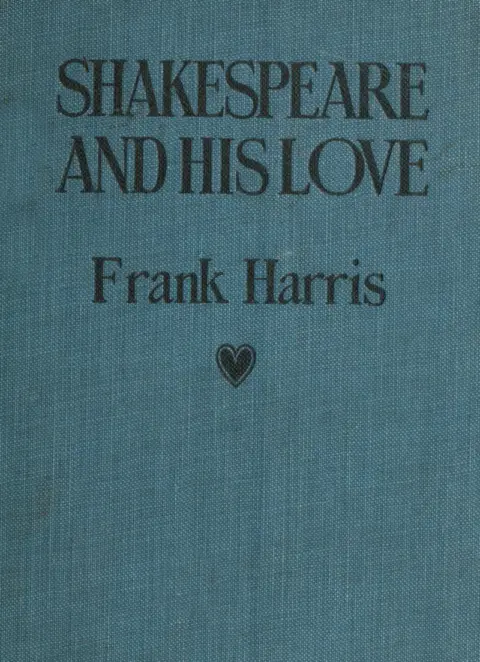
"Shakespeare and His Love: A Play in Four Acts and an Epilogue" by Frank Harris is a dramatic play written in the early 20th century. The work explores the life and romantic experiences of William Shakespeare, specifically focusing on his love affair with Mary Fitton, a maid of honor to Queen Elizabeth. Through its depiction of Shakespeare and his contemporaries, the play delves into the complexities of love, ambition, and the challenges faced by artists during the Elizabethan era. The opening of the play introduces the vibrant setting of the Globe Theatre following a performance of "The Merchant of Venice." Several notable characters, including the Earl of Southampton, Ben Jonson, and the playwright himself, engage in lively conversation about the play they just witnessed, revealing the dynamics of their thoughts and relationships. As Shakespeare interacts with other characters, including his love interest, Mary Fitton, we see hints of his melancholy, artistic aspirations, and the complications arising from his emotions and social standing. This initial act sets the stage for exploring not only Shakespeare's internal struggles but also the tumultuous court politics and rivalries that characterize his world.
Introduction adapted from the source catalogue; source summaries may be automatically generated.
Free to read · English · 22,849 words · No account needed
MAKE TIME FOR A GOOD BOOK
On by default. Untick to stop anonymous reading totals. Each page counts after 10 seconds in view. How this works.
Anonymous counting is on unless you have switched it off.
In verity I belong to the brutish, bearded sex, as you may prove, my lord, when the occasion pleases you. [Bows to Herbert.] But “naturally” offends my sense, ’tis a gross and vulgar birth. Prithee, my lord, do you dress “naturally”? or eat “naturally”? or house “naturally”? And if to be natural in all these is savage-vile, why should a man talk “naturally,” like a lewd barbarian?
I mean why be singular in speech—fanciful, peculiar?
The first man who made a girdle of skins instead of the fig-leaf was so admonished, and with equal consistency. Why wear a slashed doublet, my lord—most “fanciful-peculiar”?
It becomes my place.
And so my speech is more ornate than peasants use.
But my doublet isn’t tagged with silly, useless ornaments, like your “scent the air,” and “sage-green with jealousy”! Green is good enough.
Green means nothing; but sage-green paints the bilious tinge of soured vanity; still, a dispute about the shade concedes the principle.
No, I think the common speech better, stronger.
No! No! Ten thousand negatives! I abhor your common fustian speech. Words, like coins, grow lighter in the using; so I mint a new word to charm the ear, as a jeweller sets a gem to catch the eye. [Turning to Miss Fitton.] But I’ve tired you, most divine fair, with peevish argument, instead of pleasing with example. I entreat forgiveness: am carmined with confusion. [A bevy of girls come up: the first cries—] “We are allowed to dance”: [the second—] “How shall we begin, with the galliard or the Coranto?” [They speak chiefly to Lord Herbert and Mistress Fitton, because Lord Lacy is staring at one of their number, Lady Joan Nevil. Lacy, turning again to Herbert.] What heavenly pulchritude! casting light, not shadow, upon earth. Who is the wonder, nymph or angel? My eyes are blinded by her celestial radiance.
[Stepping forward.] Lady Joan, let me present Lord Lacy here, who professes himself your admirer.
[Bowing to the ground.] Admirer [with a reproachful glance at Herbert], worshipper of your most angelic loveliness! Lady, my senses are all your slaves.
I free them at once, my lord. I would not slavish service.
O voice most tuneful and beyond music harmonious!
Praise, my lord, should keep a measure; sweets are quick to surfeit.
Lady, if I cannot win your favour, I am like to die of grief.
Live, my lord, live, and now if it please you let us join the dancers. [They turn off together; the dancing goes on with directions changing the galliard to the Coranto.]
Your reading position is saved on this browser. Take it to another device with a library code. Reading pages adapt to text, rather than matching a printed edition.
Frank Harris
Frank Harris
Frank Harris
Frank Harris
BEHIND THE BOOK
This eBook is for the use of anyone anywhere in the United States and most other parts of the world at no cost and with almost no restrictions whatsoever. You may copy it, give it away or re-use it under the terms of the Project Gutenberg License included with this eBook or online at www.gutenberg.org. If you are not located in the United States, you will have to check the laws of the country where you are located before using this eBook. Read the source licence.
The original source file, including credits and licence, is retained by this library. Request an original-format copy at no charge. Please include the book title and Project Gutenberg identifier #69269.
KEEP YOUR CURIOSITY GOING
Maurice Baring
W. B. (William Butler) Yeats
Edward Martyn

John Brougham & Charlotte Brontë
Marguerite Merington
Leonid Andreyev