THE CLASSIC COLLECTION✦Undream’d of shoresCLASSIC FREE BOOKS
Undream’d of shores
Frank Harris
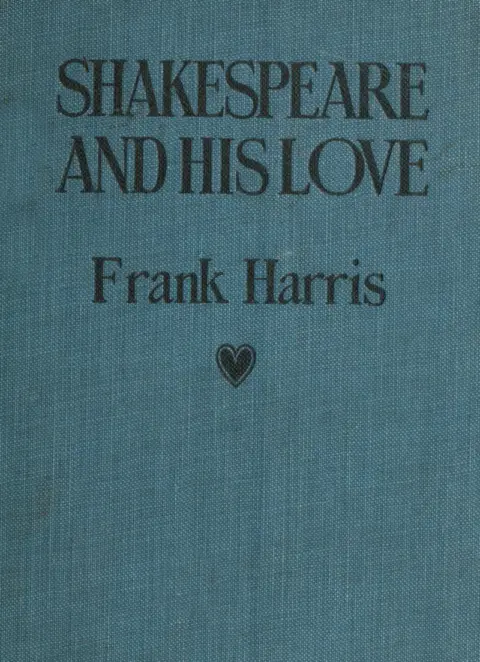
THE CLASSIC COLLECTION · 1910
"Shakespeare and His Love: A Play in Four Acts and an Epilogue" by Frank Harris is a dramatic play written in the early 20th century. The work explores the life and romantic experiences of William Shakespeare, specifically focusing on his love affair with Mary Fitton, a maid of honor to Queen Elizabeth. Through its depiction of Shakespeare and his contemporaries, the play delves into the complexities of love, ambition, and the challenges faced by artists during the Elizabethan era. The opening of the play introduces the vibrant setting of the Globe Theatre following a performance of "The Merchant of Venice." Several notable characters, including the Earl of Southampton, Ben Jonson, and the playwright himself, engage in lively conversation about the play they just witnessed, revealing the dynamics of their thoughts and relationships. As Shakespeare interacts with other characters, including his love interest, Mary Fitton, we see hints of his melancholy, artistic aspirations, and the complications arising from his emotions and social standing. This initial act sets the stage for exploring not only Shakespeare's internal struggles but also the tumultuous court politics and rivalries that characterize his world.
Introduction adapted from the source catalogue; source summaries may be automatically generated.
Free to read · English · 22,849 words · No account needed
MAKE TIME FOR A GOOD BOOK
On by default. Untick to stop anonymous reading totals. Each page counts after 10 seconds in view. How this works.
Anonymous counting is on unless you have switched it off.
[Jonson rises, crying “You dog!” Lord Lacy on one side, and Shakespeare on the other, hold him back, and constrain him to sit.]
Amity, friends, amity!
Every man in his humour, Ben; who should know that better than you?
[Sits again, grumbling.] The curs, who bark and run.
Let’s have a hanap, friends, to cool the embers of strife.
One cup of sack, Shakespeare, to chase your melancholy and start your
wit.
Not one. Sweet wine on bitter beer would make me Chettle. [Turns to Jonson.] So you became a Catholic in prison, Ben. Was it the loneliness, or fasting?
Loneliness, perhaps: in solitude one listens to the heart.
MARSTON [Interrupting.]
That’s weak, Jonson, childish-weak. Solitude breeds religion as the dark breeds devils—out of fear.
Religion’s a trade to the priest, an intrigue to women, to men a
laughing-stock.
Don’t say that, don’t blaspheme, don’t attack the Faith, mad lads! I always mean to repent, but put off the evil day of reformation so long as health lasts. Conscience and sack struggle in me for the mastery, and the conflict makes me thirsty and so sack wins. But no scorners or blasphemers, say I.
We’re all godly at heart; eh, Chettle? We all wish other men virtuous, so that there’ll be more frolic for us.
Ha! Ha! You’re right, lad! [To the drawer.] Another cup, you bodkin, you radish, you—Ah, we are all sinners, Will, villainous sinners! [He drinks.]
I incline to the new faith. These puritans are much in earnest, though they go too far. One of them told me of late that actors should be outlawed, for they were not mentioned in the Bible. [Laughs.]
[Interrupting.] Why didn’t you reply that tailors weren’t mentioned there, either, and so the crophead knave himself should go naked.
Wonder of wonders! Chettle is learned in the Scriptures.
Our catechist in pious phrases, man, our doctor of divinity.
He knows more of tavern reckonings! He! He!
Why not, lad, why not? The animal man must keep a balance.
Religion is like the fashion; one man wears his doublet slashed, another laced, another plain, but every man has a doublet and a religion.
[Pompously.] ’Tis easy to mock at things sacred; but without religion there’d be no society. Be Protestant or Catholic, as you will; but without either we’d fall into anarchia.
Hum! I don’t know—What do you say, Shakespeare?
If all our rushlights went out, the sun would still be shining.
Your reading position is saved on this browser. Take it to another device with a library code. Reading pages adapt to text, rather than matching a printed edition.
Frank Harris
Frank Harris
Frank Harris
Frank Harris
BEHIND THE BOOK
This eBook is for the use of anyone anywhere in the United States and most other parts of the world at no cost and with almost no restrictions whatsoever. You may copy it, give it away or re-use it under the terms of the Project Gutenberg License included with this eBook or online at www.gutenberg.org. If you are not located in the United States, you will have to check the laws of the country where you are located before using this eBook. Read the source licence.
The original source file, including credits and licence, is retained by this library. Request an original-format copy at no charge. Please include the book title and Project Gutenberg identifier #69269.
KEEP YOUR CURIOSITY GOING
Maurice Baring
W. B. (William Butler) Yeats
Edward Martyn

John Brougham & Charlotte Brontë
Marguerite Merington
Leonid Andreyev