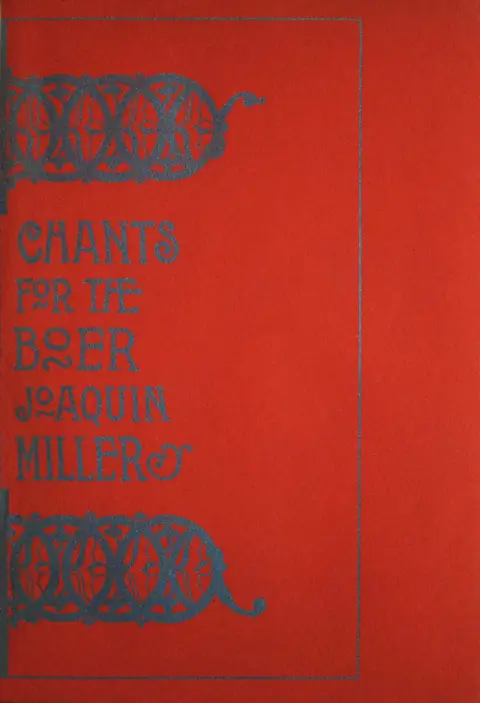
Chants for the Boer
Joaquin Miller
THE CLASSIC COLLECTION · 1881
"Shadows of Shasta" by Joaquin Miller is a novel written in the late 19th century. The book explores the lives and struggles of indigenous people in the California Sierras, highlighting their injustices and perseverance through a blend of rich poetic language and vivid storytelling. It centers around the characters of Carrie, a spirited young girl, John Logan, a strong and determined young man of Indian descent, and the old miner known as Forty-nine, all of whom navigate the perils of a world marked by man-hunters and the looming threat of captivity on Reservations. The opening of the novel introduces a somber yet powerful commentary on the treatment of Native Americans, with vivid descriptions of their struggles and the landscapes they inhabit. It begins with reflections on the historical injustices faced by indigenous people, particularly focusing on a young officer's role in escorting captured women and children. As the narrative progresses, it shifts toward the lives of Carrie and Johnny, two children who have escaped from a Reservation and are taken in by the mysterious old miner, Forty-nine. Their adventure reflects themes of survival, innocence in the face of hardship, and the harsh realities of their existence as they come to terms with the dangers of man-hunters who seek to reclaim them. This rich opening sets the stage for a tale filled with emotion, resilience, and the longing for freedom.
Introduction adapted from the source catalogue; source summaries may be automatically generated.
Free to read · English · 34,538 words · No account needed
MAKE TIME FOR A GOOD BOOK
On by default. Untick to stop anonymous reading totals. Each page counts after 10 seconds in view. How this works.
Anonymous counting is on unless you have switched it off.
Both are out of breath--both are looking back wildly; but Stumps huddles up again and again close under his sister's arm, as if he fears he might be followed, and looks to her for protection. She draws him close to her, and then looking back, and then down into his upturned face, says breathlessly:
"Stumps! Oh, Stumps, did you get 'em, Stumps?"
The boy shrinks closer to his sister, and again looking back, and then
seeing for a certainty that he is not followed, he grows bolder and
says:
"Git 'em, Carats? Look there! And that 'un is your'n, Carats; and you can have both of 'em if you want 'em, for I don't feel hungry now, Carats," and here he hitches up his pants, and wipes his nose on his sleeve.
"Why, Stumps, don't you feel hungry now?" Then suddenly beholding two upheld ruddy peaches, she catches her breath, and says: "Oh, oh!" and she starts back and throws up her hands. "Oh, the pretty, pretty peaches!"
"Here, take 'em both, Carrie--I ain't hungry now."
"No, I don't want but one, Stumps--one 's enough. Why, how you tore your pants; and your shin 's a bleeding, too. Why, poor Stumps!"
Stumps, looking back, cries:
"Shoo! Thar war a dog--yes, thar war a dog! And what do you think! Shoo! I thought I heard somethin' a comin'. Carats, old Miss Logan, the Injun woman, seed me!"
"Why, Stumps! No?"
"Yes, she did. When I clim' the fence, and slid down that sapling in the yard, there she laid on the porch on her shuck-bed a-shaking with the ager. And, Carats, she was a-looking right straight at me--yes, she was; so help me, she was."
"Why, Stumps; and what did she do! Didn't she holler, and say 'Seek 'em,
Bose?'"
"Carats, she didn't; and that's what's the matter--and that's why I don't want to eat any peaches, Carats. Carats, I wish she had--I do, I do, so help me. Let's not eat 'em--let's take 'em back--Carrie, sister Carrie, let's take 'em back."
Carrie thoughtfully and tenderly gazes in his face.
"Let's take 'em to old Forty-nine, Johnny. There ain't nothing he can eat, you know; an' then he's been a-shakin' since melon-time,--an' Johnny, I don't think we are very good to him, anyhow."
Stumps, scratching his bleeding shin with his foot, exclaims:
"I've barked my shin, and I've tore'd my pants, an' I don't care! But I won't take him a peach that I've stoled. Why, what would he think, Carats? He'd die dead, he would, if he thought I'd stoled them peaches from the poor old sick Injun woman; yes he would, Carats."
Your reading position is saved on this browser. Take it to another device with a library code. Reading pages adapt to text, rather than matching a printed edition.
Joaquin Miller
Joaquin Miller
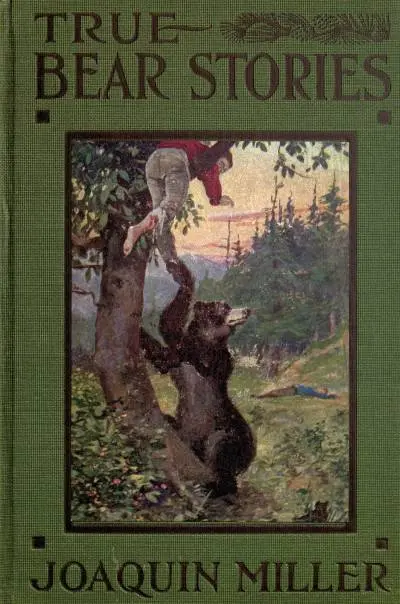
Joaquin Miller
Joaquin Miller
BEHIND THE BOOK
This eBook is for the use of anyone anywhere in the United States and most other parts of the world at no cost and with almost no restrictions whatsoever. You may copy it, give it away or re-use it under the terms of the Project Gutenberg License included with this eBook or online at www.gutenberg.org. If you are not located in the United States, you will have to check the laws of the country where you are located before using this eBook. Read the source licence.
The original source file, including credits and licence, is retained by this library. Request an original-format copy at no charge. Please include the book title and Project Gutenberg identifier #24006.
KEEP YOUR CURIOSITY GOING
Cécile Tormay

Moritz Busch
Coulson Kernahan
John L. Ransom

Maurice Baring
Frances Wright