A Little Girl in Old Chicago
Amanda M. Douglas
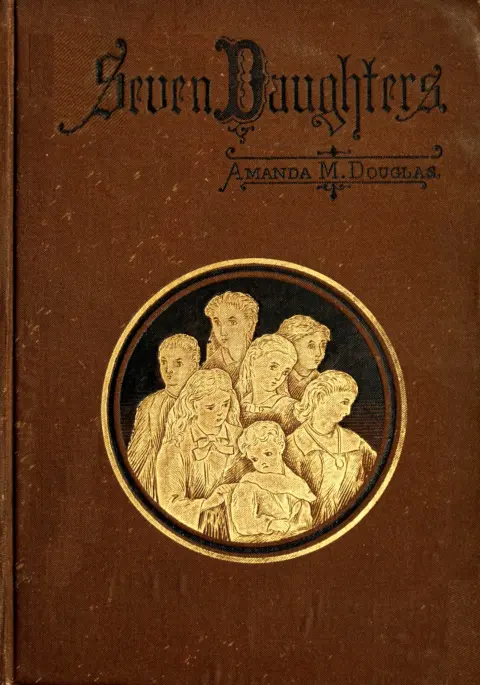
THE CLASSIC COLLECTION · 1874
"Seven Daughters" by Amanda M. Douglas is a novel written in the late 19th century. The story revolves around the lives of seven sisters, highlighting their childhood experiences and the challenges they face within their family as they approach womanhood. The narrative, infused with humor and warmth, touches on themes of family dynamics, gender roles, and the lives of girls in a more traditional society. The opening of the book introduces us to the Endicott family as the birth of a new daughter sets off a flurry of chatter among friends and relatives, revealing the dynamics of the household filled with girls. The protagonist, Rose, grapples with feelings of frustration and curiosity about their situation, particularly regarding the absence of brothers and the expectations of growing up. As the family navigates their daily tasks and interactions, the warmth of familial love is juxtaposed with the pressures of societal expectations, setting the stage for the sisters’ journey through adolescence and beyond. Rose's reflections on their lives, the presence of a newcomer in the family, and the interactions with various characters paint a vivid picture of a family making do in a changing world.
Introduction adapted from the source catalogue; source summaries may be automatically generated.
Free to read · English · 71,643 words · No account needed
MAKE TIME FOR A GOOD BOOK
On by default. Untick to stop anonymous reading totals. Each page counts after 10 seconds in view. How this works.
Anonymous counting is on unless you have switched it off.
“There is nothing to show, so I make no pretence,” he answered, in a dry, hard tone.—“I hate froth, and all that.”
“Yet I suppose the waterfall is much prettier for the spray and bubbles. Frail as they are, they reflect many beautiful tints. And I suppose God could have made apples just as well without such showers of fragrant blooms, and He may put some people in the world for the sake of the blossom and the sweetness rather than the fruit.”
“What an idea! I should think you would be educated to consider the
strictly useful.”
“But all things that God has made have their uses.”
“You keep to the text—that God does it all. It is a woman’s province to believe, I fancy.”
There was a little sneer in that.
“Does unbelief render men so much happier that they love to cling to
it?” I asked.
“Oh, they are dipping into science and philosophy, and see so much more of the world,” he replied, loftily.
I turned to the window—and was silent.
“There!” he exclaimed, “I have vexed you.”
“No.” I returned, “I am not vexed. I only wish I knew the right words to say to you; mamma might.”
“You are all very kind. I wonder that you were so good, when the
beginning was so unpromising. You must have thought us a couple of
brutes.”
“Stuart apologized handsomely to papa.”
“O, I dare say. He is up to that sort of dodge;” and a smile of scorn
curled his thin lip.
“I wish you loved your brothers better,” I could not forbear saying.
“It is their loss, no doubt.”
What could I do with him in such a mood? “Preaching,” as Fan called it, was useless. Then I bethought myself of Miss Churchill’s call, and told him what she had brought for him.
“And now,” I said, “it is time you had your supper. You must be nearly
starved.”
With that I ran down stairs. Yes, I did like bright, pleasant people. Mamma’s cheery ways and papa’s sweetness were worth more than doses of science and philosophy, since we have to live in a work-day world, and cannot soar up to the clouds. It is just the every-day being that is life, not the grand dreams that never come to pass.
I prepared the tray and took it, standing it on a table at the bed’s side. When I returned the little group were in their accustomed places, with papa ready to ask the blessing. I slipped quietly into the circle.
When I went to bring the dishes down I remarked a peculiar expression
upon Louis’ face.
Your reading position is saved on this browser. Take it to another device with a library code. Reading pages adapt to text, rather than matching a printed edition.
Amanda M. Douglas
Amanda M. Douglas
Amanda M. Douglas
Amanda M. Douglas
BEHIND THE BOOK
This eBook is for the use of anyone anywhere in the United States and most other parts of the world at no cost and with almost no restrictions whatsoever. You may copy it, give it away or re-use it under the terms of the Project Gutenberg License included with this eBook or online at www.gutenberg.org. If you are not located in the United States, you will have to check the laws of the country where you are located before using this eBook. Read the source licence.
The original source file, including credits and licence, is retained by this library. Request an original-format copy at no charge. Please include the book title and Project Gutenberg identifier #71729.
KEEP YOUR CURIOSITY GOING
Coulson Kernahan

Maurice Baring
Frances Wright
Cécile Tormay

Frederic Jesup Stimson

W. H. P. (William Henry Pope) Jarvis