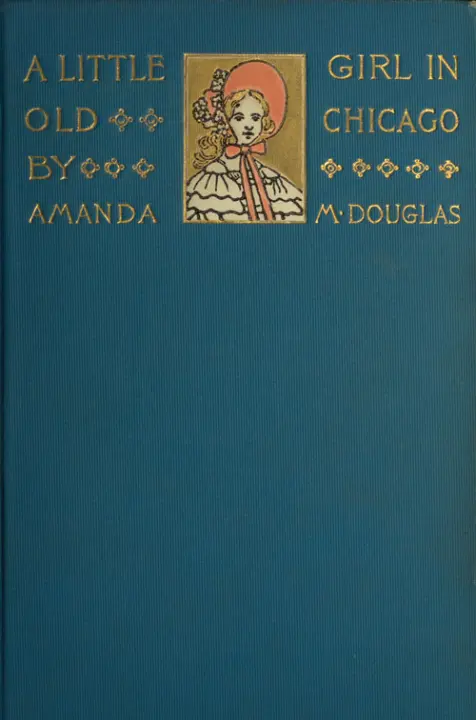
A Little Girl in Old Chicago
Amanda M. Douglas
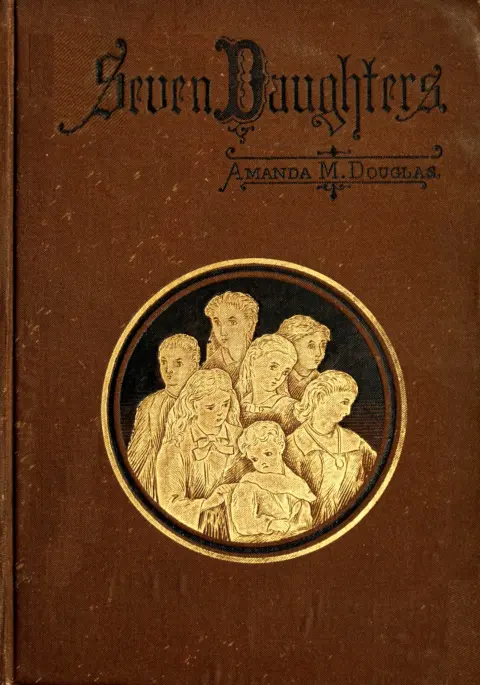
THE CLASSIC COLLECTION · 1874
"Seven Daughters" by Amanda M. Douglas is a novel written in the late 19th century. The story revolves around the lives of seven sisters, highlighting their childhood experiences and the challenges they face within their family as they approach womanhood. The narrative, infused with humor and warmth, touches on themes of family dynamics, gender roles, and the lives of girls in a more traditional society. The opening of the book introduces us to the Endicott family as the birth of a new daughter sets off a flurry of chatter among friends and relatives, revealing the dynamics of the household filled with girls. The protagonist, Rose, grapples with feelings of frustration and curiosity about their situation, particularly regarding the absence of brothers and the expectations of growing up. As the family navigates their daily tasks and interactions, the warmth of familial love is juxtaposed with the pressures of societal expectations, setting the stage for the sisters’ journey through adolescence and beyond. Rose's reflections on their lives, the presence of a newcomer in the family, and the interactions with various characters paint a vivid picture of a family making do in a changing world.
Introduction adapted from the source catalogue; source summaries may be automatically generated.
Free to read · English · 71,643 words · No account needed
MAKE TIME FOR A GOOD BOOK
On by default. Untick to stop anonymous reading totals. Each page counts after 10 seconds in view. How this works.
Anonymous counting is on unless you have switched it off.
“I know what she would be excellently fitted for,” replied Miss Churchill, quickly. “And that emboldens me to offer my plea, or, rather, my sister’s. But how thoughtless I am! Mrs. Endicott, I did not hear of your added burden and anxiety until a few days ago. I am sincerely sorry that you should have had so much trouble outside of your own family, as the serious illness of this young Duncan.”
“Yes, it has been rather unfortunate; but we are through the worst, I hope. Mr. Endicott is guardian for these boys.”
“He is extremely kind and conscientious, I am sure. But I can hardly understand how you manage, with all the rest of your work. There comes Kenton and the carriage, and I feel as if I had not made half a call.”
“I am sure you need not hurry,” exclaimed mamma, who had warmed wonderfully towards our visitor. “And you had something to ask—for your sister.”
“O, I am positively ashamed to. I ought to help instead of hindering.”
“Ask it, nevertheless,” said mamma.
“I told Lucy that I was going to call here; and, as I said, she was feeling quite dispirited and lonesome. ‘Give them all my kindest regards,’ she said, ‘and ask Mrs. Endicott if she cannot spare one of the girls to spend the day with me. I’d like to have the one who talks a good deal.’ Is it a compliment to you, Miss Fanny?”
Fan blushed scarlet.
“I was thinking, a few moments ago, that you, with your bright spirits, would be invaluable to invalids. But I suppose you can hardly spare her out of your sick room.” And she glanced at mamma.
“O, Miss Churchill, you rate me too highly,” returned Fanny. “Rose is a charming and sensible nurse. I never try nursing.”
“Mrs. Whitcomb has been staying with us, and our sick room has had to be kept very quiet,” said mamma. “Fanny would do better where society is needed.”
“And that is just Lucy’s case. Now, Miss Fanny, if your mamma can spare you, I will sew on your dress, or do anything to help make up the time.”
“If it would really be any pleasure, I can readily consent to her
going,” mamma responded.
“It would, indeed. I do not think I realized how busy you all must be, or I should not have had the courage to prefer my request. And I hope you will not consider that I have taken a liberty in bringing a few articles for your patient.”
With that she rose, and went down the path to her brother, who handed a
snowy basket out to her.
Your reading position is saved on this browser. Take it to another device with a library code. Reading pages adapt to text, rather than matching a printed edition.
Amanda M. Douglas
Amanda M. Douglas
Amanda M. Douglas
Amanda M. Douglas
BEHIND THE BOOK
This eBook is for the use of anyone anywhere in the United States and most other parts of the world at no cost and with almost no restrictions whatsoever. You may copy it, give it away or re-use it under the terms of the Project Gutenberg License included with this eBook or online at www.gutenberg.org. If you are not located in the United States, you will have to check the laws of the country where you are located before using this eBook. Read the source licence.
The original source file, including credits and licence, is retained by this library. Request an original-format copy at no charge. Please include the book title and Project Gutenberg identifier #71729.
KEEP YOUR CURIOSITY GOING
Coulson Kernahan

Maurice Baring
Frances Wright
Cécile Tormay

Frederic Jesup Stimson

W. H. P. (William Henry Pope) Jarvis