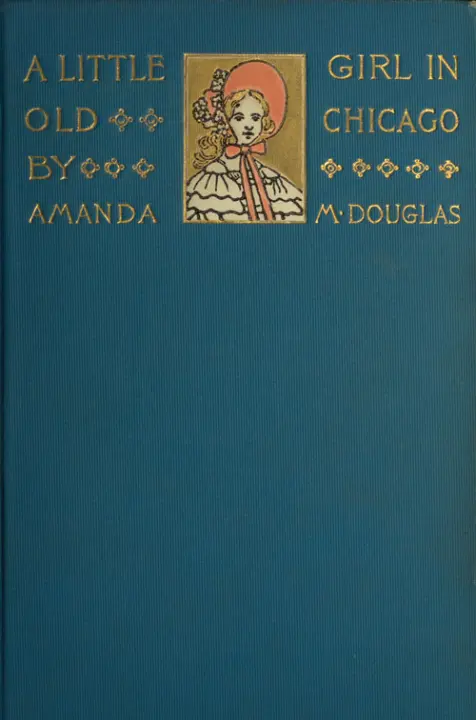
A Little Girl in Old Chicago
Amanda M. Douglas
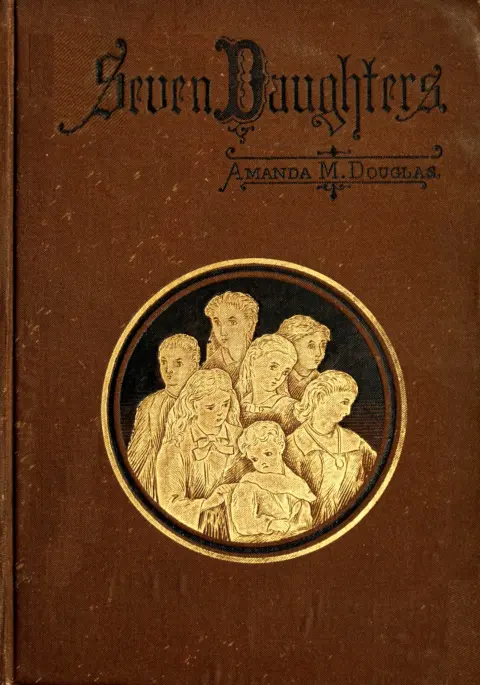
THE CLASSIC COLLECTION · 1874
"Seven Daughters" by Amanda M. Douglas is a novel written in the late 19th century. The story revolves around the lives of seven sisters, highlighting their childhood experiences and the challenges they face within their family as they approach womanhood. The narrative, infused with humor and warmth, touches on themes of family dynamics, gender roles, and the lives of girls in a more traditional society. The opening of the book introduces us to the Endicott family as the birth of a new daughter sets off a flurry of chatter among friends and relatives, revealing the dynamics of the household filled with girls. The protagonist, Rose, grapples with feelings of frustration and curiosity about their situation, particularly regarding the absence of brothers and the expectations of growing up. As the family navigates their daily tasks and interactions, the warmth of familial love is juxtaposed with the pressures of societal expectations, setting the stage for the sisters’ journey through adolescence and beyond. Rose's reflections on their lives, the presence of a newcomer in the family, and the interactions with various characters paint a vivid picture of a family making do in a changing world.
Introduction adapted from the source catalogue; source summaries may be automatically generated.
Free to read · English · 71,643 words · No account needed
MAKE TIME FOR A GOOD BOOK
On by default. Untick to stop anonymous reading totals. Each page counts after 10 seconds in view. How this works.
Anonymous counting is on unless you have switched it off.
Mamma favored the new dress. Fan went down to the store that afternoon and bought it, and Dick Fairlie insisted upon driving her home in the phaeton, telling her again and again how glad he was that she would go to the picnic.
“Why, there would be no lack of girls, Dick,” she said, gayly.
“But they are not like you.”
“And Wachusett would be very stupid and monotonous if all its girls were alike, or all its mountains.”
“But I can talk to you; and some of them I can not get on with at all. I don’t like smart women.”
“O, Dick! I always supposed you liked me on account of my smartness. If I had one virtue above another, I thought it was that.”
Dick blushed to the roots of his hair.
“I did not mean just that, Miss Fanny,” he stammered. “But some of the academy girls have a way of laughing if you are not on your best behavior every moment. And I am a plain, old-fashioned fellow. I like Scotch ballads ever so much better than opera music, that I can’t understand a word of; but I do believe Kate would think it a disgrace to sing in anything but Italian. And woods and trees, and rambles through them, and talks with friends, seem like ballad-singing to me.”
“Now, Dick, that is a nice, pretty idea. You see you do have thoughts quite like other people. And the ballad-singing is delightful. I like it myself.”
“I wish you would keep on down to the pines,” said, Dick wistfully. “It is just a pleasant drive. I have to go for Kate at six; and here I have an hour on my hands.”
“I cannot to-day, though I’m much obliged, Dick,” with a pause and a
questioning glance.
“Well.”
“I would like to ask a favor.”
“Anything. I’d be glad to do it for you.”
“Jennie Ryder is just getting over her fever, you know. I was down there yesterday, and she was wishing I owned a carriage—which I never shall. But if you could, and would, take her out, it would give me as much pleasure as going myself.”
“I will,” returned Dick, with alacrity.
Fan told mamma and me.
“Though I suppose Kate would fancy her phaeton contaminated, if she knew it,” Fan added, with a laugh. “But Dick is bright enough not to say much about it; and I hope Jennie will have a splendid ride. She is just as nice as anybody, even if she does sew for a living. And I wish Dick would take a good honest liking to her.”
“Fan!” said mamma, gravely.
Your reading position is saved on this browser. Take it to another device with a library code. Reading pages adapt to text, rather than matching a printed edition.
Amanda M. Douglas
Amanda M. Douglas
Amanda M. Douglas
Amanda M. Douglas
BEHIND THE BOOK
This eBook is for the use of anyone anywhere in the United States and most other parts of the world at no cost and with almost no restrictions whatsoever. You may copy it, give it away or re-use it under the terms of the Project Gutenberg License included with this eBook or online at www.gutenberg.org. If you are not located in the United States, you will have to check the laws of the country where you are located before using this eBook. Read the source licence.
The original source file, including credits and licence, is retained by this library. Request an original-format copy at no charge. Please include the book title and Project Gutenberg identifier #71729.
KEEP YOUR CURIOSITY GOING
Coulson Kernahan

Maurice Baring
Frances Wright
Cécile Tormay

Frederic Jesup Stimson

W. H. P. (William Henry Pope) Jarvis