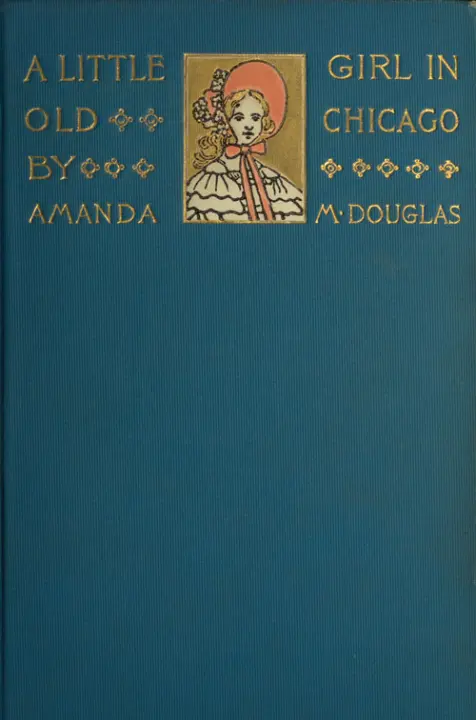
A Little Girl in Old Chicago
Amanda M. Douglas
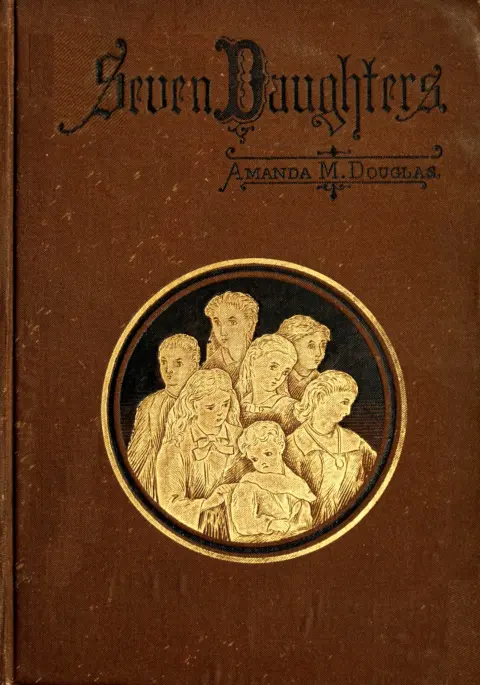
THE CLASSIC COLLECTION · 1874
"Seven Daughters" by Amanda M. Douglas is a novel written in the late 19th century. The story revolves around the lives of seven sisters, highlighting their childhood experiences and the challenges they face within their family as they approach womanhood. The narrative, infused with humor and warmth, touches on themes of family dynamics, gender roles, and the lives of girls in a more traditional society. The opening of the book introduces us to the Endicott family as the birth of a new daughter sets off a flurry of chatter among friends and relatives, revealing the dynamics of the household filled with girls. The protagonist, Rose, grapples with feelings of frustration and curiosity about their situation, particularly regarding the absence of brothers and the expectations of growing up. As the family navigates their daily tasks and interactions, the warmth of familial love is juxtaposed with the pressures of societal expectations, setting the stage for the sisters’ journey through adolescence and beyond. Rose's reflections on their lives, the presence of a newcomer in the family, and the interactions with various characters paint a vivid picture of a family making do in a changing world.
Introduction adapted from the source catalogue; source summaries may be automatically generated.
Free to read · English · 71,643 words · No account needed
MAKE TIME FOR A GOOD BOOK
On by default. Untick to stop anonymous reading totals. Each page counts after 10 seconds in view. How this works.
Anonymous counting is on unless you have switched it off.
They left regrets and kind messages, and swept through the hall in a
complacent fashion.
I ran up stairs and took off my dress in a hurry.
“It wasn’t worth the trouble;” I declared with some disgust. “I really think I could find more intellectual enjoyment in tacking down carpets. I am sure I could in hanging pictures.”
“What a depraved taste! And West Side people, too!”
“I can’t help it, Miss Churchill would have been charming.” Then I repeated Miss Maynard’s offers.
“Very thoughtful of her;” said Fan dryly.—“People in her position can do many nice things if they try. I would not have hung that picture in the parlor if it had not been for papa.”
“Our parlor is our own,” replied I.
“No, it belongs in part to the parish.”
Mrs. Whitcomb laughed at that.
“Oh, won’t this room be lovely,” said Nelly. “Why, I could swing Tabby around in it without hitting the children!”
“Let me catch you swinging Tabby! She has passed through purgatory.”
“And these book-shelves are just the thing. Daisy, they are mine, do you understand? If I find one of your books here I shall put it in the middle of the floor.”
“That will have one merit at least, I can see it there.”
We finished the two rooms by night, and then had callers all the evening. But Sunday without mamma seemed quite out of the order of things. I knew papa felt lost, though we all tried to do our best. Once it came into my mind what the house would be without her forever, and my eyes filled with tears. We sat together an hour after church, talking about her.
We went to work again the first of the week. The carpet had come and was very pretty. A mossy, fine figured vine in two shades of green, with a dash of crimson here and there. The lounge had been covered the year before with green reps and still looked bright.
“How pretty it will be!” I said, “I am all impatience to see it down and the room in order. The carpet comes just like a present, doesn’t it?”
“We have forgotten the work and the worry.”
“Perhaps it was a good thing for us. And somehow I do believe it will prove good for Louis Duncan.”
“When will we go at the study, Mrs. Whitcomb?”
“Not until your father is out of the house.”
A ring at the bell startled us.
“West Side again;” said Mrs. Whitcomb;—“Miss Churchill.”
“O, please come in here;” exclaimed Fanny with a laugh. “It is only a step from—dress-making to carpets.”
Your reading position is saved on this browser. Take it to another device with a library code. Reading pages adapt to text, rather than matching a printed edition.
Amanda M. Douglas
Amanda M. Douglas
Amanda M. Douglas
Amanda M. Douglas
BEHIND THE BOOK
This eBook is for the use of anyone anywhere in the United States and most other parts of the world at no cost and with almost no restrictions whatsoever. You may copy it, give it away or re-use it under the terms of the Project Gutenberg License included with this eBook or online at www.gutenberg.org. If you are not located in the United States, you will have to check the laws of the country where you are located before using this eBook. Read the source licence.
The original source file, including credits and licence, is retained by this library. Request an original-format copy at no charge. Please include the book title and Project Gutenberg identifier #71729.
KEEP YOUR CURIOSITY GOING
Coulson Kernahan

Maurice Baring
Frances Wright
Cécile Tormay

Frederic Jesup Stimson

W. H. P. (William Henry Pope) Jarvis