THE CLASSIC COLLECTION✦Duologues and scenes from the novels of Jane AustenCLASSIC FREE BOOKS
Duologues and scenes from the novels of Jane Austen
Rosina Filippi & Jane Austen
THE CLASSIC COLLECTION · 1811
"Sense and Sensibility" by Jane Austen is a novel published in 1811. When the Dashwood sisters are forced from their family estate into reduced circumstances, they face romantic trials that test their contrasting natures. Sensible Elinor guards her feelings while passionate Marianne wears her heart openly. Both encounter love, disappointment, and betrayal as suitors prove honorable or false. Through heartbreak and revelation, the sisters must navigate society's demands while discovering what truly matters in matters of the heart.
Introduction adapted from the source catalogue; source summaries may be automatically generated.
Free to read · English · 120,508 words · No account needed
MAKE TIME FOR A GOOD BOOK
On by default. Untick to stop anonymous reading totals. Each page counts after 10 seconds in view. How this works.
Anonymous counting is on unless you have switched it off.
This, as every thing else would have been, was too much for Marianne, who could only exclaim, in the anguish of her heart, “Oh! Elinor, I am miserable, indeed,” before her voice was entirely lost in sobs.
Elinor could no longer witness this torrent of unresisted grief in
silence.
“Exert yourself, dear Marianne,” she cried, “if you would not kill yourself and all who love you. Think of your mother; think of her misery while you suffer: for her sake you must exert yourself.”
“I cannot, I cannot,” cried Marianne; “leave me, leave me, if I distress you; leave me, hate me, forget me! but do not torture me so. Oh! how easy for those, who have no sorrow of their own to talk of exertion! Happy, happy Elinor, you cannot have an idea of what I suffer.”
“Do you call me happy, Marianne? Ah! if you knew!—And can you believe me to be so, while I see you so wretched!”
“Forgive me, forgive me,” throwing her arms round her sister’s neck; “I know you feel for me; I know what a heart you have; but yet you are—you must be happy; Edward loves you—what, oh what, can do away such happiness as that?”
“Many, many circumstances,” said Elinor, solemnly.
“No, no, no,” cried Marianne wildly, “he loves you, and only you. You can have no grief.”
“I can have no pleasure while I see you in this state.”
“And you will never see me otherwise. Mine is a misery which nothing
can do away.”
“You must not talk so, Marianne. Have you no comforts? no friends? Is your loss such as leaves no opening for consolation? Much as you suffer now, think of what you would have suffered if the discovery of his character had been delayed to a later period—if your engagement had been carried on for months and months, as it might have been, before he chose to put an end to it. Every additional day of unhappy confidence, on your side, would have made the blow more dreadful.”
“Engagement!” cried Marianne, “there has been no engagement.”
“No engagement!”
“No, he is not so unworthy as you believe him. He has broken no faith
with me.”
“But he told you that he loved you.”
“Yes—no—never absolutely. It was every day implied, but never
professedly declared. Sometimes I thought it had been, but it never
was.”
“Yet you wrote to him?”
“Yes: could that be wrong after all that had passed? But I cannot
talk.”
Your reading position is saved on this browser. Take it to another device with a library code. Reading pages adapt to text, rather than matching a printed edition.
Rosina Filippi & Jane Austen
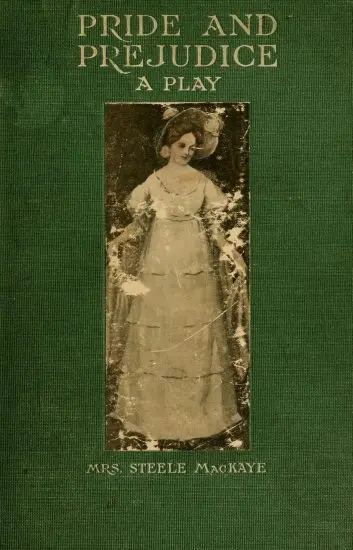
Steele, Mrs. MacKaye & Jane Austen
Jane Austen
Jane Austen
BEHIND THE BOOK
This eBook is for the use of anyone anywhere in the United States and most other parts of the world at no cost and with almost no restrictions whatsoever. You may copy it, give it away or re-use it under the terms of the Project Gutenberg License included with this eBook or online at www.gutenberg.org. If you are not located in the United States, you will have to check the laws of the country where you are located before using this eBook. Read the source licence.
The original source file, including credits and licence, is retained by this library. Request an original-format copy at no charge. Please include the book title and Project Gutenberg identifier #161.
KEEP YOUR CURIOSITY GOING
Coulson Kernahan

Maurice Baring
Frances Wright
Cécile Tormay

Frederic Jesup Stimson

W. H. P. (William Henry Pope) Jarvis