THE CLASSIC COLLECTION✦Duologues and scenes from the novels of Jane AustenCLASSIC FREE BOOKS
Duologues and scenes from the novels of Jane Austen
Rosina Filippi & Jane Austen
THE CLASSIC COLLECTION · 1811
"Sense and Sensibility" by Jane Austen is a novel published in 1811. When the Dashwood sisters are forced from their family estate into reduced circumstances, they face romantic trials that test their contrasting natures. Sensible Elinor guards her feelings while passionate Marianne wears her heart openly. Both encounter love, disappointment, and betrayal as suitors prove honorable or false. Through heartbreak and revelation, the sisters must navigate society's demands while discovering what truly matters in matters of the heart.
Introduction adapted from the source catalogue; source summaries may be automatically generated.
Free to read · English · 120,508 words · No account needed
MAKE TIME FOR A GOOD BOOK
On by default. Untick to stop anonymous reading totals. Each page counts after 10 seconds in view. How this works.
Anonymous counting is on unless you have switched it off.
Elinor’s thoughts were full of what might be passing in Berkeley Street during their absence; but a moment’s glance at her sister when they returned was enough to inform her, that Willoughby had paid no second visit there. A note was just then brought in, and laid on the table.
“For me!” cried Marianne, stepping hastily forward.
“No, ma’am, for my mistress.”
But Marianne, not convinced, took it instantly up.
“It is indeed for Mrs. Jennings; how provoking!”
“You are expecting a letter, then?” said Elinor, unable to be longer
silent.
“Yes, a little—not much.”
After a short pause. “You have no confidence in me, Marianne.”
“Nay, Elinor, this reproach from you—you who have confidence in no
one!”
“Me!” returned Elinor in some confusion; “indeed, Marianne, I have
nothing to tell.”
“Nor I,” answered Marianne with energy, “our situations then are alike. We have neither of us any thing to tell; you, because you do not communicate, and I, because I conceal nothing.”
Elinor, distressed by this charge of reserve in herself, which she was not at liberty to do away, knew not how, under such circumstances, to press for greater openness in Marianne.
Mrs. Jennings soon appeared, and the note being given her, she read it aloud. It was from Lady Middleton, announcing their arrival in Conduit Street the night before, and requesting the company of her mother and cousins the following evening. Business on Sir John’s part, and a violent cold on her own, prevented their calling in Berkeley Street. The invitation was accepted; but when the hour of appointment drew near, necessary as it was in common civility to Mrs. Jennings, that they should both attend her on such a visit, Elinor had some difficulty in persuading her sister to go, for still she had seen nothing of Willoughby; and therefore was not more indisposed for amusement abroad, than unwilling to run the risk of his calling again in her absence.
Elinor found, when the evening was over, that disposition is not materially altered by a change of abode, for although scarcely settled in town, Sir John had contrived to collect around him, nearly twenty young people, and to amuse them with a ball. This was an affair, however, of which Lady Middleton did not approve. In the country, an unpremeditated dance was very allowable; but in London, where the reputation of elegance was more important and less easily attained, it was risking too much for the gratification of a few girls, to have it known that Lady Middleton had given a small dance of eight or nine couple, with two violins, and a mere side-board collation.
Your reading position is saved on this browser. Take it to another device with a library code. Reading pages adapt to text, rather than matching a printed edition.
Rosina Filippi & Jane Austen
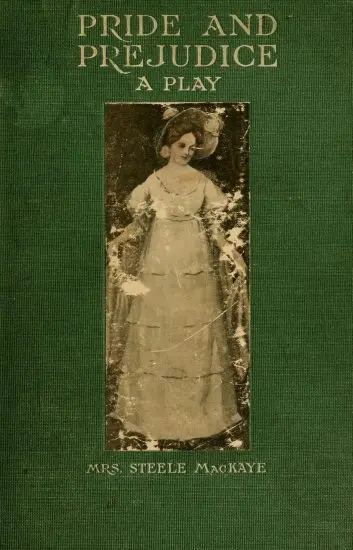
Steele, Mrs. MacKaye & Jane Austen
Jane Austen
Jane Austen
BEHIND THE BOOK
This eBook is for the use of anyone anywhere in the United States and most other parts of the world at no cost and with almost no restrictions whatsoever. You may copy it, give it away or re-use it under the terms of the Project Gutenberg License included with this eBook or online at www.gutenberg.org. If you are not located in the United States, you will have to check the laws of the country where you are located before using this eBook. Read the source licence.
The original source file, including credits and licence, is retained by this library. Request an original-format copy at no charge. Please include the book title and Project Gutenberg identifier #161.
KEEP YOUR CURIOSITY GOING
Coulson Kernahan

Maurice Baring
Frances Wright
Cécile Tormay

Frederic Jesup Stimson

W. H. P. (William Henry Pope) Jarvis