THE CLASSIC COLLECTION✦Hearts and the highwayCLASSIC FREE BOOKS
Hearts and the highway
Cyrus Townsend Brady
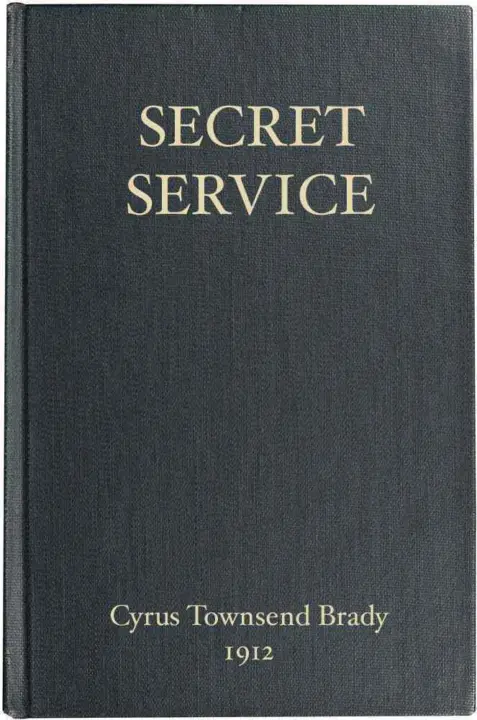
THE CLASSIC COLLECTION · 1912
"Secret Service" by Cyrus Townsend Brady and William Gillette is a historical novel written in the early 20th century. Set in the tumultuous spring of 1865 during the American Civil War, the narrative revolves around themes of loyalty, bravery, and treachery amidst the chaos of battle. The story primarily follows young Wilfred Varney, who is eager to enlist and fight for the Confederacy, dealing with the emotional turmoil of his family as they face significant challenges related to the war. At the start of the narrative, the scene is vividly set in a house in Richmond, where the sounds of distant cannon fire echo, creating a backdrop of tension and foreboding. Wounded soldiers are being cared for amidst the mourning of families who have lost loved ones in battle. Young Wilfred, frustrated by the war's impact on his family, resolves to join the army regardless of the risks involved. Confrontations between him and his mother reveal the emotional weight of their decisions, while the introduction of several key characters, such as the ailing Howard and Captain Thorne, establish a complex network of relationships that will evolve as the storyline unfolds. As the opening progresses, there are hints of espionage and betrayal, suggesting an intricate plot that intertwines personal and larger military conflicts.
Introduction adapted from the source catalogue; source summaries may be automatically generated.
Free to read · English · 61,071 words · No account needed
MAKE TIME FOR A GOOD BOOK
On by default. Untick to stop anonymous reading totals. Each page counts after 10 seconds in view. How this works.
Anonymous counting is on unless you have switched it off.
“No, ma’am.”
“Oh!”
“It’s another offisuh, ma’am. He says he’s fum de President an’ he’s got to see Miss Edith pussonally.”
Jonas extended a card which, as he spoke, Edith took and glanced at
indifferently.
“Lieutenant Maxwell,” she read.
“Ask the gentleman in, Jonas,” said Mrs. Varney.
“It’s come,” whispered Edith to her mother.
“Do you know who he is?”
“No—but he’s from the President—it must be that commission.”
At this moment old Jonas ushered into the drawing-room a very dashing young officer, handsome in face, gallant in bearing, and dressed in a showy and perfectly fitting uniform, which was quite a contrast to the worn habiliments of the men at the front. Mrs. Varney stepped forward a little, and Lieutenant Maxwell bowed low before her.
“Good-evening, ma’am. Have I the honour of addressing Miss Varney?”
“I am Mrs. Varney, sir.”
“Madam,” said the Lieutenant, “I am very much afraid this looks like an intrusion on my part, but I come from the President, and he desires me to see Miss Varney personally.”
“Any one from the President could not be otherwise than welcome, sir. This is my daughter. Edith, let me present Lieutenant Maxwell.”
The young Lieutenant, greatly impressed, bowed profoundly before her, and taking a large brown envelope from his belt, handed it to her.
“Miss Varney,” he said, “the President directed me to deliver this into your hands, with his compliments. He is glad to be able to do this, he says, not only at your request, but because of your father and for the merits of the gentleman in question.”
“Oh, thank you,” cried the girl, taking the envelope.
“Won’t you be seated, Lieutenant Maxwell?” said Mrs. Varney.
“Yes, do,” urged the girl, holding the envelope pressed very tightly to
her side.
“Nothing would please me so much, ladies,” answered the Lieutenant, “but I must go back to the President’s house right away. I’m on duty this evening. Would you mind writing me off a line or two, Miss Varney, just to say you have received the communication?”
“Why, certainly, you want a receipt. I’ll go upstairs to my desk; it won’t take a moment. And could I put in how much I thank him for his kindness?”
“I am sure he would be more than, pleased,” smiled Lieutenant Maxwell, as Edith left the room and hastened up the stairs.
“We haven’t heard so much cannonading to-day, Lieutenant,” said Mrs. Varney. “Do you know what it means?”
“I don’t think they are quite positive, ma’am, but they can’t help looking for a violent attack to follow.”
Your reading position is saved on this browser. Take it to another device with a library code. Reading pages adapt to text, rather than matching a printed edition.
Cyrus Townsend Brady
William Gillette
Cyrus Townsend Brady
Cyrus Townsend Brady
BEHIND THE BOOK
This eBook is for the use of anyone anywhere in the United States and most other parts of the world at no cost and with almost no restrictions whatsoever. You may copy it, give it away or re-use it under the terms of the Project Gutenberg License included with this eBook or online at www.gutenberg.org. If you are not located in the United States, you will have to check the laws of the country where you are located before using this eBook. Read the source licence.
The original source file, including credits and licence, is retained by this library. Request an original-format copy at no charge. Please include the book title and Project Gutenberg identifier #44659.
KEEP YOUR CURIOSITY GOING
Cécile Tormay

Moritz Busch
Coulson Kernahan
John L. Ransom

Maurice Baring
Frances Wright