THE CLASSIC COLLECTION✦Hearts and the highwayCLASSIC FREE BOOKS
Hearts and the highway
Cyrus Townsend Brady

THE CLASSIC COLLECTION · 1912
"Secret Service" by Cyrus Townsend Brady and William Gillette is a historical novel written in the early 20th century. Set in the tumultuous spring of 1865 during the American Civil War, the narrative revolves around themes of loyalty, bravery, and treachery amidst the chaos of battle. The story primarily follows young Wilfred Varney, who is eager to enlist and fight for the Confederacy, dealing with the emotional turmoil of his family as they face significant challenges related to the war. At the start of the narrative, the scene is vividly set in a house in Richmond, where the sounds of distant cannon fire echo, creating a backdrop of tension and foreboding. Wounded soldiers are being cared for amidst the mourning of families who have lost loved ones in battle. Young Wilfred, frustrated by the war's impact on his family, resolves to join the army regardless of the risks involved. Confrontations between him and his mother reveal the emotional weight of their decisions, while the introduction of several key characters, such as the ailing Howard and Captain Thorne, establish a complex network of relationships that will evolve as the storyline unfolds. As the opening progresses, there are hints of espionage and betrayal, suggesting an intricate plot that intertwines personal and larger military conflicts.
Introduction adapted from the source catalogue; source summaries may be automatically generated.
Free to read · English · 61,071 words · No account needed
MAKE TIME FOR A GOOD BOOK
On by default. Untick to stop anonymous reading totals. Each page counts after 10 seconds in view. How this works.
Anonymous counting is on unless you have switched it off.
Captain Thorne was almost too dazed to realise the purport of the decree. He mechanically saluted, and from his lips broke a murmured,
“Thank you, sir.”
The General looked at him severely, and then, seeing Edith Varney, turned away and engaged in conversation with his staff. His intention was obvious, and Edith immediately embraced the opportunity.
“Oh!” she said; “that isn’t nearly so bad as death,” and before them all she stretched out her hand to him.
“No?” queried Thorne in a low voice.
“No,” she said, forcing herself to look at him. “After a while perhaps—some time——”
“Oh!” said Thorne. “Some time? If it’s some time, that’s enough.”
Mrs. Varney, having succeeded in getting Howard quiet and composed, had been in the room since the advent of General Randolph.
“Mamma,” said Edith, “won’t you speak to him, too?”
Mrs. Varney approached him, but Wilfred was quicker.
“I would like to shake hands with you,” he said, with boyish enthusiasm.
“What, again?” said Thorne, smiling. “All right.” He stretched out his hand. “Go ahead.”
“And so would I,” said Caroline, following the lead of her boy lover.
“Don’t be afraid now,” said Wilfred. “Everything will be all right. They will give you a parole, and——”
“A parole!” said Caroline. “Goodness gracious, they will give you hundreds of them, I am sure.”
But General Randolph turned once more.
“One moment, please,” said the officer. As he came forward, the others fell back. Only Edith Varney kept her place close by Thorne’s side. “There is only one reason on earth why the President has set aside a certain verdict of death. You held up that false order and made a turn in our favor. You are not to be tried as a spy, but held as a prisoner of war. We expect you to make that turn complete and enter our service.”
“Never,” replied Thorne instantly. “That’s impossible, sir.”
“You can give us your answer later,” said the General.
“You have it now.”
“You will be kept in close confinement until you come to our terms,” continued the older officer.
“You make me a prisoner for life, then.”
“You will see it in another light before many days, and it wouldn’t surprise me if Miss Varney had something to do with a change in your views.”
“You are mistaken, General Randolph,” quickly interposed Edith. “I think he is perfectly right.”
“Oh, very well,” said the General, smiling a little. “We will see what a little prison life will do. Sergeant?”
“Yes, sir.”
Your reading position is saved on this browser. Take it to another device with a library code. Reading pages adapt to text, rather than matching a printed edition.
Cyrus Townsend Brady
William Gillette
Cyrus Townsend Brady
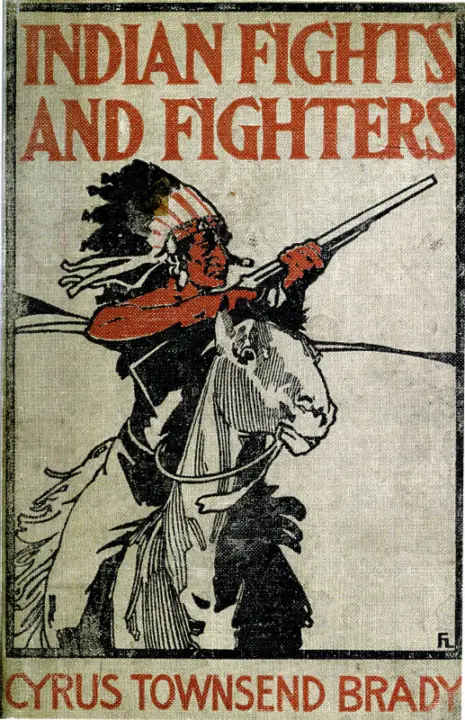
Cyrus Townsend Brady
BEHIND THE BOOK
This eBook is for the use of anyone anywhere in the United States and most other parts of the world at no cost and with almost no restrictions whatsoever. You may copy it, give it away or re-use it under the terms of the Project Gutenberg License included with this eBook or online at www.gutenberg.org. If you are not located in the United States, you will have to check the laws of the country where you are located before using this eBook. Read the source licence.
The original source file, including credits and licence, is retained by this library. Request an original-format copy at no charge. Please include the book title and Project Gutenberg identifier #44659.
KEEP YOUR CURIOSITY GOING
Cécile Tormay

Moritz Busch
Coulson Kernahan
John L. Ransom

Maurice Baring
Frances Wright