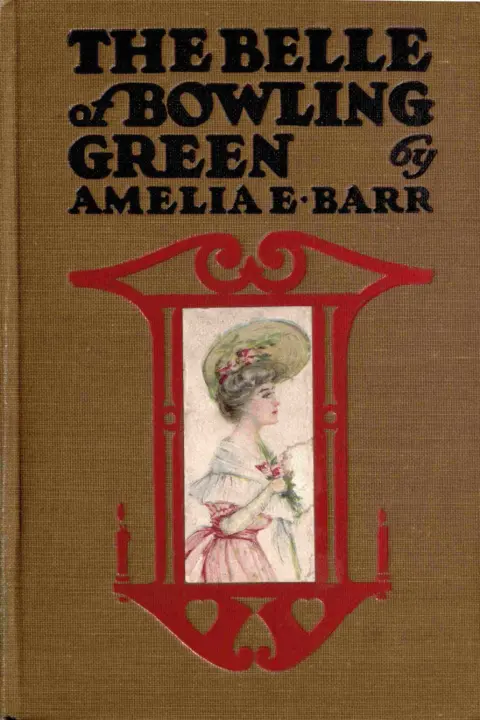
The Belle of Bowling Green
Amelia E. Barr
THE CLASSIC COLLECTION · 1883
"Scottish Sketches" by Amelia E. Barr is a collection of short stories likely written in the late 19th century. The narrative is set in Scotland, focusing on the lives and struggles of various characters connected to the Crawford family, particularly the laird Alexander Crawford and his son, Colin, as they navigate personal and social challenges amidst the backdrop of Scottish culture and identity. The opening portion introduces Alexander Crawford, who is reflecting on his wealth and the legacy of his family while preparing for the return of his son, Colin, from Glasgow. As the story unfolds, we see Crawford's pride in his estate and his fervent nationalism, as well as his concerns about Colin's potential association with an English visitor. This sets the stage for a generational conflict and themes of duty versus personal desire, as Colin harbors aspirations and ideals that may clash with his father's expectations. The opening establishes both the tension within the family and the societal changes encroaching upon their traditional way of life, hinting at deeper explorations of character dynamics and cultural identity throughout the collection.
Introduction adapted from the source catalogue; source summaries may be automatically generated.
Free to read · English · 62,885 words · No account needed
MAKE TIME FOR A GOOD BOOK
On by default. Untick to stop anonymous reading totals. Each page counts after 10 seconds in view. How this works.
Anonymous counting is on unless you have switched it off.
"You see, Davie," he urged in apology, "he's mair at hame like wi'
me."
And then he drew the child to him, and let his whole heart go out now, without check or reproach, to "Davie's bairn."
"But you have not finished your story, Mr. Cargill," said John, and
David sighed as he answered,
"There is naething by the ordinar in it. I went back to the warks I had got a footing in, the Glencart Iron Warks, and gradually won my way to the topmost rungs o' the ladder. I am head buyer now, hae a gude share i' the concern, and i' money matters there's plenty folk waur off than David Cargill. When I put my father's forgiveness, my mither's love, and my Bessie's bonnie lad to the lave, I may weel say that 'they are weel guided that God guides.' A week ago I went into the editor's room o' the Glasgow Herald,' and the man no being in I lifted a paper and saw in it my father's message to me. It's sma' credit that I left a' and answered it."
"What paper, Mr. Cargill, what paper?"
"They ca' it 'The Watchman.' I hae it in my pocket."
"I thought so," said John triumphantly. "It's a grand paper; every one
ought to have it."
"It is welcome evermore in my house," said Davie.
"It means weel, it means weel," said Andrew, with a great stretch of charity, "but I dinna approve o' its doctrines at a', and--"
"It found David for you, Andrew."
"Ay, ay, God uses a' kinds o' instruments. 'The Watchman' isna as auld as the Bible yet, John, and it's ill praising green barley."
"Now, Andrew, I think--"
"Tut, tut, John, I'se no sit i' Rome and strive wi' the pope; there's naething ill said, you ken, if it's no ill taken."
John smiled tolerantly, and indeed there was no longer time for further discussion, for the shepherds from the hills and the farmers from the glen had heard of David's return, and were hurrying to Cargill to see him. Mysie saw that there would be a goodly company, and the long harvest-table was brought in and a feast of thanksgiving spread. Conversation in that house could only set one way, and after all had eaten and David had told his story again, one old man after another spoke of the dangers they had encountered and the spiritual foes they had conquered.
Whether it was the speaking, or the sympathy of numbers, or some special influence of the Holy Ghost, I know not; but suddenly Andrew lifted his noble old head and spoke thus:
Your reading position is saved on this browser. Take it to another device with a library code. Reading pages adapt to text, rather than matching a printed edition.
Amelia E. Barr
Amelia E. Barr
Amelia E. Barr
Amelia E. Barr
BEHIND THE BOOK
This eBook is for the use of anyone anywhere in the United States and most other parts of the world at no cost and with almost no restrictions whatsoever. You may copy it, give it away or re-use it under the terms of the Project Gutenberg License included with this eBook or online at www.gutenberg.org. If you are not located in the United States, you will have to check the laws of the country where you are located before using this eBook. Read the source licence.
The original source file, including credits and licence, is retained by this library. Request an original-format copy at no charge. Please include the book title and Project Gutenberg identifier #14494.
KEEP YOUR CURIOSITY GOING
Coulson Kernahan

Maurice Baring
Frances Wright
Cécile Tormay

Frederic Jesup Stimson

W. H. P. (William Henry Pope) Jarvis