THE CLASSIC COLLECTION✦My diaries, being a personal narrative of events 1888-1914, Part 2 (1900-1914)CLASSIC FREE BOOKS
My diaries, being a personal narrative of events 1888-1914, Part 2 (1900-1914)
Wilfrid Scawen Blunt
THE CLASSIC COLLECTION · 1899
"Satan Absolved: A Victorian Mystery" by Wilfrid Scawen Blunt is a poetic drama written during the late 19th century. This unique work explores deep philosophical and theological questions through a narrative centered on Satan, who seeks reconciliation with God after a long history of rebellion. The book serves as a dramatic reflection on the nature of good and evil, humanity's place in the universe, and the irony of divine justice. In the story, Satan appears in the antechamber of Heaven, expressing a desire to make peace with God and address the perceived flaws in His creation of humanity. As he engages in a profound dialogue with God, Satan unveils the consequences of human actions, highlighting the devastation brought about by mankind's greed and cruelty over time. The themes of arrogance, redemption, and the struggle between light and darkness permeate the text, culminating in a poignant exploration of the moral implications of God's choices and human behavior. The narrative ultimately challenges readers to reconsider traditional notions of good and evil, making it a thought-provoking piece of Victorian literature.
Introduction adapted from the source catalogue; source summaries may be automatically generated.
Free to read · English · 11,970 words · No account needed
MAKE TIME FOR A GOOD BOOK
On by default. Untick to stop anonymous reading totals. Each page counts after 10 seconds in view. How this works.
Anonymous counting is on unless you have switched it off.
Satan, once more beware.
Thy tongue hath a wide license, yet it runneth far.
This Anglo-Saxon man hath a fair name with some.
He standeth in brave repute, a priest of Christendom,
First in civility, so say the Angel host
Who speak of him with awe as one that merits most.
The Angels fear him, Lord.
How fear?
They fear his tongue, Unscrupulous to speak, the right he hath in wrong, The wrong he hath in right. They doubt he hath Thine ear, Lord of the Universe. They are excused of fear. They see his long success, his victory over good, They count the nations lost which were of kindlier blood But could not stand before him, his great subtlety, His skill in the arts, the crafts. They mark the powers that be In earth, air, water, fire, all banded in his plan And used to the world's hurt as never yet by Man. They look on Thee, Lord God, as one that careth not, On him as Thy supplanter and the iron as hot Which shall reforge the chain by which the Earth is bound. They fear to awaken Thee from Thy long sleep profound. He hath become their God, one impious and profane, But strong and unreproved, ascendant on Thy wane. They kneel to the new comer as all courtiers use Who fear a change of king. Their news is an ill news, Nay, Lord, 'tis but a lie. I know it well, their story. 'Tis but the man's own boast, his mouthings of vain glory Repeated day by day with long reiterate stress, Till the world half believes in sheer ear-weariness, And they, who think to please, retail it as their own. What say they of him, Lord? That he hath one God alone, Is not as the lewd nations, keepeth Thy Sabbath holy, Nor Thy name vainly taketh in the ways of folly, Hath a wise polity--his Church and State close blent, A lordly bench of bishops, peers of Parliament, A Convocation House which yearly witnesseth A king by grace of God, Defender of the Faith, Thy ten commandments set in all his Courts of Law. They show his fanes restored by highway, hedge and shaw, His missions to the Jews, his Church societies, The zeal of his free sects, each than the rest more wise, The wealth of his chief priests, his weekly public prayer, Things proving him devout more than the nations are. They cite his worldly worth, his virtue these beyond, His high repute in trade, his word held as his bond, The valour of his dealings, his long boast of truth, The prudent continence of his unwedded youth, Uxorious faith in marriage, husband of one wife, Nor taking her next sister to his widowed life. These tales they hear and bring, some true, some false, but all Of the common Saxon brag for first original. So too of his world-science, social schemes, reforms, His school-boards, gaols new systemed, signalling of storms, Posts, railways, Homes for orphans, Charities organised, His Mansion House funds floated, alms economised, His hospitals, museums, baths, parks, workhouses, And that last glorious marvel, his free Daily Press. A wonderful Saxon truly, each day interviewed By his own wondering self and found exceeding good. All this and more they cite. That he hath virtues, well, Let it be granted him. Those pay who most would sell, And more who most would buy. Alms to his credit stand In his account with time, and add strength to his hand, Serving his best advantage in the enlarged domain Of his Man's selfishness, which works for the World's bane More surely than his vices. He hath outlived the day Of the old single graspings, where each went his way Alone to plunder all. He hath learned to curb his lusts Somewhat, to smooth his brawls, to guide his passionate gusts His cry of "mine, mine, mine" in inarticulate wrath. He dareth not make raid on goods his next friend hath With open violence, nor loose his hand to steal, Save in community and for the common weal 'Twixt Saxon man and man. He is more congruous grown, Holding a subtler plan to make the world his own By organised self-seeking in the paths of power. He is new drilled to wait. He knoweth his appointed hour And his appointed prey. Of all he maketh tool, Even of his own sad virtues, to cajole and rule, Even of Thee, Lord God.--I will expound this thing, The creed of these white thieves which boast of Thee, their king, As partner in their crimes. The head knaves of the horde, Those who inspire the rest and give the masterword, The leaders of their thought, their lords political, Sages, kings, poets, priests, in their hearts one and all-- For all their faith avowed and their lip service done In face of Thy high fires each day beneath the sun-- Ay, and their prelates too, their men of godliest worth, Believe no word of Thee as master of their Earth, Controller of their acts, no word of Thy high right, To bend men to obedience and at need to smite, No word of Thy true law, the enforcement of Thy peace, Thy all-deciding arm in the world's policies. They ignore Thee on the Earth. They grant Thee, as their "God," The kingdom of the heavens, seeing it a realm untrod, Untreadable by man, a space, a res nullius Or No-Man's Land, which they as loyal men and pious Leave and assign to Thee to deal with as Thou wilt, To hold as Thy strong throne or loose as water spilt, For sun and wind to gather in the wastes of air. Whether of a truth Thou art they know not, Lord, nor care; Only they name Thee "God," and pay Thee their prayers vain, As dormant over-lord and pensioned suzerain, The mediatised blind monarch of a world, outgrown Of its faith's swaddling clothes, which wills to walk alone. The Earth not so. 'Tis theirs, the prize of the strong hand, The strongest being their own by sea alike and land. "Thy Will be done," they cry, "Father which art in Heaven," (Where Thou canst harm nor hurt not one day in the seven.) And if they add "on Earth" they deem Thee impotent, Seeing Thee drowse thus long and leave men to their bent. They mean "Thy Will in Heaven," or in their "World to come." "Terram autem dedit filiis hominum." So think their chiefs, their lords. For the blind mass of men, Which live and toil and die heart-hungry in their pen, They have no god but gold, the lord of their distress, And gold's slave, drink, that buys a night's forgetfulness. Of Thee they have no heed to chide them or to cheer, The fear of Thee with these is their law's officer. Lord God, if Thou but saw the pagan hearts they hide, The base greeds of their being, the lusts undenied, The Mammons that they worship! But Thou dost not see, Or Thou hadst purged long since this worst profanity From the World's better way and thereby saved Thy name Profaned in their foul mouths from its long daily shame. Thou dost not hear, nor see. The smoke of their foul dens Broodeth on Thy fair Earth as a black pestilence, Hiding the kind day's eye. No flower, no grass there groweth, Only their engines' dung which the fierce furnace throweth. Their presence poisoneth all and maketh all unclean. Thy streams they have made sewers for their dyes aniline. No fish therein may swim, no frog, no worm may crawl, No snail for grime may build her house within their wall. Thy beasts they have enslaved in blindness underground. The voice of birds that sang to them is a lost sound. Nay, they have tarred Time's features, pock-marked Nature's face, Brought all to the same jakes with their own lack of grace. In all Thy living World there is no sentient thing Polluteth and defileth as this Saxon king, This intellectual lord and sage of the new quest, The only wanton he that fouleth his own nest. And still his boast goeth forth. Nay, Lord, 'tis shame to Thee This slave, being what he is, should ape divinity, The poorest saddest drudge, the least joy-lifted heart In all a World where tears are sold in open mart, That he should stand, Thy choice, to preach Thy law, and set His impress on the Earth in full apostolate, Thy missioner and priest. He goeth among the nations, Saith he, to spread Thy truth, to preach Thy law of patience, To glorify Thy name! Not selfishly, forsooth, But for their own more good, to open them the truth, To teach them happiness, to civilise, to save, To smite down the oppressor and make free the slave. To bear the "White Man's Burden," which he yearns to take On his white Saxon back for his white conscience sake. Huge impudent imposture!--Lord, there were fair lands Once on Thy Earth, brave hills, bright isles, sweet coral strands, Noble savannahs, plains of limitless waving green, Lakes girt with giant forests, continents unseen, Unknown by these white thieves, where men lived in the way Of Thy good natural law with Thy free beasts at play And partners with Thy birds, men who nor toiled nor span, Nor sowed, nor reaped, nor delved for the red curse of Man, The gold that kills the soul, who knew nought of the fire Which in his guns he storeth, naught of the desire More deadly still concealed in his fire drink of death; Who went unclothed, unshamed, for garment a flower wreath; Whose women lived unsold and loved their natural kin, Nor gave aught to the stranger in the wage of sin; Who blessed Thee for their babes and through the woods, like Eve, Wandered in happy laughter, glorying to conceive. Yea, Lord, and there were others,--shut communities Of souls still on Thy path and strange to the new lies, Yet, not as these were, wild, but held in discipline Of orderly commandment, servants true of Thine And doers of Thy law, but ignorant, untaught Save by an inward grace of self-restraining thought And light intuitive. No shedders they of blood, But with all creatures friends, with men in brotherhood, Blameless of wine, of strife. In innocent arts well skilled But schoolless of all guile as an unchristened child. To these with mouthings fine come the white gospellers, Our Saxon mission-men black coated to the ears. "Which be your gods?" ask they; "Do ye adore the Christ? "Know ye the Three in One, or walk ye in the mist?" "Sirs, we have One, not Three. Our poor ancestral wit "Encompasseth no more." "Then be ye damned for it. "This is our Bible, read. In the long after-death "Ye shall be burned with fire. It is God's self that saith." "We do not live again." "In this life, ye shall live "According to our gospel, nor profanely wive "Save with one spouse alone." "Our law hath given us three. "Three Gods to one sole wife were multiplicity." "These pagans are blasphemers! Who is on our side? "See, we have gold to give. We may not be denied." And they baptise them Christians. Cometh the trader next, His bible too in hand, its free-trade for his text. He teacheth them to buy.--"We nothing need." "Yet take. "The want will come anon and keep your wits awake. "Here are the goods we sell, cloth, firelocks, powder, rum, "Ye shall go clothed like lords, like kings of Christendom." "We live best naked." "Fie."--"We have no use for arms. "The fire drink is forbid." "The thing forbid hath charms. "Nay. We will make you men, soldiers to brawl and fight "As all good Christians use, and God defend the right. "The drink will give you courage. Take it. 'Tis the sign "Of manhood orthodox, its sacramental wine, "Or how can you be worthy your new Christian creed? "Drink." And they drink to Jesus and are borne to bed. He teacheth them to sell. "We need coin for our draught. "How shall we bring the price, since ye give naught for naught? "We crave the fire drink now."--"Friends, let not that prevent. "We lend on all your harvests, take our cent. per cent." "Sirs, but the crop is gone."--"There is your land in lots." "The land? It was our fathers'."--"Curse ye for idle sots, "A rascal lazing pack. Have ye no hands to work? "Off to the mines and dig, and see it how ye shirk."-- "As slaves?" "No, not as slaves. Our principles forbid. "Free labourers, if you will. We use that word instead. "The 'dignity of labour' ye shall learn for hire. "No paltering. No excuse. The white man hates a liar, "And hates a grumbling hand. Enough if we provide "Tools with the drink and leave your backs with a whole hide. "These lands are ours by Charter. If you doubt it, bring "Your case before the Courts, which will expound the thing. "As for your women folk. Look, there are ways well known "All women have of living in a Christian town. "Moreover you do ill. One wife the law allows, "And you, you say, have four. Send three round to our house." --Thus is Thy gospel preached. Its issue, Lord, behold In the five Continents, the new world and the old. The happier tribes of Man despoiled, enslaved, betrayed To the sole white Man's lust, husband and wife and maid. Their laughter drowned in tears, their kindness in mad wrath, Their dignity of joy in a foul trance of death, Till at the last they turn and in their anguish rend. Then loud the cry goeth forth, the white man's to each friend: "Help! Christians, to our help! These black fiends murder us." And the last scene is played in death's red charnel house. The Saxon anger flames. His ships in armament Bear slaughter on their wings. The Earth with fire is rent, And the poor souls misused are wiped from the world's face In one huge imprecation from the Saxon race, In one huge burst of prayer and insolent praise to Thee, Lord God, for Thy high help and proved complicity. Nay Lord, 'tis not a lie, the thing I tell Thee thus. Their bishops in their Churches lead, incredulous, The public thanks profane. They sanctify the sword-- "Te Deum laudamus. Give peace in our time, O Lord." Hast Thou not heard their chanting? Nay, Thou dost not hear, Or Thou hadst loosed Thy hand like lightning in the clear To smite their ribald lips with palsy, these false priests, These Lords who boast Thine aid at their high civic feasts, The ignoble shouting crowds, the prophets of their Press, Pouring their daily flood of bald self-righteousness, Their poets who write big of the "White Burden." Trash! The White Man's Burden, Lord, is the burden of his cash. --There. Thou hast heard the truth. Thy world, Lord God of Heaven, Lieth in the hands of thieves who pillage morn and even. And Thou still sleepest on! Nay but Thou needs must hear Or abdicate Thy name of High Justiciar Henceforward and for ever. It o'erwhelmeth Thee With more than temporal shame. Thy silence is a Sea Crying through all the spheres in pain and ceasing not As blood from out the ground to mark crime's murder spot: "There is no hope--no truth. He hath betrayed the trust. "The Lord God is unjust. The Lord God is unjust." (A cry without.) This is their cry in Heaven who give Thee service true. Arise, Lord, and avenge as was Thy wont to do.
Your reading position is saved on this browser. Take it to another device with a library code. Reading pages adapt to text, rather than matching a printed edition.
Wilfrid Scawen Blunt
Wilfrid Scawen Blunt
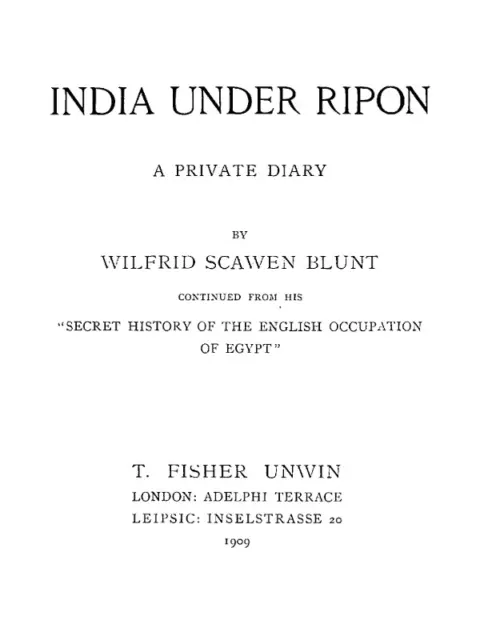
Wilfrid Scawen Blunt

Wilfrid Scawen Blunt
BEHIND THE BOOK
This eBook is for the use of anyone anywhere in the United States and most other parts of the world at no cost and with almost no restrictions whatsoever. You may copy it, give it away or re-use it under the terms of the Project Gutenberg License included with this eBook or online at www.gutenberg.org. If you are not located in the United States, you will have to check the laws of the country where you are located before using this eBook. Read the source licence.
The original source file, including credits and licence, is retained by this library. Request an original-format copy at no charge. Please include the book title and Project Gutenberg identifier #33193.
KEEP YOUR CURIOSITY GOING
Maurice Baring

Eric Mackay
Edmund Gosse
Sophia Margaretta Hensley
Gilbert Parker
George MacDonald