
In the Name of the People
Arthur W. Marchmont
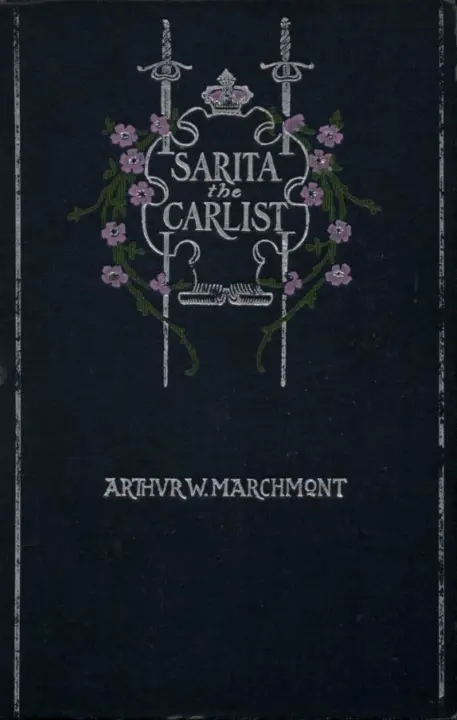
THE CLASSIC COLLECTION · 1902
"Sarita, the Carlist" by Arthur W. Marchmont is a novel written in the early 20th century. The story revolves around Ferdinand Carbonnell, who finds himself embroiled in the complicated political intrigues of Spain as he navigates familial relationships and the dangerous world of the Carlists. The narrative suggests a rich blend of romance, political drama, and personal conflict as Ferdinand encounters his cousin Sarita Castelar and must grapple with unexpected familial obligations and a tumultuous past. The opening of the novel introduces Ferdinand Carbonnell, who faces the repercussions of a woman’s preference as his family plots for a match between him and a wealthy widow. Suddenly thrust into a diplomatic role, he discovers a deeper familial connection to the Quesadas in Madrid and is drawn into a web of political secrecy and familial history, including the troubling legacy of his uncle. Shortly after his arrival, he is mistaken for a Carlist leader and nearly suffers serious consequences due to a case of mistaken identity. It is Sarita Castelar, the stunning cousin he meets, who rescues him from a dire situation, hinting at their shared family ties and the looming political machinations that will entwine their fates. The tension between personal aspiration and political loyalty sets the stage for this engaging tale of love, loyalty, and upheaval.
Introduction adapted from the source catalogue; source summaries may be automatically generated.
Free to read · English · 118,996 words · No account needed
MAKE TIME FOR A GOOD BOOK
On by default. Untick to stop anonymous reading totals. Each page counts after 10 seconds in view. How this works.
Anonymous counting is on unless you have switched it off.
"Do you think I will lose you, Sarita, in the very moment our love has spoken." At the touch of my lips she trembled violently, and with a cry of love, she wound her arms round my neck. As her head found love's shelter on my shoulder, my passion burst all control and found expression in a lava of words, hot, burning, incoherent, tumultuous and vehement, poured forth in the delirious madness of the moment of love's triumph.
We were standing there, still passion-locked, when a most unwelcome interruption came. The door was opened, and Colonel Juan Livenza was shown into the room.
He stopped on the threshold, his face livid with the rage that blazed up in his eyes at what he saw, and struggling for an instant to regain sufficient self-control to trust himself to speak, he said in a voice husky and hoarse with rage:
"Your pardon; my arrival is inopportune;" and with a bow and a look of
deadly hate and menace at me, he went out and closed the door behind
him.
Sarita, who had drawn herself hurriedly from my arms, turned pale and gazed at the shut door, trembling with agitation and distress.
"I have sown passion, and the harvest will be death," she murmured, repeating my words. "Heaven have mercy upon us."
"Or upon him," I answered. "But we need not take it quite so seriously. Come, sweetheart," and I held out my arms to her.
"No, no, no. It can never be, Ferdinand. I was mad," she cried
distractedly.
"It was a very sweet madness, and shall last our lifetime," I answered, but she would not let me place my arm round her again. "As you will," I said, gently. "The knowledge of your love is all in all to me. The rest I can trustfully leave to time."
"You must go, Ferdinand. I forgot that he was coming this afternoon. You have made me forget everything. Oh, I am mad. Now, all may be lost." The words jarred.
"Lost," I cried; and then a sudden divination of her meaning and of Livenza's visit flashed into my mind. "He was coming, of course, for this business of the day after to-morrow--but you will abandon that now, Sarita?"
"How did you know? Is it guess or knowledge?" and her startled eyes and parted lips told of her surprise.
"I was with Quesada this morning," I answered, the words coming in obedience to an impulse that I could neither account for nor resist.
"I am afraid of you, Ferdinand. How do you learn these things? How
much do you know?"
Your reading position is saved on this browser. Take it to another device with a library code. Reading pages adapt to text, rather than matching a printed edition.
Arthur W. Marchmont
Arthur W. Marchmont
Arthur W. Marchmont
Arthur W. Marchmont
BEHIND THE BOOK
This eBook is for the use of anyone anywhere in the United States and most other parts of the world at no cost and with almost no restrictions whatsoever. You may copy it, give it away or re-use it under the terms of the Project Gutenberg License included with this eBook or online at www.gutenberg.org. If you are not located in the United States, you will have to check the laws of the country where you are located before using this eBook. Read the source licence.
The original source file, including credits and licence, is retained by this library. Request an original-format copy at no charge. Please include the book title and Project Gutenberg identifier #53551.
KEEP YOUR CURIOSITY GOING
Cécile Tormay

Moritz Busch
Coulson Kernahan
John L. Ransom

Maurice Baring
Frances Wright