
In the Name of the People
Arthur W. Marchmont
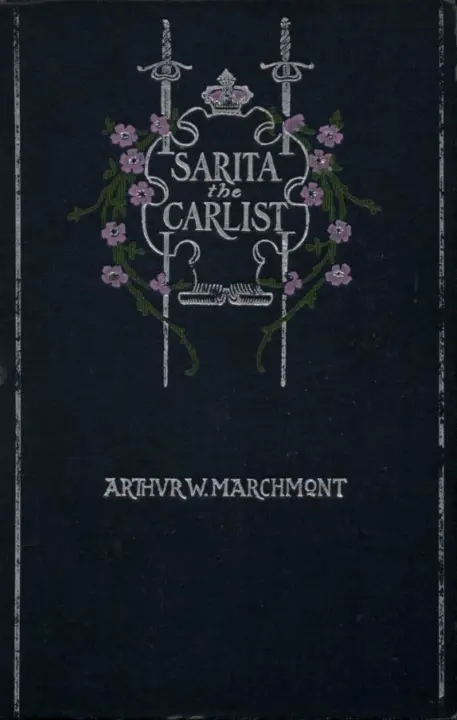
THE CLASSIC COLLECTION · 1902
"Sarita, the Carlist" by Arthur W. Marchmont is a novel written in the early 20th century. The story revolves around Ferdinand Carbonnell, who finds himself embroiled in the complicated political intrigues of Spain as he navigates familial relationships and the dangerous world of the Carlists. The narrative suggests a rich blend of romance, political drama, and personal conflict as Ferdinand encounters his cousin Sarita Castelar and must grapple with unexpected familial obligations and a tumultuous past. The opening of the novel introduces Ferdinand Carbonnell, who faces the repercussions of a woman’s preference as his family plots for a match between him and a wealthy widow. Suddenly thrust into a diplomatic role, he discovers a deeper familial connection to the Quesadas in Madrid and is drawn into a web of political secrecy and familial history, including the troubling legacy of his uncle. Shortly after his arrival, he is mistaken for a Carlist leader and nearly suffers serious consequences due to a case of mistaken identity. It is Sarita Castelar, the stunning cousin he meets, who rescues him from a dire situation, hinting at their shared family ties and the looming political machinations that will entwine their fates. The tension between personal aspiration and political loyalty sets the stage for this engaging tale of love, loyalty, and upheaval.
Introduction adapted from the source catalogue; source summaries may be automatically generated.
Free to read · English · 118,996 words · No account needed
MAKE TIME FOR A GOOD BOOK
On by default. Untick to stop anonymous reading totals. Each page counts after 10 seconds in view. How this works.
Anonymous counting is on unless you have switched it off.
"I don't mean news of the stupid newspaper sort; I mean real, private, important news. This will be in the fashionable gossip next week: but it isn't public yet."
"No--and I'm afraid I'm not very interested in it, either. Next week I
shall be in Madrid."
"Ah, but this is about Madrid, too," she cried, looking mysterious.
"What do you mean, Mercy?" asked Lascelles, who was of a very curious turn, and not quick. "What news is it?"
"It's about Mrs. Curwen, Lascelles. She is going to stay in Madrid;" and Mercy pointed the little shaft with a barbed glance that made him colour with vexation.
"Upon my word, Mercy, you ought to know better. You are abominably rude, and your manners are unpardonable," he cried, angrily. "I declare I won't allow it."
"Allow it? Why, she didn't tell me she had to ask your permission. But, of course, I'll tell her she mustn't go," returned Mercy, with such a fine assumption of innocent misunderstanding that I could not restrain my laughter.
"It will be a good thing when you are gone, Ferdinand," he turned on me, wrathfully. "You only encourage Mercy in these acts of rudeness."
"Don't be a prig, Cello," said I, good humouredly. "You are a good chap at bottom, and when you don't stick those airs on."
"I shall not stay here to be insulted," he exclaimed, and he retreated, leaving us in possession of the field.
"That was too bad, Mercy. You hit him below the belt," I said, when he
had gone.
"But he's just insufferable in those moods, and he gets worse and worse every week. And it's horrid of him to drive you away like this. Positively horrid."
"It's all right, girlie. I'm not the first man by a good many who has left his country for his family's good, even to climb the diplomatic ladder. And when I've got up a few rungs, as the father calls them, and can afford to have an establishment, you shall come and boss it, and we'll have a high old time."
"Yes, but that's just it, Nand."
"What's just it?"
"Why, of course, you're just the dearest brother in the world and awfully good at Spanish and all that, but I don't believe you'll be a bit of good as a diplomatist; and you'll never get on enough to have any place for me to boss."
"What a flatterer you are! For telling the beastly, barefaced, ugly truth, commend me to sisters," and I laughed. "But I believe you're right; and I shall probably never earn bread and cheese rind as a tactician. But I'll have a good time all the same."
Your reading position is saved on this browser. Take it to another device with a library code. Reading pages adapt to text, rather than matching a printed edition.
Arthur W. Marchmont
Arthur W. Marchmont
Arthur W. Marchmont
Arthur W. Marchmont
BEHIND THE BOOK
This eBook is for the use of anyone anywhere in the United States and most other parts of the world at no cost and with almost no restrictions whatsoever. You may copy it, give it away or re-use it under the terms of the Project Gutenberg License included with this eBook or online at www.gutenberg.org. If you are not located in the United States, you will have to check the laws of the country where you are located before using this eBook. Read the source licence.
The original source file, including credits and licence, is retained by this library. Request an original-format copy at no charge. Please include the book title and Project Gutenberg identifier #53551.
KEEP YOUR CURIOSITY GOING
Cécile Tormay

Moritz Busch
Coulson Kernahan
John L. Ransom

Maurice Baring
Frances Wright