
In the Name of the People
Arthur W. Marchmont
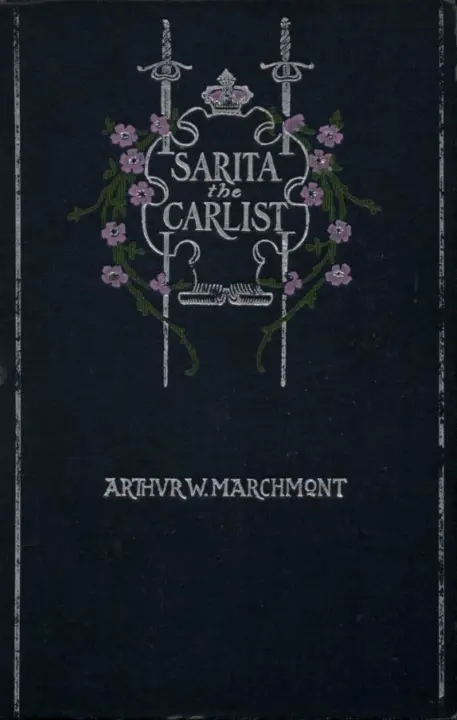
THE CLASSIC COLLECTION · 1902
"Sarita, the Carlist" by Arthur W. Marchmont is a novel written in the early 20th century. The story revolves around Ferdinand Carbonnell, who finds himself embroiled in the complicated political intrigues of Spain as he navigates familial relationships and the dangerous world of the Carlists. The narrative suggests a rich blend of romance, political drama, and personal conflict as Ferdinand encounters his cousin Sarita Castelar and must grapple with unexpected familial obligations and a tumultuous past. The opening of the novel introduces Ferdinand Carbonnell, who faces the repercussions of a woman’s preference as his family plots for a match between him and a wealthy widow. Suddenly thrust into a diplomatic role, he discovers a deeper familial connection to the Quesadas in Madrid and is drawn into a web of political secrecy and familial history, including the troubling legacy of his uncle. Shortly after his arrival, he is mistaken for a Carlist leader and nearly suffers serious consequences due to a case of mistaken identity. It is Sarita Castelar, the stunning cousin he meets, who rescues him from a dire situation, hinting at their shared family ties and the looming political machinations that will entwine their fates. The tension between personal aspiration and political loyalty sets the stage for this engaging tale of love, loyalty, and upheaval.
Introduction adapted from the source catalogue; source summaries may be automatically generated.
Free to read · English · 118,996 words · No account needed
MAKE TIME FOR A GOOD BOOK
On by default. Untick to stop anonymous reading totals. Each page counts after 10 seconds in view. How this works.
Anonymous counting is on unless you have switched it off.
Then, just as matters appeared to be going well, an unexpected thing occurred. I had received a summons to attend at the Palace one day, and went down to tell the others, and as I entered Mrs. Curwen's room I heard her say:
"I'm glad the tornado's over, Mercy. It's a blessing we shall all go back safe and sound to England. Your brother's a regular storm-centre."
"I think the storm-centre is moving at last, and across the Atlantic, as the weather people say, Mrs. Curwen," I said, referring to the war news.
"Ah, did you hear me, Lord Glisfoyle; but you seem to be the storm-centre. Have you brought any more little volcanoes or blizzards with you now? I shall always think of a cyclone when I think of you," she declared, laughing.
"I am summoned to the Palace this afternoon, and hope, with you, to find
the tornado is over."
"Have you any news of Sarita's matters then?"
"None, but I expect to hear everything this afternoon. Did you see Dolores Quesada this morning, Mercy?"
"Yes, poor girl; she is awfully broken by her trouble, and holds to her intention to take the veil. She is going to-day to the Convent of the Sacred Heart."
"About the best place for her, poor soul!" exclaimed Mrs. Curwen, "for a time, of course. I'm not surprised there are plenty of convents in this most cut-and-thrust country. I should go into one if I were a Spaniard--which, thank goodness, I am not!"
"I think she would have done better to accept Madame Chansette's offer to go and live with her in Paris," said I. "She's too pretty, too young, and too rich to be shut up for life."
"Madame Chansette was with me this morning, and we both tried to persuade her," replied Mercy, "but she wouldn't listen to us. We hope she will come round. Madame Chansette says she will have at least a year of the novitiate, and a good many things may happen in a year."
"A good many may happen in a week in Madrid," cried Mrs. Curwen. "It must be in the air, I suppose."
"Yes, friendships ripen quickly here, even when people are not Spanish,"
said I.
"And feelings stronger than friendship, too," retorted the widow,
understanding my reference.
"Yes, feelings stronger than friendship," I repeated, with a significant accent and glance at her. At that moment, Mayhew came in and I added, "And here's a friend, I hope."
She smiled, and turned to greet him.
"Well, what news?" she asked, a little eagerly, I thought.
"I've got the leave," he answered.
Your reading position is saved on this browser. Take it to another device with a library code. Reading pages adapt to text, rather than matching a printed edition.
Arthur W. Marchmont
Arthur W. Marchmont
Arthur W. Marchmont
Arthur W. Marchmont
BEHIND THE BOOK
This eBook is for the use of anyone anywhere in the United States and most other parts of the world at no cost and with almost no restrictions whatsoever. You may copy it, give it away or re-use it under the terms of the Project Gutenberg License included with this eBook or online at www.gutenberg.org. If you are not located in the United States, you will have to check the laws of the country where you are located before using this eBook. Read the source licence.
The original source file, including credits and licence, is retained by this library. Request an original-format copy at no charge. Please include the book title and Project Gutenberg identifier #53551.
KEEP YOUR CURIOSITY GOING
Cécile Tormay

Moritz Busch
Coulson Kernahan
John L. Ransom

Maurice Baring
Frances Wright