
In the Name of the People
Arthur W. Marchmont
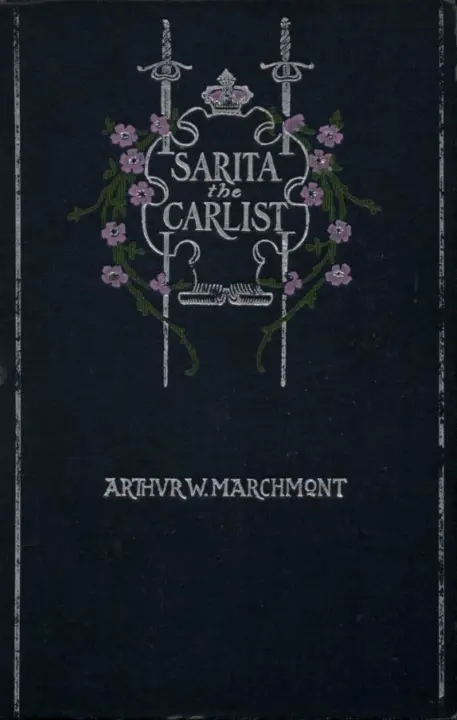
THE CLASSIC COLLECTION · 1902
"Sarita, the Carlist" by Arthur W. Marchmont is a novel written in the early 20th century. The story revolves around Ferdinand Carbonnell, who finds himself embroiled in the complicated political intrigues of Spain as he navigates familial relationships and the dangerous world of the Carlists. The narrative suggests a rich blend of romance, political drama, and personal conflict as Ferdinand encounters his cousin Sarita Castelar and must grapple with unexpected familial obligations and a tumultuous past. The opening of the novel introduces Ferdinand Carbonnell, who faces the repercussions of a woman’s preference as his family plots for a match between him and a wealthy widow. Suddenly thrust into a diplomatic role, he discovers a deeper familial connection to the Quesadas in Madrid and is drawn into a web of political secrecy and familial history, including the troubling legacy of his uncle. Shortly after his arrival, he is mistaken for a Carlist leader and nearly suffers serious consequences due to a case of mistaken identity. It is Sarita Castelar, the stunning cousin he meets, who rescues him from a dire situation, hinting at their shared family ties and the looming political machinations that will entwine their fates. The tension between personal aspiration and political loyalty sets the stage for this engaging tale of love, loyalty, and upheaval.
Introduction adapted from the source catalogue; source summaries may be automatically generated.
Free to read · English · 118,996 words · No account needed
MAKE TIME FOR A GOOD BOOK
On by default. Untick to stop anonymous reading totals. Each page counts after 10 seconds in view. How this works.
Anonymous counting is on unless you have switched it off.
There was, of course, room to hope that he might have had to return to his house to make some preparations for his flight; and I harassed and worried myself with a hundred speculations about this: whether he would not have gone to Quesada's with everything in readiness for flight; or whether he had thought that he would be taken at once, or even killed by Quesada, and had thus set his affairs in order before going. To speculate on his actions in such a case, was, however, of no more value than to count the waves on the seashore; and I got no further than an ever-consuming desire for yet greater speed.
"Close there now, senor," cried Rubio, at last, looking out of the window into the gloom. "A few minutes."
"Thank Heaven for that," I exclaimed, fervently.
"And that we've escaped a smash at that mad pace." We had left the high road, and were going less rapidly along a narrow country lane, and could speak without so much effort. "It's going to be a wild night," he added.
"I wish we were there, or rather that we could have been there two hours
ago."
"I think we shall be in time, senor. The place is not easy to find. I think it will be all right there."
When the carriage stopped I sprang out, followed by Rubio, and hurried up to the house, which lay back some distance from the lane, along a rough, ill-kept carriage drive.
"It's evidently all right, senor. If anything had happened we should see some signs of it," said my companion, as he knocked loudly. A man opened the door, and touched his forehead as he recognised Rubio. "Good evening, Carlos. All well here?"
"All well, Senor Rubio;" and at the word I breathed a deep sigh of
relief.
"The senorita is well, Carlos?"
"Quite well, Senor Rubio, and in her rooms."
"No visitors, I suppose?" was asked, casually.
"Yes, senor; Colonel Livenza, from his Excellency, has been here."
"Been here?" I cried, in surprise. "Tell us, quickly, what you mean?"
"He came with a letter from his Excellency, to see the senorita. He brought some urgent news, he said, and he was with her about half an hour, and then left."
"How long ago was that?"
"He has been gone maybe an hour, or perhaps less."
"Quick work," muttered Rubio. "Show the senor here to the senorita's rooms," he added, to the man. "Shall I go with you, senor?"
Your reading position is saved on this browser. Take it to another device with a library code. Reading pages adapt to text, rather than matching a printed edition.
Arthur W. Marchmont
Arthur W. Marchmont
Arthur W. Marchmont
Arthur W. Marchmont
BEHIND THE BOOK
This eBook is for the use of anyone anywhere in the United States and most other parts of the world at no cost and with almost no restrictions whatsoever. You may copy it, give it away or re-use it under the terms of the Project Gutenberg License included with this eBook or online at www.gutenberg.org. If you are not located in the United States, you will have to check the laws of the country where you are located before using this eBook. Read the source licence.
The original source file, including credits and licence, is retained by this library. Request an original-format copy at no charge. Please include the book title and Project Gutenberg identifier #53551.
KEEP YOUR CURIOSITY GOING
Cécile Tormay

Moritz Busch
Coulson Kernahan
John L. Ransom

Maurice Baring
Frances Wright