
In the Name of the People
Arthur W. Marchmont
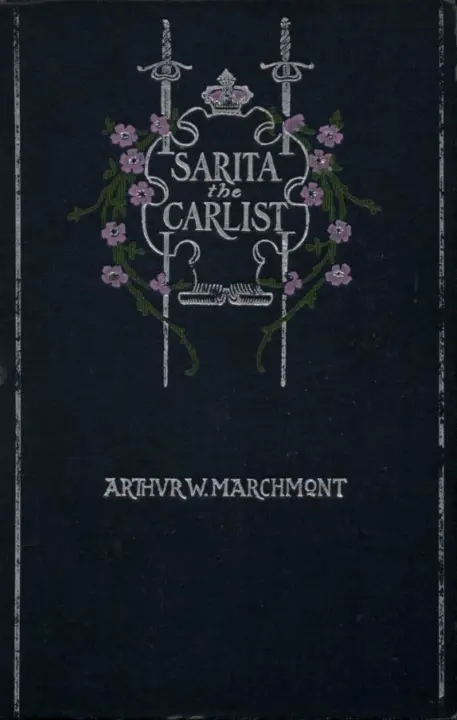
THE CLASSIC COLLECTION · 1902
"Sarita, the Carlist" by Arthur W. Marchmont is a novel written in the early 20th century. The story revolves around Ferdinand Carbonnell, who finds himself embroiled in the complicated political intrigues of Spain as he navigates familial relationships and the dangerous world of the Carlists. The narrative suggests a rich blend of romance, political drama, and personal conflict as Ferdinand encounters his cousin Sarita Castelar and must grapple with unexpected familial obligations and a tumultuous past. The opening of the novel introduces Ferdinand Carbonnell, who faces the repercussions of a woman’s preference as his family plots for a match between him and a wealthy widow. Suddenly thrust into a diplomatic role, he discovers a deeper familial connection to the Quesadas in Madrid and is drawn into a web of political secrecy and familial history, including the troubling legacy of his uncle. Shortly after his arrival, he is mistaken for a Carlist leader and nearly suffers serious consequences due to a case of mistaken identity. It is Sarita Castelar, the stunning cousin he meets, who rescues him from a dire situation, hinting at their shared family ties and the looming political machinations that will entwine their fates. The tension between personal aspiration and political loyalty sets the stage for this engaging tale of love, loyalty, and upheaval.
Introduction adapted from the source catalogue; source summaries may be automatically generated.
Free to read · English · 118,996 words · No account needed
MAKE TIME FOR A GOOD BOOK
On by default. Untick to stop anonymous reading totals. Each page counts after 10 seconds in view. How this works.
Anonymous counting is on unless you have switched it off.
"Was the window fastened?" I asked.
"Yes, I myself examined it."
"That broken pane of glass?"
"It was broken by his Excellency himself to-day, and he had given orders
for the repair of it."
The answer surprised me, but a moment's reflection showed me what might
have happened.
"How came it broken, and when; do you know?"
"How, I do not know; but it was done when Colonel Livenza was here to-day, closeted with his Excellency. They were, as perhaps you know, senor, closely associated together." There was a furtive, half eager, half alarmed, and wholly cunning look on Rubio's face, which sent the thought flashing upon me that he could say a good deal of Quesada's private matters if he pleased.
"I know much more than you think, Senor Rubio. These two were close friends, you say; did they part to-day on friendly terms?"
"I was not here, senor," was the guarded reply.
But I could read the facts without his help. Livenza had come to demand an explanation, and intended, no doubt, to wreak his revenge on the spot. There had been a quarrel, and probably some kind of tussle, in which this window had been broken. Livenza had for some reason abstained from shooting Quesada there and then; but he had been quick to see that if he left and went round to the back of the house, he could fire at his victim through the broken window, and kill him without anyone suspecting the act. I got some confirmation of this theory by questioning the servant, who had seen his master after Livenza had left the house, and had noticed that he was unusually excited and angry.
There was the fact that no sound of a pistol shot had been heard; but the room had double doors and a heavy portiere curtain, and this might well account for such a thing. I was, at any rate, satisfied with my theory, and while I was with Rubio, Mayhew arrived with the official papers placing the police services at my disposal. I showed them to him, and they increased his apprehension.
"I shall do all I can to help you, senor," he assured me, nervously.
"You will find it safer," said I, significantly. "Have any of Senor Quesada's papers been removed?"
"None," he answered, with a slight start.
"Well, then my friend Mr. Mayhew here, of the British Embassy, will remain and see that everything is sealed. And now tell me, do you suspect anyone of this murder?"
"It is the work of the cursed Carlists, of course. His Excellency's life was more than once attempted by them."
Your reading position is saved on this browser. Take it to another device with a library code. Reading pages adapt to text, rather than matching a printed edition.
Arthur W. Marchmont
Arthur W. Marchmont
Arthur W. Marchmont
Arthur W. Marchmont
BEHIND THE BOOK
This eBook is for the use of anyone anywhere in the United States and most other parts of the world at no cost and with almost no restrictions whatsoever. You may copy it, give it away or re-use it under the terms of the Project Gutenberg License included with this eBook or online at www.gutenberg.org. If you are not located in the United States, you will have to check the laws of the country where you are located before using this eBook. Read the source licence.
The original source file, including credits and licence, is retained by this library. Request an original-format copy at no charge. Please include the book title and Project Gutenberg identifier #53551.
KEEP YOUR CURIOSITY GOING
Cécile Tormay

Moritz Busch
Coulson Kernahan
John L. Ransom

Maurice Baring
Frances Wright