
In the Name of the People
Arthur W. Marchmont
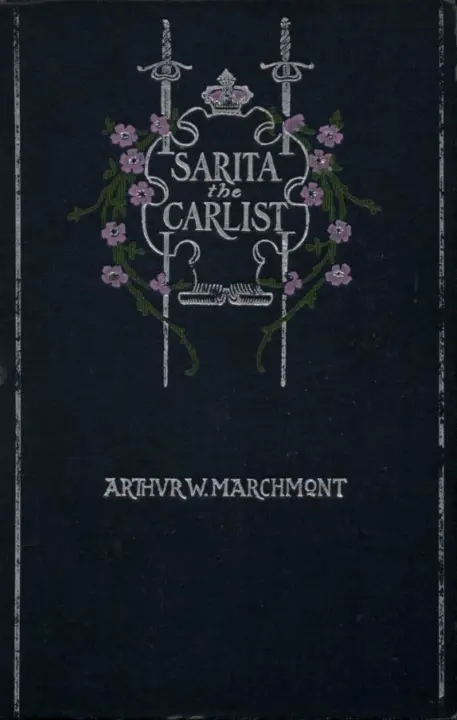
THE CLASSIC COLLECTION · 1902
"Sarita, the Carlist" by Arthur W. Marchmont is a novel written in the early 20th century. The story revolves around Ferdinand Carbonnell, who finds himself embroiled in the complicated political intrigues of Spain as he navigates familial relationships and the dangerous world of the Carlists. The narrative suggests a rich blend of romance, political drama, and personal conflict as Ferdinand encounters his cousin Sarita Castelar and must grapple with unexpected familial obligations and a tumultuous past. The opening of the novel introduces Ferdinand Carbonnell, who faces the repercussions of a woman’s preference as his family plots for a match between him and a wealthy widow. Suddenly thrust into a diplomatic role, he discovers a deeper familial connection to the Quesadas in Madrid and is drawn into a web of political secrecy and familial history, including the troubling legacy of his uncle. Shortly after his arrival, he is mistaken for a Carlist leader and nearly suffers serious consequences due to a case of mistaken identity. It is Sarita Castelar, the stunning cousin he meets, who rescues him from a dire situation, hinting at their shared family ties and the looming political machinations that will entwine their fates. The tension between personal aspiration and political loyalty sets the stage for this engaging tale of love, loyalty, and upheaval.
Introduction adapted from the source catalogue; source summaries may be automatically generated.
Free to read · English · 118,996 words · No account needed
MAKE TIME FOR A GOOD BOOK
On by default. Untick to stop anonymous reading totals. Each page counts after 10 seconds in view. How this works.
Anonymous counting is on unless you have switched it off.
"I shall not call anyone," he said, his voice no longer jaunty and truculent, but hoarse, broken, and abject, the voice of a coward in deadly fear.
"I am glad to hear it. You will therefore show your confidence in me further by laying your weapon on the table."
"There is no need for that. I don't wish----"
"On the table, there," I said sternly, pointing to it.
"I have no objection," he declared, with a start at my stern tone; and with trembling fingers he drew his sword and laid it down, and then put his revolver by the side of it, and sighed.
"Hand the key of the door to Senorita Castelar," I bade him next, and without a murmur he obeyed. "Now we can talk without restraint," I said, and put his sword and revolver on a chair behind him. "Be good enough to answer my questions fully. How comes it you have found your way here to this out-of-the-way place at this precise moment?"
"I heard that this was a house where Carlists were likely----"
"Wait," I broke in, angrily. "Tell the truth, the full truth; no half lies and generalities and equivocations; and don't forget that I also know much--more than enough to test every word you say. If you lie, the interview ends--and the end will not be well for you. Now, answer my question."
"Sebastian Quesada's spies in Daroca found out that Senorita Castelar was here, and I came in search of her."
"That's better. Now, what secret arrangement has there been between you and Quesada affecting your relations with the senorita? Remember, I know it, but wish her to hear it from you." The question set him trembling in dire agitation, and for some moments he stood hesitating and perplexed, trying vainly to speak.
"What do you mean?" he muttered.
"Answer," I said, sternly. "And mind, the truth."
Again he wrestled with his feelings, and then in a low voice: "He knew of my passion for her, and--and thought that if she was to be arrested, I had best do it."
"You are lying, Colonel Livenza," I said.
"I am unarmed," he muttered, shifting his eyes uneasily.
"I, too, was unarmed once before your weapon; and afterwards you swore to tell me the truth. You know why. But if you mean that I am insulting an unarmed man, here, take your revolver;" and I put it on the table and pushed it toward him. "You lied, Colonel Livenza," I repeated.
Your reading position is saved on this browser. Take it to another device with a library code. Reading pages adapt to text, rather than matching a printed edition.
Arthur W. Marchmont
Arthur W. Marchmont
Arthur W. Marchmont
Arthur W. Marchmont
BEHIND THE BOOK
This eBook is for the use of anyone anywhere in the United States and most other parts of the world at no cost and with almost no restrictions whatsoever. You may copy it, give it away or re-use it under the terms of the Project Gutenberg License included with this eBook or online at www.gutenberg.org. If you are not located in the United States, you will have to check the laws of the country where you are located before using this eBook. Read the source licence.
The original source file, including credits and licence, is retained by this library. Request an original-format copy at no charge. Please include the book title and Project Gutenberg identifier #53551.
KEEP YOUR CURIOSITY GOING
Cécile Tormay

Moritz Busch
Coulson Kernahan
John L. Ransom

Maurice Baring
Frances Wright