
In the Name of the People
Arthur W. Marchmont
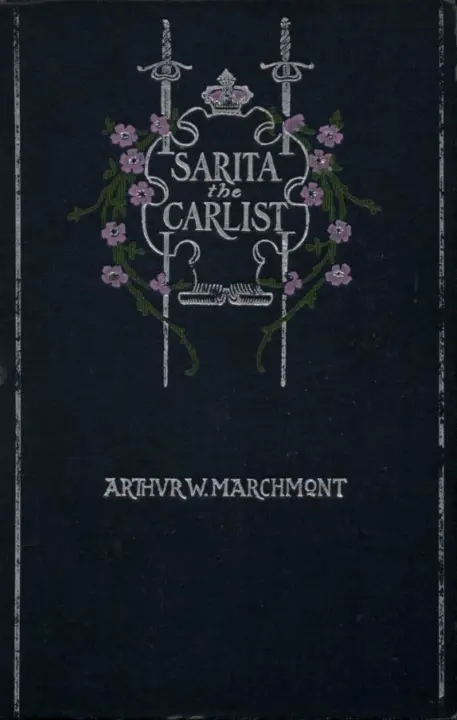
THE CLASSIC COLLECTION · 1902
"Sarita, the Carlist" by Arthur W. Marchmont is a novel written in the early 20th century. The story revolves around Ferdinand Carbonnell, who finds himself embroiled in the complicated political intrigues of Spain as he navigates familial relationships and the dangerous world of the Carlists. The narrative suggests a rich blend of romance, political drama, and personal conflict as Ferdinand encounters his cousin Sarita Castelar and must grapple with unexpected familial obligations and a tumultuous past. The opening of the novel introduces Ferdinand Carbonnell, who faces the repercussions of a woman’s preference as his family plots for a match between him and a wealthy widow. Suddenly thrust into a diplomatic role, he discovers a deeper familial connection to the Quesadas in Madrid and is drawn into a web of political secrecy and familial history, including the troubling legacy of his uncle. Shortly after his arrival, he is mistaken for a Carlist leader and nearly suffers serious consequences due to a case of mistaken identity. It is Sarita Castelar, the stunning cousin he meets, who rescues him from a dire situation, hinting at their shared family ties and the looming political machinations that will entwine their fates. The tension between personal aspiration and political loyalty sets the stage for this engaging tale of love, loyalty, and upheaval.
Introduction adapted from the source catalogue; source summaries may be automatically generated.
Free to read · English · 118,996 words · No account needed
MAKE TIME FOR A GOOD BOOK
On by default. Untick to stop anonymous reading totals. Each page counts after 10 seconds in view. How this works.
Anonymous counting is on unless you have switched it off.
Once in the long, sweet suspense of that battle she raised her head, looked at me and smiled--a sorrow-laden, anxious, wan smile--as if in deprecation of her own weakness and of her woman's need for aid and sympathy. Then her head sank again on my breast with a sigh of infinite content, such as might have slipped from the lips of a tired and overwrought child.
The sound was music in my ears, for it told me how for the moment at least my coming had eased her misery.
At length she began to stir again in my arms; not away from them, I thanked Heaven, but as though the sense of relieved happiness was passing, and the thoughts of trouble were gathering force again.
"I am shamed, Ferdinand," she murmured.
"I love you, sweetheart," was my whispered reply.
"How did you come here, and alone?" she asked next, after a pause, "You have caught me in my moment of weakness."
"I will tell you all presently," I said. "I have come to help you.
Wait."
But her curiosity was rising as her composure returned.
"Tell me now."
"I knew you would be in trouble, dearest, and I followed you."
"But how did you find me?" and then a great and sudden change came over her. "What am I doing? I am mad," she cried in a quick tone of alarm; and drawing swiftly from my arms she stood, my hands still holding hers, and looked at me with fear in her face. "You must not stay here. You are in danger, Ferdinand. There are those coming here, will be here instantly may be, who will know you and--oh God, what shall we do? they will kill you."
The fear was for me, and had quickened her into active thought, as no fear for herself had done. I guessed her meaning instinctively, and allayed the fear.
"No, there is no danger. You mean the two men, Cabrera and Garcia. I came here with them, and Cabrera himself urged me, in his last words, to try and save you."
"But they--I can't understand. How could that be?" she cried, her face
a mask of perplexity.
"Simply as I say. I recognised them, but they did not recognise me. I made myself known to them--as Ferdinand Carbonnell--in the train; we escaped from it together at Calatayud, and together we have ridden here. We were going to Daroca, when we heard that you were here, and that the roads were blocked with troops, and we came here."
"You were going to Daroca? Are you mad, too, Ferdinand?"
Your reading position is saved on this browser. Take it to another device with a library code. Reading pages adapt to text, rather than matching a printed edition.
Arthur W. Marchmont
Arthur W. Marchmont
Arthur W. Marchmont
Arthur W. Marchmont
BEHIND THE BOOK
This eBook is for the use of anyone anywhere in the United States and most other parts of the world at no cost and with almost no restrictions whatsoever. You may copy it, give it away or re-use it under the terms of the Project Gutenberg License included with this eBook or online at www.gutenberg.org. If you are not located in the United States, you will have to check the laws of the country where you are located before using this eBook. Read the source licence.
The original source file, including credits and licence, is retained by this library. Request an original-format copy at no charge. Please include the book title and Project Gutenberg identifier #53551.
KEEP YOUR CURIOSITY GOING
Cécile Tormay

Moritz Busch
Coulson Kernahan
John L. Ransom

Maurice Baring
Frances Wright