
In the Name of the People
Arthur W. Marchmont
THE CLASSIC COLLECTION · 1902
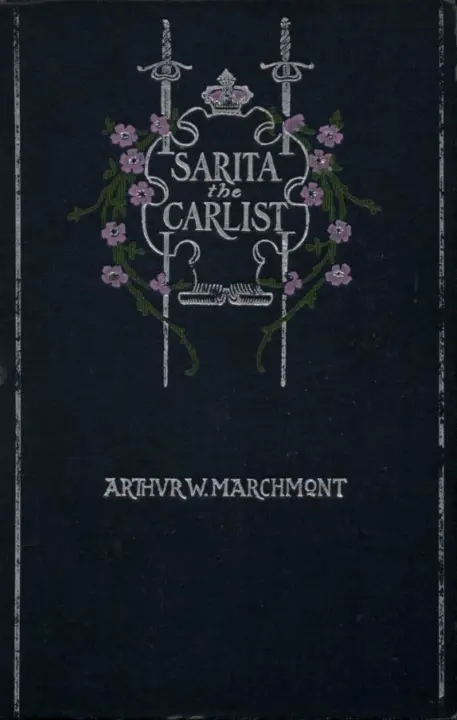
"Sarita, the Carlist" by Arthur W. Marchmont is a novel written in the early 20th century. The story revolves around Ferdinand Carbonnell, who finds himself embroiled in the complicated political intrigues of Spain as he navigates familial relationships and the dangerous world of the Carlists. The narrative suggests a rich blend of romance, political drama, and personal conflict as Ferdinand encounters his cousin Sarita Castelar and must grapple with unexpected familial obligations and a tumultuous past. The opening of the novel introduces Ferdinand Carbonnell, who faces the repercussions of a woman’s preference as his family plots for a match between him and a wealthy widow. Suddenly thrust into a diplomatic role, he discovers a deeper familial connection to the Quesadas in Madrid and is drawn into a web of political secrecy and familial history, including the troubling legacy of his uncle. Shortly after his arrival, he is mistaken for a Carlist leader and nearly suffers serious consequences due to a case of mistaken identity. It is Sarita Castelar, the stunning cousin he meets, who rescues him from a dire situation, hinting at their shared family ties and the looming political machinations that will entwine their fates. The tension between personal aspiration and political loyalty sets the stage for this engaging tale of love, loyalty, and upheaval.
Introduction adapted from the source catalogue; source summaries may be automatically generated.
Free to read · English · 118,996 words · No account needed
MAKE TIME FOR A GOOD BOOK
On by default. Untick to stop anonymous reading totals. Each page counts after 10 seconds in view. How this works.
Anonymous counting is on unless you have switched it off.
Sarita listened to my rapid, excited speech with gradually paling cheek, and when I finished, her breath was coming fast and her eyes shining brightly.
"If I thought that, I'd---- But no, Ferdinand, he dare not, he dare not," she exclaimed, in quick, bated tones.
"Dare not--Sebastian Quesada?" I cried, incredulously.
"Dare not. A hundred daggers would flash at his heart."
"Aye, but the hundred hands that could thrust them would be rotting in
his prisons."
"It is impossible, impossible, impossible. I won't believe it; but I must have time to think. You madden me. I am fevered and frozen in turns by the thoughts you kindle, I must have time."
"Let me make a last appeal, Sarita. Marry me and come away. Leave
all----"
"No, no," she broke in, passionately. "I cannot. I cannot. This is no problem that a coward's flight can solve."
"Well then, postpone this attempt on the young King until you have had time to inquire and search and think."
"I cannot think now. I will see you to-morrow--or better, will think
over all and write you."
"No, I will come to-morrow," I said. "Promise you will see me."
"If I am in Madrid, I promise," she said; and with that, seeing how deeply she was agitated, I thought it best to leave.
"One word, not from counsellor this, but from your lover, Sarita. The knowledge we have gained of each other to-day, is knowledge for all our time. My love can never change; neither will yours, that I know. To-morrow, it will be the lover who will come to you, sweetheart. I shall have all in readiness for our departure. Till to-morrow, good-bye." I took her hand and tried to kiss her, but she would not suffer me, and when I looked in her eyes, I saw, to my consternation, they were full of tears. Knowing how intensely she must be excited and agitated to shed tears, and that it would distress her still more for me to remain and see her weakness, I turned away and went out.
I was scarcely less excited than Sarita, and, driving at once to my rooms, sent a messenger with a note to Silas Mayhew, asking him to come to me without fail in two hours' time, and sat down to try and clear the tangle of my thoughts. I had guessed much of the desperate intrigue that lay behind the abduction plot, and felt that I had guessed rightly the part which Sebastian Quesada was playing. But there was more that I did not know, and I had to learn it if the project was yet to be thwarted and his scheme exposed.
Your reading position is saved on this browser. Take it to another device with a library code. Reading pages adapt to text, rather than matching a printed edition.
Arthur W. Marchmont
Arthur W. Marchmont
Arthur W. Marchmont
Arthur W. Marchmont
BEHIND THE BOOK
This eBook is for the use of anyone anywhere in the United States and most other parts of the world at no cost and with almost no restrictions whatsoever. You may copy it, give it away or re-use it under the terms of the Project Gutenberg License included with this eBook or online at www.gutenberg.org. If you are not located in the United States, you will have to check the laws of the country where you are located before using this eBook. Read the source licence.
The original source file, including credits and licence, is retained by this library. Request an original-format copy at no charge. Please include the book title and Project Gutenberg identifier #53551.
KEEP YOUR CURIOSITY GOING
Cécile Tormay

Moritz Busch
Coulson Kernahan
John L. Ransom

Maurice Baring
Frances Wright