THE CLASSIC COLLECTION✦An outlaw’s diary: the CommuneCLASSIC FREE BOOKS
An outlaw’s diary: the Commune
Cécile Tormay
THE CLASSIC COLLECTION · 1915
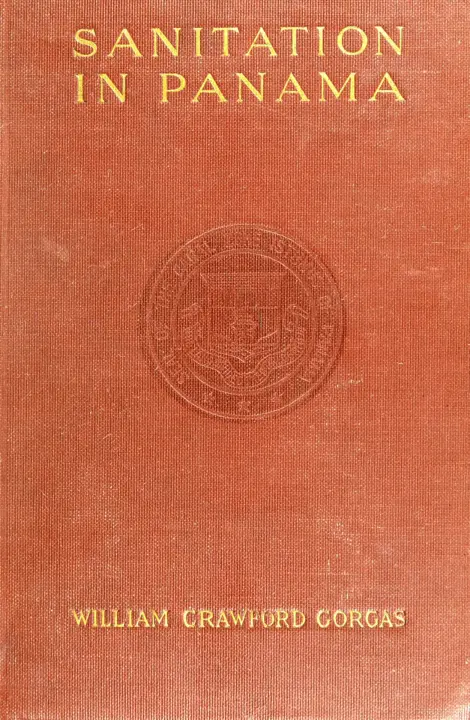
"Sanitation in Panama" by William Crawford Gorgas is a scientific publication written in the early 20th century. The book focuses on the medical and sanitary efforts undertaken to eliminate yellow fever in Panama, as well as the essential discoveries made regarding its transmission. Through the analysis of historical battles against the disease, the work discusses the strategies implemented to safeguard health during the construction of the Panama Canal. At the start of the book, Gorgas establishes the severe threat yellow fever posed to both humans and economies, particularly in Havana. He recounts the devastating impacts of the disease during past epidemics and introduces the significant discoveries of the Reed Board, highlighting the role of the stegomyia mosquito in transmitting yellow fever. The opening sets the stage for Gorgas's preventive measures, emphasizing the importance of sanitation in eradicating the disease as well as detailing the ongoing challenges faced by health officials in containing its spread.
Introduction adapted from the source catalogue; source summaries may be automatically generated.
Free to read · English · 66,047 words · No account needed
MAKE TIME FOR A GOOD BOOK
On by default. Untick to stop anonymous reading totals. Each page counts after 10 seconds in view. How this works.
Anonymous counting is on unless you have switched it off.
But what gives me the greatest confidence is that our non-immunes are made up entirely of Spaniards and Americans. The Americans promptly report themselves where there is anything suspicious, for the sake of the better care that they get at Las Animas. The Spaniards are all matriculated at one of the three “quintas,” and go there as soon as they are sick from any cause. These “quintas” are all very anxious to try and catch up to the record of Las Animas, and report every case that they think, by any possibility, will pass the Board. And then, too, I can control the “quintas” by frequent inspections. So it seems to me that there is very little probability of cases being concealed to any extent. Still, we can speak more definitely on this subject about the 1st of December than we can now.
All well. With kindest regards, I remain,
Very sincerely yours,
W. C. GORGAS,
Maj. & Surg., U. S. A.
Chief Sanitary Officer.
To Maj. Walter Reed,
Washington, D. C.
Army Med. Museum, June 27, 1901.
I thank you so much for your last kind and most interesting letter of June 13th. Really, my dear Dr., in spite of a few disagreeable things and people, when I think of the absence of yellow fever from Havana for a period of fifty days, I begin to feel like rejoicing that I ever was born! You are doing a splendid work for your corps and profession in Havana.
Sincerely, your friend,
REED.
Army Med. Museum, Washington, July 29.
I was on the eve of writing to you, when your kind favor of the 20th inst. reached me. The news from Havana is simply delightful. I am willing to confess that my fears that physicians would fail to report cases of yellow fever to your office, and thus maintain foci of infection, were groundless. It shows that your acquaintance with the local conditions were much better than mine. That you have succeeded in throttling the epidemic appears to be beyond question, and is to your everlasting credit as an energetic Health Officer, who saw his opportunity and grasped it. A man of less discretion, enthusiasm and energy would have made a fiasco of it. Whereas, you, my dear Gorgas, availing yourself of the results of the work at Camp Lazear, have rid that pest hole, Havana, of her yellow plague! All honor to you my dear boy! Thank God that the Medical Department of the U. S. Army, which got such “a black eye” during the Spanish-American war, has during the past year accomplished work that will always remain to its eternal credit! I had seen in the papers report of the cases at Santiago de las Vegas. I am delighted that you have taken charge of the suppression of this outbreak. Of course, you will soon stamp it out, if you can enforce your regulations. I shall look forward with the greatest interest to your work there. Please keep me posted. I did not get your June Report, which I should like to have very much. Apropos of the outbreak at Santiago de las Vegas, I have concluded to have Carroll go to Havana, for the purpose, if he can get hold of any cases of yellow fever, of making a few observations on human beings, which will be a valuable guide to us at the present stage of our search for the parasite. I sincerely hope that he can succeed in getting hold of a few recently arrived immigrants for this purpose. I especially ask your kind assistance in this matter. I see that Gen. Wood has left Havana so that I am afraid that Carroll cannot get any money with which to pay the subjects of experimentation. Have you any funds with which they could be paid $1.00 per day? I think that you said that subjects could be obtained at that price. Carroll would like to do his work at Las Animas Hospital. Can that be arranged? He must start on his return by Sept. 20th, if possible. So that he has but little time in which to accomplish the task before. Still if he can draw blood from a few undoubted cases and can get a few subjects, it won’t take him long to decide the point. I wanted to come very much, but I have work here which I feel that I should not neglect. Else I should have certainly come down. I have been intending to ask you whether, in dealing with y. f. in Havana, this year, you have confined your work to simply protecting the sick against bites and destruction of mosquitoes; and have omitted all disinfection of bedding and clothing. I sincerely hope that this is true. I shall probably present, with Carroll, a paper to the next meeting of the American Public Health Association on the management and prevention of yellow fever, and I would so like to be able to say that the great work in Havana was accomplished without the disinfection of any bedding or clothing. Carroll leaves New York, with Pvt. Springer, on Ward Line leaving on Wednesday, August 6th. Pardon this lengthy letter. Please present my kindest regards to Mrs. Gorgas. Keep me informed of your progress at S. de las Vegas.
Your reading position is saved on this browser. Take it to another device with a library code. Reading pages adapt to text, rather than matching a printed edition.
BEHIND THE BOOK
This eBook is for the use of anyone anywhere in the United States and most other parts of the world at no cost and with almost no restrictions whatsoever. You may copy it, give it away or re-use it under the terms of the Project Gutenberg License included with this eBook or online at www.gutenberg.org. If you are not located in the United States, you will have to check the laws of the country where you are located before using this eBook. Read the source licence.
The original source file, including credits and licence, is retained by this library. Request an original-format copy at no charge. Please include the book title and Project Gutenberg identifier #70624.
KEEP YOUR CURIOSITY GOING
Cécile Tormay

Moritz Busch
John L. Ransom
Frances Wright
Cécile Tormay

Mabel Potter Daggett