THE CLASSIC COLLECTION✦An outlaw’s diary: the CommuneCLASSIC FREE BOOKS
An outlaw’s diary: the Commune
Cécile Tormay
THE CLASSIC COLLECTION · 1915
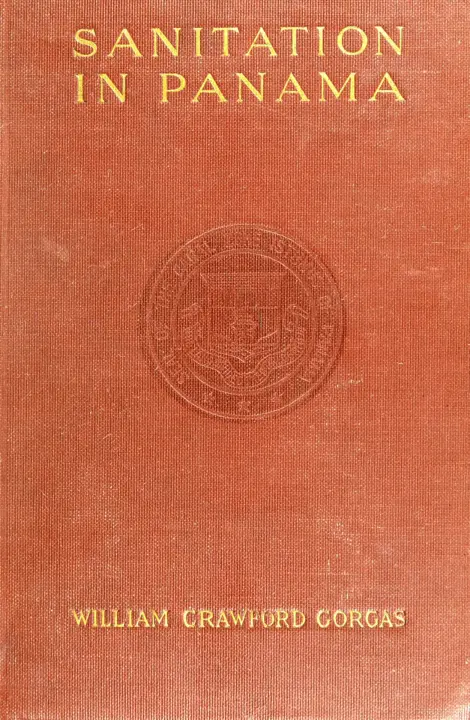
"Sanitation in Panama" by William Crawford Gorgas is a scientific publication written in the early 20th century. The book focuses on the medical and sanitary efforts undertaken to eliminate yellow fever in Panama, as well as the essential discoveries made regarding its transmission. Through the analysis of historical battles against the disease, the work discusses the strategies implemented to safeguard health during the construction of the Panama Canal. At the start of the book, Gorgas establishes the severe threat yellow fever posed to both humans and economies, particularly in Havana. He recounts the devastating impacts of the disease during past epidemics and introduces the significant discoveries of the Reed Board, highlighting the role of the stegomyia mosquito in transmitting yellow fever. The opening sets the stage for Gorgas's preventive measures, emphasizing the importance of sanitation in eradicating the disease as well as detailing the ongoing challenges faced by health officials in containing its spread.
Introduction adapted from the source catalogue; source summaries may be automatically generated.
Free to read · English · 66,047 words · No account needed
MAKE TIME FOR A GOOD BOOK
On by default. Untick to stop anonymous reading totals. Each page counts after 10 seconds in view. How this works.
Anonymous counting is on unless you have switched it off.
No doubt the great centers of civilization will remain for centuries much as they are at present. The white settlers will go to the valleys of the Amazon and Congo, building up large agricultural communities which will supply the European and American centers located as they are at present with their food supply. But in the course of ages the centers of civilization will move to where a given amount of labor will produce the largest amount of food. Of course, other things must be equal. I am assuming that the government in these new communities is as good as the government with which we are comparing it in the temperate zone. When this great migration of population has fully commenced, I believe that the peoples of that day will look back upon the sanitary work done at the Canal Zone as the first great demonstration that the white man could live as well in the tropics as in the temperate zone.
I am inclined to think that at this time the sanitary phase of the work will be considered more important than the actual construction of the Canal itself, as important to the world as this great waterway now is, and will be for generations to come.
The discovery of the Americas was a great epoch in the history of the white man, and threw large areas of fertile and healthy country open to his settlement. The demonstration made at Panama that he can live a healthy life in the tropics will be an equally important milestone in the history of the race, and will throw just as large an area of the earth’s surface open to man’s settlement, and a very much more productive area.
Agramonte, Dr., 11, 16, 41.
Albertini, Dr. Antonio, 12.
American Medical Association, interest of, in Panama sanitation, 142.
Ancon Hospital, 209, 224-234, 236-238, 241-247.
care of insane at, 242.
clinic for tropical diseases at, 238.
equipment at, 241.
eye department at, 242.
management of, 243, 244.
organized by La Garde, 229-232.
records of, under French company, 227.
researches at, 238.
services of, to Canal employees, 247.
sewage system installed at, 230.
statistics of, 247.
treatment of yellow fever at, 230-231.
Angeles, Sister Maria de los, 268.
Anopheles. See Mosquito, malarial.
Augustin, on yellow fever, 117.
Avila, Pedro Arias de. See Pedrarias.
Balboa in Panama, 132, 133, 134, 135, 168.
Bubonic plague in Panama, 271, 276-278.
Camp Columbia, yellow-fever experiments at, 19, 20, 25, 26, 30.
Camphor fumigation, 54, 55.
Carroll, Dr., on Sanarelli’s researches, 7, 11.
mosquito experiments of, 16, 19, 41.
Carter, Dr. Henry R., quarantine work of, 271. system of, for transportation of sick in Panama, 210-212. yellow-fever researches of, 10, 27, 28, 29.
Cemeteries in Panama, 214-217.
Chloroform, use of, against mosquitoes, 199.
Coffin story, 240.
Colon Hospital, 209.
Colon, yellow fever in, 150.
Colonization and disease, 114, 284.
Columbus in Panama, 131.
Concrete floors, as anti-plague measure, 277-278.
Your reading position is saved on this browser. Take it to another device with a library code. Reading pages adapt to text, rather than matching a printed edition.
BEHIND THE BOOK
This eBook is for the use of anyone anywhere in the United States and most other parts of the world at no cost and with almost no restrictions whatsoever. You may copy it, give it away or re-use it under the terms of the Project Gutenberg License included with this eBook or online at www.gutenberg.org. If you are not located in the United States, you will have to check the laws of the country where you are located before using this eBook. Read the source licence.
The original source file, including credits and licence, is retained by this library. Request an original-format copy at no charge. Please include the book title and Project Gutenberg identifier #70624.
KEEP YOUR CURIOSITY GOING
Cécile Tormay

Moritz Busch
John L. Ransom
Frances Wright
Cécile Tormay

Mabel Potter Daggett