THE CLASSIC COLLECTION✦Tirzah Ann’s summer trip, and other sketchesCLASSIC FREE BOOKS
Tirzah Ann’s summer trip, and other sketches
Marietta Holley
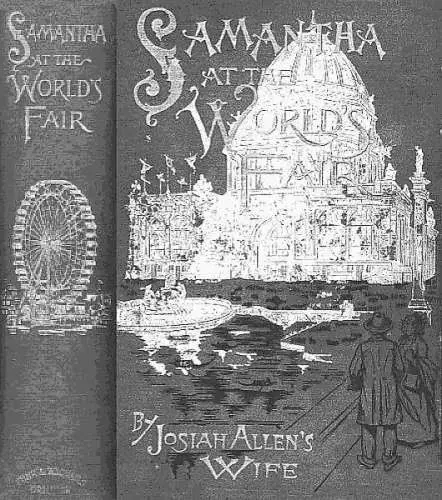
THE CLASSIC COLLECTION · 1893
"Samantha at the World's Fair" by Marietta Holley is a satirical novel written in the late 19th century. This work follows Samantha Allen, a witty and intelligent woman, as she prepares to attend the World's Fair in Chicago alongside her husband Josiah. The narrative explores themes of progress, societal issues, and the quirks of family relations, all delivered with Holley's characteristic humor and commentary on contemporary social issues. At the start of the story, Samantha reflects on her admiration for Christopher Columbus and his discoveries, which she wishes to honor through her attendance at the fair. In a twist of fate, she and her husband meet a distant relative, Christopher Columbus Allen, who arrives at their home just as they are making preparations for their trip to the World's Fair. This coincidence serves as a humorous thread that intertwines with Samantha's contemplations about history, family, and the expectations of society. The opening sets the tone for a blend of personal ambition and social commentary, suggesting that readers can expect a thoughtful yet entertaining exploration of these themes throughout the book.
Introduction adapted from the source catalogue; source summaries may be automatically generated.
Free to read · English · 139,602 words · No account needed
MAKE TIME FOR A GOOD BOOK
On by default. Untick to stop anonymous reading totals. Each page counts after 10 seconds in view. How this works.
Anonymous counting is on unless you have switched it off.
"Give me statuary that is ornamental in prosperity, and that you can eat up if reverses come to you," sez he.
"Why," sez he, "there is one hundred kinds of grain in that one model
farm of Illinois.
"Now, if that picter should git torn to pieces by a cyclone, what would a ile paintin' be? A dead loss.
"But that grain farm-house, what food for hens that would make--such a variety. Why, the hens would jest pour out eggs fed on the ruins of that farm.
"Give me beauty and economy hitched together in one team."
I sithed, and the sithe wuz deep, almost like a groan, and sez I--
"You tire me, Josiah Allen--you tire me almost to death."
"Wall," sez he, "I'm talkin' good horse sense."
Sez I, "I should think it wuz animal sense of some kind--nothin'
spiritual about it and riz up."
"Wall," sez he, "you'll see five hundred folks a-standin' round and praisin' up them seed picters where there is one that gits carried away as you do over Wattses 'Love and Death' and Elihu Vedder's dum picters."
"Wall," sez I, in a tired-out axent, "that don't prove anything, Josiah Allen. The multitude chose Barrabus to the Divine One.
"Not," sez I reasonably, "that I would want to compare the seed picters and the butter females to a robber.
"They're extremely curious and interestin' to look at, and wonderful in their way as anything in the hull Exposition.
"But," sez I, "there is a height and a depth in the soul that them butter figgers can't touch--no, nor the pop-corn trees can't reach that height with their sorghum branches. It lays fur beyond the switchin' timothy tail of that seed horse or the wavin' raisen mane of that prune charger. It is a realm," sez I, "that I fear you will never stand in, Josiah Allen."
"No, indeed," sez he; "and I don't want to. I hain't no desires that
way."
Again I sithed, and we walked off into another gallery.
Wall, I might write and keep a-writin' from Fourth of July to Christmas Eve, and then git up Christmas mornin' and say truly that the half hadn't been told of what we see there, and so what is the use of tryin' to relate it in this epistle.
But suffice it to say that we stayed there all day long, and that night we meandered home perfectly wore out, and perfectly riz up in our two minds, or at least I wuz. Josiah's feelin's seemed to be clear fag, jest plain wore out fag.
The nights are always cool in Chicago--that is, if the weather is anyways comfortable durin' the day.
Your reading position is saved on this browser. Take it to another device with a library code. Reading pages adapt to text, rather than matching a printed edition.
Marietta Holley
Marietta Holley
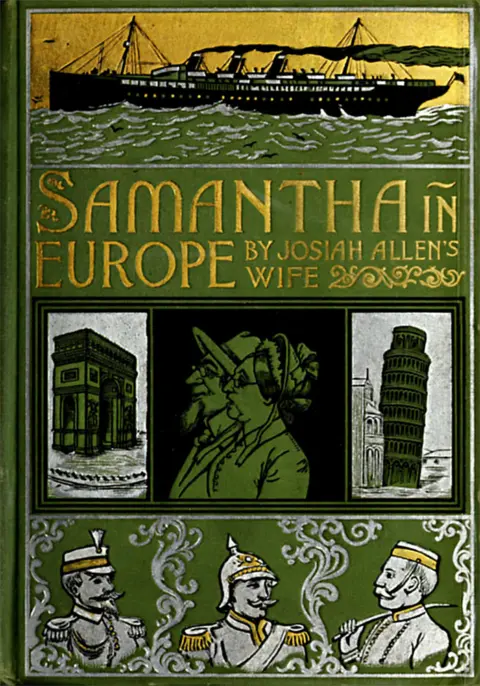
Marietta Holley
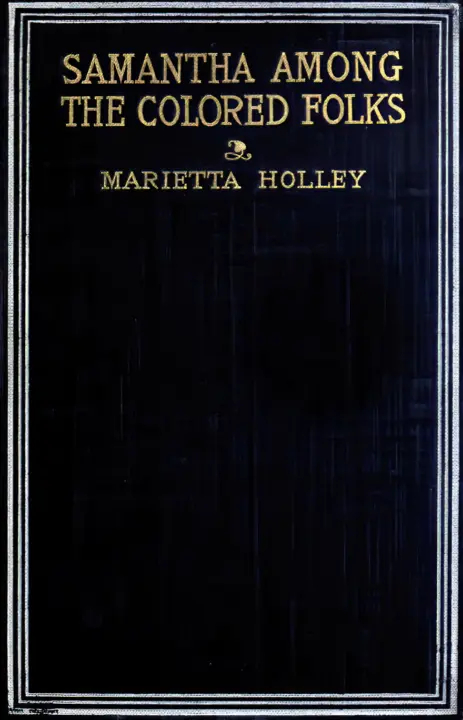
Marietta Holley
BEHIND THE BOOK
This eBook is for the use of anyone anywhere in the United States and most other parts of the world at no cost and with almost no restrictions whatsoever. You may copy it, give it away or re-use it under the terms of the Project Gutenberg License included with this eBook or online at www.gutenberg.org. If you are not located in the United States, you will have to check the laws of the country where you are located before using this eBook. Read the source licence.
The original source file, including credits and licence, is retained by this library. Request an original-format copy at no charge. Please include the book title and Project Gutenberg identifier #18091.
KEEP YOUR CURIOSITY GOING
Coulson Kernahan

Maurice Baring
Frances Wright
Cécile Tormay

Frederic Jesup Stimson

W. H. P. (William Henry Pope) Jarvis