THE CLASSIC COLLECTION✦Tirzah Ann’s summer trip, and other sketchesCLASSIC FREE BOOKS
Tirzah Ann’s summer trip, and other sketches
Marietta Holley
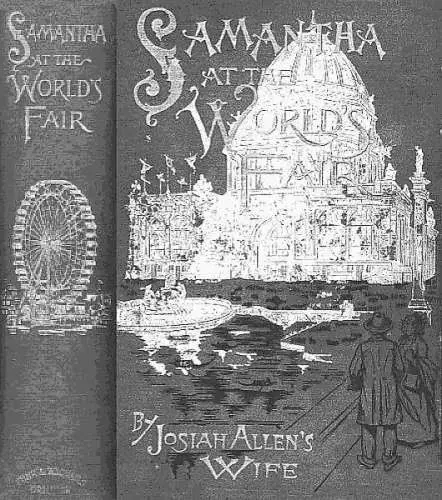
THE CLASSIC COLLECTION · 1893
"Samantha at the World's Fair" by Marietta Holley is a satirical novel written in the late 19th century. This work follows Samantha Allen, a witty and intelligent woman, as she prepares to attend the World's Fair in Chicago alongside her husband Josiah. The narrative explores themes of progress, societal issues, and the quirks of family relations, all delivered with Holley's characteristic humor and commentary on contemporary social issues. At the start of the story, Samantha reflects on her admiration for Christopher Columbus and his discoveries, which she wishes to honor through her attendance at the fair. In a twist of fate, she and her husband meet a distant relative, Christopher Columbus Allen, who arrives at their home just as they are making preparations for their trip to the World's Fair. This coincidence serves as a humorous thread that intertwines with Samantha's contemplations about history, family, and the expectations of society. The opening sets the tone for a blend of personal ambition and social commentary, suggesting that readers can expect a thoughtful yet entertaining exploration of these themes throughout the book.
Introduction adapted from the source catalogue; source summaries may be automatically generated.
Free to read · English · 139,602 words · No account needed
MAKE TIME FOR A GOOD BOOK
On by default. Untick to stop anonymous reading totals. Each page counts after 10 seconds in view. How this works.
Anonymous counting is on unless you have switched it off.
I see quite a number of the Japans there, pretty, small-bonded folks, with faces kinder yellowish brown, dark eyes sot considerable fur back in their heads, their noses not Romans by any means--quite the reverse--and their hair glossy and dark, little hands and feet. Some on 'em wuz dressed like Jonesvillians, but others had their queer-shaped clothin', and dretful ornamental. Josiah wuz bound to have a sack embroidered like one of theirn, and some wooden shoes, and caps with tossels--he thought they wuz dressy--and he wanted some big sleeves that he could use as a pocket; and then sez he--
"To have shoes that have a separate place for the big toe, what a boon for that dum old corn on that toe of mine that would be!"
But I frowned on the idee; but sez he--
"If you mind the expense, I could take one of your old short night-gowns and color it black, and set some embroidery onto it. I could cut some figgers out of creton--it wouldn't be much work. Why," sez he, "I could pin 'em on--no, dum it all," sez he, "I couldn't set down in it, but I could glue 'em on."
But I sez, "If you want to foller the Japans I could tell you a custom of theirn, and I would give ten cents willin'ly to see you foller it."
"What is that?" sez he, ready, as I could see, to ornament himself, or shave his hair, or dress up his big toe, or anything.
But I sez, "It is their politeness, Josiah Allen."
"I'd be a dum fool if I wuz in your place," sez he. "What do I want to foller 'em for? I am polite, and always wuz."
I looked coldly at him, and sez I--
"Japans wouldn't call their wives a dum fool no quicker than they would
take their heads off."
Sez he, conscience-struck, "I didn't call you one. I said I would be one if I wuz in your place--I wuz a-demeanin' myself, Samantha."
Sez I, not mindin' his persiflage, "The Japans are the politest nation on the earth; they say cheatin' and lyin' hain't polite, and so they don't want to foller 'em; they hitch principle and politeness right up in one team and ride after it."
"Wall," sez he, "I do and always have."
I wouldn't deign to argue with him, only I remarked, "Wall, the team prances, and throws you time and again, Josiah Allen."
Sez I, "The Japans are neat, industrious, studious, and progressive, ardent in desirin' knowledge."
"Wall," sez he, "if you think so much on 'em, why don't you buy a pipe--they all smoke, men and wimmen."
Your reading position is saved on this browser. Take it to another device with a library code. Reading pages adapt to text, rather than matching a printed edition.
Marietta Holley
Marietta Holley
Marietta Holley
Marietta Holley
BEHIND THE BOOK
This eBook is for the use of anyone anywhere in the United States and most other parts of the world at no cost and with almost no restrictions whatsoever. You may copy it, give it away or re-use it under the terms of the Project Gutenberg License included with this eBook or online at www.gutenberg.org. If you are not located in the United States, you will have to check the laws of the country where you are located before using this eBook. Read the source licence.
The original source file, including credits and licence, is retained by this library. Request an original-format copy at no charge. Please include the book title and Project Gutenberg identifier #18091.
KEEP YOUR CURIOSITY GOING
Coulson Kernahan

Maurice Baring
Frances Wright
Cécile Tormay

Frederic Jesup Stimson

W. H. P. (William Henry Pope) Jarvis