THE CLASSIC COLLECTION✦Tirzah Ann’s summer trip, and other sketchesCLASSIC FREE BOOKS
Tirzah Ann’s summer trip, and other sketches
Marietta Holley
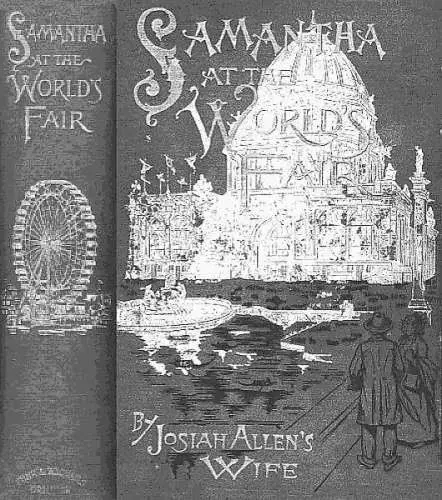
THE CLASSIC COLLECTION · 1893
"Samantha at the World's Fair" by Marietta Holley is a satirical novel written in the late 19th century. This work follows Samantha Allen, a witty and intelligent woman, as she prepares to attend the World's Fair in Chicago alongside her husband Josiah. The narrative explores themes of progress, societal issues, and the quirks of family relations, all delivered with Holley's characteristic humor and commentary on contemporary social issues. At the start of the story, Samantha reflects on her admiration for Christopher Columbus and his discoveries, which she wishes to honor through her attendance at the fair. In a twist of fate, she and her husband meet a distant relative, Christopher Columbus Allen, who arrives at their home just as they are making preparations for their trip to the World's Fair. This coincidence serves as a humorous thread that intertwines with Samantha's contemplations about history, family, and the expectations of society. The opening sets the tone for a blend of personal ambition and social commentary, suggesting that readers can expect a thoughtful yet entertaining exploration of these themes throughout the book.
Introduction adapted from the source catalogue; source summaries may be automatically generated.
Free to read · English · 139,602 words · No account needed
MAKE TIME FOR A GOOD BOOK
On by default. Untick to stop anonymous reading totals. Each page counts after 10 seconds in view. How this works.
Anonymous counting is on unless you have switched it off.
And there wuz a shirt of old Peter Stuyvesent's and a baby dress of De
Witt Clinton's.
I never mistrusted that he wuz ever a baby till I seen that dress. I'd always thought on him as the first Governor of New York.
And speakin' of babys--why, I wuz jest a-lookin' at that dress when I met Miss Job Presley, of Loontown.
And I sez, almost the first thing, "Where is your baby?"
And she sez, "It is in the Babys' Buildin'. I have got a check for her--one for her, and one for my umbrell." And she showed 'em to me.
"Wall," sez I, "that is a good, noble idee to rest mothers' tired arms; but it must make you feel queer."
And she said, as she put the checks back into her portmoney, "That it did make her feel queer as a dog."
Wall, there wuz a table from Pennsylvania, containin' more than two thousand pieces of native wood; and there wuz a Scotchwoman with her good old spinnin'-wheel, and a Welsh girl a-weavin' cloth.
And inventions of females of all kinds, from a toboggan slide, and a
system of irrigation, and models of buildin's of all kinds, to a stock
car.
Why, the very elevator you rode up to the ruff garden on wuz made by a
woman.
And then there wuz cotton raised and ginned by wimmen of the South, and nets by the wimmen of New Jersey, and fruit raised by the wimmen of California--the most beautiful fruit I ever sot my eyes on, and wine made by her, too.
(I could have wept when I see that, but presoom it wuz for sickness.)
And from Colorado there wuz tracin's of minin' surveys. Wimmen a-findin' out things hid in the bowels of the earth! O good land! the idee on't!
And engravin's and etchin's done by wimmen way back to 1581.
And in stamped leather, wall decoration, furniture, it wuz a sight to see the noble doin's of my sect; and a exhibit that done my soul good wuz from Belva Lockwood, admittin' wimmen to practise in the Supreme Court. That wuz better than leather work, though that is worthy, and wuz more elevatin' to my sect than the elevator.
The British exhibit is arranged splendidly to show off wimmen's noble work in charity, education, manafacture, art, literature, etc., and amongst their patents is one for a fire-escape, and one to extract gold from base metals. Both of these are good idees, as there can't anybody dispute.
Another exhibit there that appeals strong to the feelin' heart wuz Kate Marsdon's Siberian leper village.
Your reading position is saved on this browser. Take it to another device with a library code. Reading pages adapt to text, rather than matching a printed edition.
Marietta Holley
Marietta Holley
Marietta Holley
Marietta Holley
BEHIND THE BOOK
This eBook is for the use of anyone anywhere in the United States and most other parts of the world at no cost and with almost no restrictions whatsoever. You may copy it, give it away or re-use it under the terms of the Project Gutenberg License included with this eBook or online at www.gutenberg.org. If you are not located in the United States, you will have to check the laws of the country where you are located before using this eBook. Read the source licence.
The original source file, including credits and licence, is retained by this library. Request an original-format copy at no charge. Please include the book title and Project Gutenberg identifier #18091.
KEEP YOUR CURIOSITY GOING
Coulson Kernahan

Maurice Baring
Frances Wright
Cécile Tormay

Frederic Jesup Stimson

W. H. P. (William Henry Pope) Jarvis