THE CLASSIC COLLECTION✦My diaries, being a personal narrative of events 1888-1914, Part 2 (1900-1914)CLASSIC FREE BOOKS
My diaries, being a personal narrative of events 1888-1914, Part 2 (1900-1914)
Wilfrid Scawen Blunt
THE CLASSIC COLLECTION · 1926
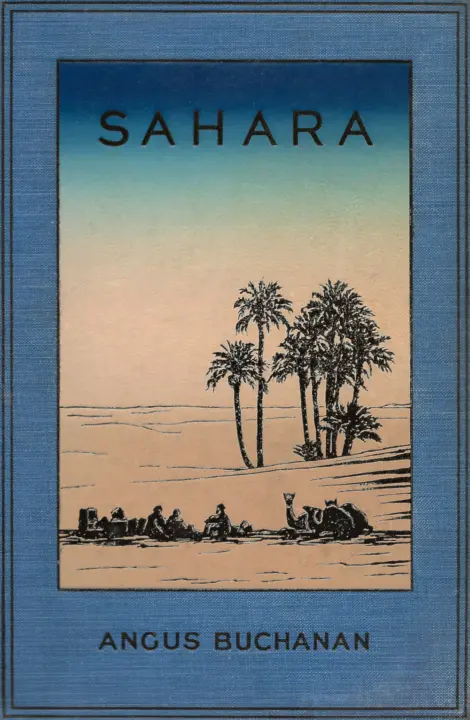
"Sahara" by Angus Buchanan is a travelogue written in the early 20th century. The work chronicles an extensive journey across the Sahara Desert, highlighting the perils and marvels encountered by the author and his companions, including the struggle for survival and the captivating landscapes. Buchanan's dual background as a naturalist and explorer adds depth to his observations of the desert environment and its unique fauna. At the start of "Sahara," the author reflects on his preparation for a major expedition into the vast desert after years of contemplation. He recounts his discussions with an influential military captain that ignited his ambition to explore further into this mystical territory. After navigating the slow bureaucratic process for approval, Buchanan and his companions embark on a treacherous 3,500-mile journey characterized by hardships, scarce resources, and encounters with both the desert's natural beauty and its relentless challenges. The opening portion sets the stage for the extraordinary experiences and rich descriptions of life within the Sahara that unfold as the narrative progresses.
Introduction adapted from the source catalogue; source summaries may be automatically generated.
Free to read · English · 65,282 words · No account needed
MAKE TIME FOR A GOOD BOOK
On by default. Untick to stop anonymous reading totals. Each page counts after 10 seconds in view. How this works.
Anonymous counting is on unless you have switched it off.
Since visiting Melen I have travelled far in the Sahara, and know many wells in like God-forsaken places, each of which suggests that it belongs to a bygone age when greater fertility made it possible for the nomads to camp where they willed, which—if we take such wells as significant—was sometimes in localities that they cannot camp in now.
Wherefore, in many strange ways, it comes back to one, always, that the Sahara is a decadent land. And that is a steadfast impression, that the traveller is always catching, even when least expected.
And, now, to broadly picture the aspect of the country, the Sahara is not, of course, as is often popularly believed, simply a vast track of desert sand. The “floor” of its vast area is made up, principally, of four types of country, which I describe as follows, along with the names by which they are known to the nomads:
(1) “Tenere” (Tamascheq[6]) =Absolute sandy desert.
“Arummila” (Arabic)
(2) “Adjadi” or “Igidi” =Regions of permanent sand-dunes, (Tamascheq) sometimes barren, sometimes with scattered vegetation. “Erg” (Arabic)
(3) “Tanezrouft” =Regions where the sand is hard (Tamascheq) and interspersed with plains of pebbles. Sometimes great gravel “Reg” (Arabic) plains as barren as sand desert and hence often called Black Desert by the Tuaregs.
(4) “Tassili” (Tamascheq) =Regions of chiefly horizontal, rough, rocky, much crevassed “Elkideà” (Arabic) ground, often of shelf rock, where decomposition is very rapid and outcrops much cracked and broken apart. The ground surface, or plateau surface, is usually as barren as sand desert, but in deep ravines in such country there is often a sparse growth of vegetation.
As a whole all those regions are practically horizontal, and, except in the north, are on a level well above the sea. Between longitude 5° and 10°, from south to north, the altitudes of the Saharan plains, above sea-level, are approximately:
Latitude 15° 1,525 feet (north of Tanout)
1,800 feet (Tanout).
„ 18° 1,000 feet (desert west of Aïr)
1,600 feet (desert east of Aïr)
1,220 feet (Bilma Oasis. Longitude 13°)
„ 20° 1,500 feet (Gara Tindi)
1,350 feet (In-Azaoua)
„ 22° 3,100 feet (Zazir) }
3,700 feet (Tenacurt) }Land rising to the Ahaggar
4,200 feet (Tamanrasset)}Mountains.
„ 30° 350 feet (Hassi Inifel) Land that falls gradually 600 feet (Messedli) away to a low basin in the El Erg region between the Ahaggar and Atlas Mountains.
The widespread aspect of the Sahara is of vast desolate plains of rock and sand. But a fact which has been overlooked to an astonishing degree, by popular consent, is that the Great Desert is relieved by some very remarkable mountain groups, chief of which are Aïr, Ahaggar, and Tibesti—each in extent as large as the whole of England, and towering majestically to altitudes of 6,000 to 10,000 feet.
Your reading position is saved on this browser. Take it to another device with a library code. Reading pages adapt to text, rather than matching a printed edition.
BEHIND THE BOOK
This eBook is for the use of anyone anywhere in the United States and most other parts of the world at no cost and with almost no restrictions whatsoever. You may copy it, give it away or re-use it under the terms of the Project Gutenberg License included with this eBook or online at www.gutenberg.org. If you are not located in the United States, you will have to check the laws of the country where you are located before using this eBook. Read the source licence.
The original source file, including credits and licence, is retained by this library. Request an original-format copy at no charge. Please include the book title and Project Gutenberg identifier #70525.
KEEP YOUR CURIOSITY GOING
Wilfrid Scawen Blunt
Wilfrid Scawen Blunt

E. W. (Edgar Watson) Howe
Cécile Tormay

Moritz Busch
John L. Ransom