THE CLASSIC COLLECTION✦My diaries, being a personal narrative of events 1888-1914, Part 2 (1900-1914)CLASSIC FREE BOOKS
My diaries, being a personal narrative of events 1888-1914, Part 2 (1900-1914)
Wilfrid Scawen Blunt
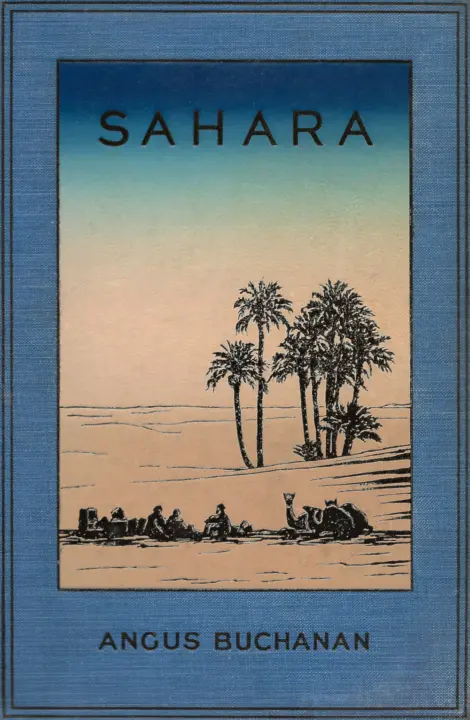
THE CLASSIC COLLECTION · 1926
"Sahara" by Angus Buchanan is a travelogue written in the early 20th century. The work chronicles an extensive journey across the Sahara Desert, highlighting the perils and marvels encountered by the author and his companions, including the struggle for survival and the captivating landscapes. Buchanan's dual background as a naturalist and explorer adds depth to his observations of the desert environment and its unique fauna. At the start of "Sahara," the author reflects on his preparation for a major expedition into the vast desert after years of contemplation. He recounts his discussions with an influential military captain that ignited his ambition to explore further into this mystical territory. After navigating the slow bureaucratic process for approval, Buchanan and his companions embark on a treacherous 3,500-mile journey characterized by hardships, scarce resources, and encounters with both the desert's natural beauty and its relentless challenges. The opening portion sets the stage for the extraordinary experiences and rich descriptions of life within the Sahara that unfold as the narrative progresses.
Introduction adapted from the source catalogue; source summaries may be automatically generated.
Free to read · English · 65,282 words · No account needed
MAKE TIME FOR A GOOD BOOK
On by default. Untick to stop anonymous reading totals. Each page counts after 10 seconds in view. How this works.
Anonymous counting is on unless you have switched it off.
‘The record of his study of birds, beasts and fishes of the Far North is written not merely with scientific accuracy, but with a broad outlook that must interest alike the naturalist and the ordinary layman. . . . The book affords fascinating reading for young and old.’—The Daily Telegraph.
‘It is the treasure of the mind and the eye of a man of knowledge and sensibility, exploring beyond the white man’s frontier of Saskatchewan. . . . Commend it we can, and do, heartily.’ The Morning Post.
Numerous Photographs by the Author.
SECOND IMPRESSION. --12s.-- net.
‘A book which is singularly attractive and “African” all over. . . . His narrative is essentially the story of three years’ soldiering in Central Africa by a lover of the wild, a traveller in many lands, a naturalist and sportsman.’—The Times.
‘Captain Buchanan’s valuable book. . . . It is of great human interest as a record of the admirable work done by the author’s battalion.’—The Spectator.
‘Wonderfully interesting—the author gives thrilling accounts of the fighting, but the story is more that of a man possessing the spirit of adventure, an explorer of the wild, a lover of nature, and a sportsman.’—Naval and Military Record.
‘This well-written book is intensely inspiring as a study in British pluck.’—The Graphic.
[Footnote 1: Month.]
[Footnote 2: Hyenas.]
[Footnote 3: Hausa for “lion.”]
[Footnote 4: Branded.]
[Footnote 5: It is possible, even probable, that, to some extent, better conditions of vegetation and rain prevailed, at one time, throughout the whole Sahara.]
[Footnote 6: Tamascheq: The Tuareg Language.]
[Footnote 7: Out of the World North of Nigeria, p. 167.]
[Footnote 8: All the above plants are named in Tamascheq—the Tuareg
language.]
[Footnote 9: They are a recognised white race, akin to some of the
oldest European stocks.]
[Footnote 10: When at leisure the Tuareg wears his gown to the
ankles.]
[Footnote 11: An extremely interesting geographical observation, for no watercourse exists along that line to-day; which suggests further evidence of physical change and decay in the Sahara.]
[Footnote 12: Another observation of particular interest. Wells, at places, are all that remain along that line of territory at the present time.]
[Footnote 13: The natron is found at Arrighi, about ten hours’
journey north of Bilma.]
[Footnote 14: Usually each camel carries away four cones; the maximum
load is six cones.]
[Footnote 15: I have, so far, failed to elucidate their origin to my
entire satisfaction.]
[Footnote 16: Raid described in Out of the World North of Nigeria.]
[Footnote 17: There are times when fuel is one of the most important items that a caravan must carry.]
Your reading position is saved on this browser. Take it to another device with a library code. Reading pages adapt to text, rather than matching a printed edition.
BEHIND THE BOOK
This eBook is for the use of anyone anywhere in the United States and most other parts of the world at no cost and with almost no restrictions whatsoever. You may copy it, give it away or re-use it under the terms of the Project Gutenberg License included with this eBook or online at www.gutenberg.org. If you are not located in the United States, you will have to check the laws of the country where you are located before using this eBook. Read the source licence.
The original source file, including credits and licence, is retained by this library. Request an original-format copy at no charge. Please include the book title and Project Gutenberg identifier #70525.
KEEP YOUR CURIOSITY GOING
Wilfrid Scawen Blunt
Wilfrid Scawen Blunt

E. W. (Edgar Watson) Howe
Cécile Tormay

Moritz Busch
John L. Ransom