THE CLASSIC COLLECTION✦My diaries, being a personal narrative of events 1888-1914, Part 2 (1900-1914)CLASSIC FREE BOOKS
My diaries, being a personal narrative of events 1888-1914, Part 2 (1900-1914)
Wilfrid Scawen Blunt
THE CLASSIC COLLECTION · 1926
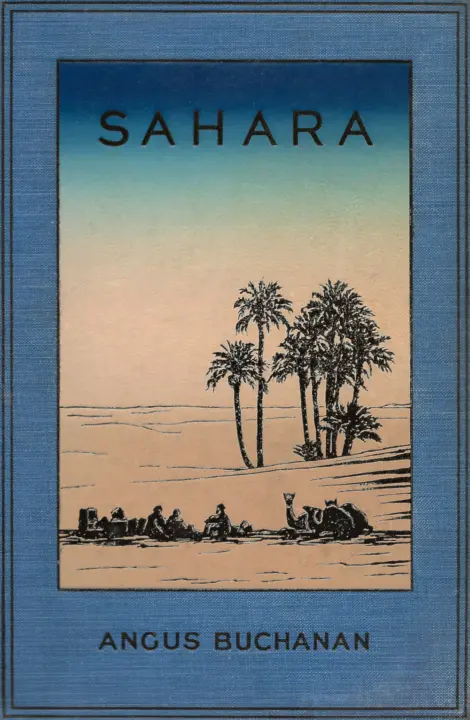
"Sahara" by Angus Buchanan is a travelogue written in the early 20th century. The work chronicles an extensive journey across the Sahara Desert, highlighting the perils and marvels encountered by the author and his companions, including the struggle for survival and the captivating landscapes. Buchanan's dual background as a naturalist and explorer adds depth to his observations of the desert environment and its unique fauna. At the start of "Sahara," the author reflects on his preparation for a major expedition into the vast desert after years of contemplation. He recounts his discussions with an influential military captain that ignited his ambition to explore further into this mystical territory. After navigating the slow bureaucratic process for approval, Buchanan and his companions embark on a treacherous 3,500-mile journey characterized by hardships, scarce resources, and encounters with both the desert's natural beauty and its relentless challenges. The opening portion sets the stage for the extraordinary experiences and rich descriptions of life within the Sahara that unfold as the narrative progresses.
Introduction adapted from the source catalogue; source summaries may be automatically generated.
Free to read · English · 65,282 words · No account needed
MAKE TIME FOR A GOOD BOOK
On by default. Untick to stop anonymous reading totals. Each page counts after 10 seconds in view. How this works.
Anonymous counting is on unless you have switched it off.
The lifelong background, to them, was primitive Africa. Previous to joining the caravan they had both lived for many years in Kano, the great Hausa trade centre of Northern Nigeria, and one of the most remarkable native cities in the world. An environment of humble, low, mud-walled huts and narrow sandy lanes had always been theirs, and heat and flies and a dense population, with meagre sufficiency of food, their intimate atmosphere. To them luxury was unknown, and, not knowing it, they were happy. Indeed, Kano is a town of laughter, and its people healthy and content amid a humbleness and simplicity that is as yet unspoiled, and natural to them.
The language familiar to Ali and Sakari is Hausa; though Arabic is the native tongue of the former. However, for the purpose in view, Hausa will not serve, and therefore, in endeavouring to give some of their impressions of this country as closely as possible, I will, in the main, have recourse to their Pidgin English. To give some idea of this curious and amusing African patois, I will, before proceeding to the main subject, cite some expressions that were familiar during the late expedition:
“Wait small,” i.e. Wait a little.
“He live small,” i.e. The meal is not quite ready.
“Time no reach,” i.e. It is not yet the time appointed.
“Excuse me small,” i.e. Please give room to let me pass.
“He no live,” i.e. When someone cannot be found when wanted.
“This day I be black all over,” i.e. In a bad temper. (No
reference to colour.)
“Them French be palava people,” i.e. Talkative people.
“Jeasers,” i.e. Scissors.
Sakari, when asked if he has cleaned my gun:
“I done dust him, sir!”
Sakari, telling he has looked for a lost knife:
“Them knife: I find him all, I no look him.”
Sakari, when asked if he has found a lost button:
“You make I find him for them place this morning; I find him,
I no see him.”
Sakari, having brought a local native to me who can mend a broken
frying-pan:
“Look this man! Him say he fit go make them fry pan well.”
Sakari, describing that two men are brothers:
“The mother what born him be mother for that man, too. Them all
belong one mother.”
Sakari, referring to one of the camel-men who is exhausted:
“All him strong gone.”
Sakari, referring to the state of my wardrobe when everything is
in rags:
“All them clothes broke.”
Sakari, when asked if he has properly killed a lizard before skinning
it, chuckled and replied:
“No, sir! Him hard for die.”
“Where is the butter, Sakari?”
Your reading position is saved on this browser. Take it to another device with a library code. Reading pages adapt to text, rather than matching a printed edition.
BEHIND THE BOOK
This eBook is for the use of anyone anywhere in the United States and most other parts of the world at no cost and with almost no restrictions whatsoever. You may copy it, give it away or re-use it under the terms of the Project Gutenberg License included with this eBook or online at www.gutenberg.org. If you are not located in the United States, you will have to check the laws of the country where you are located before using this eBook. Read the source licence.
The original source file, including credits and licence, is retained by this library. Request an original-format copy at no charge. Please include the book title and Project Gutenberg identifier #70525.
KEEP YOUR CURIOSITY GOING
Wilfrid Scawen Blunt
Wilfrid Scawen Blunt

E. W. (Edgar Watson) Howe
Cécile Tormay

Moritz Busch
John L. Ransom