THE CLASSIC COLLECTION✦A Dream of Empire; Or, The House of BlennerhassettCLASSIC FREE BOOKS
A Dream of Empire; Or, The House of Blennerhassett
William Henry Venable
THE CLASSIC COLLECTION · 1884
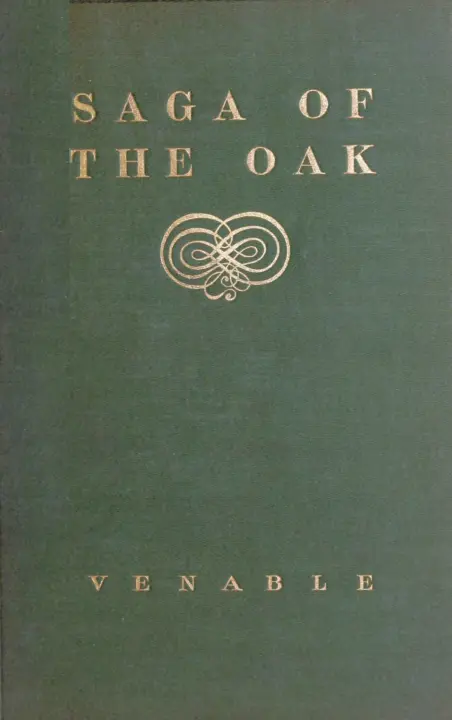
"Saga of the Oak, and Other Poems" by William Henry Venable is a collection of poetry published in the early 20th century. This anthology typically reflects themes of nature, personal introspection, and cultural history, exemplifying the lyrical quality prevalent in poetry of that time, particularly the late 19th to early 20th centuries. The collection showcases the poet’s profound appreciation for natural beauty and his contemplation of life's profound themes through a variety of poetic forms. The poems in this collection range from reflective to celebratory, incorporating various subjects such as love, loss, folklore, and the beauty of the natural world. The titular poem, "Saga of the Oak," metaphorically narrates the story of an oak tree contemplating its existence through the ages, touching on themes of resilience and continuity. Other pieces, like "A Ballad of Old Kentucky" and "Johnny Appleseed," explore historical narratives and American folklore, bringing regional stories to life. Throughout, Venable’s use of vivid imagery and rhythmic language invites readers to engage emotionally and intellectually, providing a rich tapestry of poetic expression that resonates with both contemporary and timeless themes.
Introduction adapted from the source catalogue; source summaries may be automatically generated.
Free to read · English · 14,299 words · No account needed
MAKE TIME FOR A GOOD BOOK
On by default. Untick to stop anonymous reading totals. Each page counts after 10 seconds in view. How this works.
Anonymous counting is on unless you have switched it off.
A poet born, not made,
By Nature taught, she knew,
And, knowing, still obeyed
The Beautiful, the True.
Hers was the seeing eye,
The sympathetic heart,
The subtle art whereby
Lone genius summons art.
She caught the primal charm
Of every rural scene,--
Of river, cottage, farm,
Blue sky, and woodland green.
Baptized in Sorrow’s stream,
She sang, how sweetly well,
Of true Love’s tender dream,
And Death’s pale asphodel.
Her pensive muse has fled
From hill and meadow-brook;
No more her footsteps tread
Thy paths, fair Clovernook.
No more may she behold
The dew-crowned Summer morn
On wings of sunrise gold
Fly o’er the bending corn.
No more her mournful gaze
Shall seek the twilight sky,
When parting Autumn days
Flush hectic ere they die.
Nor note of joyous bird,
Nor April’s fragrant breath,
Nor tear, nor loving word,
May break the spell of Death.
Sleep on! and take thy rest,
In Greenwood by the sea!
Dear Poet of the West,
Thy West remembers thee.
Two things there are in heaven above
And earth below--the greater, Love,
The lesser, Death--and therefor grew
Heart’s-ease and rosemary and rue
And myrrh and moly, magic plants;
These, and a common rose or two
Besprent with Indiana dew,
My wizard gathers from their haunts;
Distils the balmy, subtle juice
To make a spell of potent use;
Filters a seeming simple wine
Nectared with some drops most rare--
(How he finds the tinct or where,
Not the critics can divine!)
Whoso gives the wine his lips,
Sipping smiles, and laughing sips;
But, before he drinks it up,
Tears have trickled in the cup.
Now who is the delightfulest
Old soldier that shakes hands with you?
The genial host, the welcome guest,
The teeming brain, the bosom true,
The soul of song and merry jest?
The prince of all good fellows, who?
“Why, William Baird of Ridgeville!”
Whenever meets the G. A. R.,
Through rain or dust he hies to town;
He gladdens the excursion car,
And, as his regiment tramps down
The gala street, you hear afar
The marching measure, “Old John Brown,”
From William Baird of Ridgeville.
Then all the casements open wide,
A thousand flags are shaken free,
The balconies on either side
Are loud with shouts of jubilee,
And thrilling maidens wave with pride
Their kerchiefs, laughing, crying: “See!
That’s William Baird of Ridgeville!”
Your reading position is saved on this browser. Take it to another device with a library code. Reading pages adapt to text, rather than matching a printed edition.
BEHIND THE BOOK
This eBook is for the use of anyone anywhere in the United States and most other parts of the world at no cost and with almost no restrictions whatsoever. You may copy it, give it away or re-use it under the terms of the Project Gutenberg License included with this eBook or online at www.gutenberg.org. If you are not located in the United States, you will have to check the laws of the country where you are located before using this eBook. Read the source licence.
The original source file, including credits and licence, is retained by this library. Request an original-format copy at no charge. Please include the book title and Project Gutenberg identifier #64148.
KEEP YOUR CURIOSITY GOING

Eric Mackay
Edmund Gosse
Sophia Margaretta Hensley
Gilbert Parker
George MacDonald

Elizabeth Bibesco