THE CLASSIC COLLECTION✦A Dream of Empire; Or, The House of BlennerhassettCLASSIC FREE BOOKS
A Dream of Empire; Or, The House of Blennerhassett
William Henry Venable
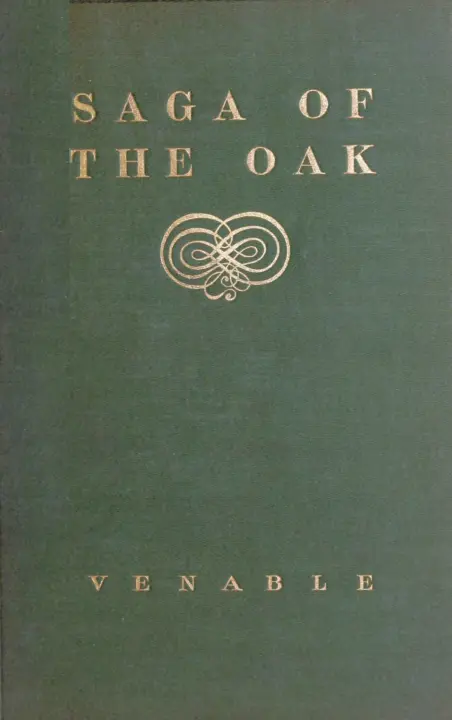
THE CLASSIC COLLECTION · 1884
"Saga of the Oak, and Other Poems" by William Henry Venable is a collection of poetry published in the early 20th century. This anthology typically reflects themes of nature, personal introspection, and cultural history, exemplifying the lyrical quality prevalent in poetry of that time, particularly the late 19th to early 20th centuries. The collection showcases the poet’s profound appreciation for natural beauty and his contemplation of life's profound themes through a variety of poetic forms. The poems in this collection range from reflective to celebratory, incorporating various subjects such as love, loss, folklore, and the beauty of the natural world. The titular poem, "Saga of the Oak," metaphorically narrates the story of an oak tree contemplating its existence through the ages, touching on themes of resilience and continuity. Other pieces, like "A Ballad of Old Kentucky" and "Johnny Appleseed," explore historical narratives and American folklore, bringing regional stories to life. Throughout, Venable’s use of vivid imagery and rhythmic language invites readers to engage emotionally and intellectually, providing a rich tapestry of poetic expression that resonates with both contemporary and timeless themes.
Introduction adapted from the source catalogue; source summaries may be automatically generated.
Free to read · English · 14,299 words · No account needed
MAKE TIME FOR A GOOD BOOK
On by default. Untick to stop anonymous reading totals. Each page counts after 10 seconds in view. How this works.
Anonymous counting is on unless you have switched it off.
And though he heard the solemn voice,
And saw the beard of gray,
The teacher’s thought was strangely wrought
“My yearning heart to-day
“Wept for this youth whose wayward will
Against persuasion strove,
Compelling force, love’s last resource,
To stablish laws of love.”
The church, a phantasm, vanished soon;
What shadowy picture then?
In classic gloom of alcoved room
An author plied his pen.
“My idlest lad!” the master said,
Filled with a new surprise,
“Shall I behold his name enrolled
Among the great and wise?”
The vision of a cottage home
Was now through tears descried:
A mother’s face illumed the place
Her influence sanctified.
“A miracle! a miracle!
This matron well I know!
She was a wild and careless child
Not half an hour ago.
“Now, when she to her children speaks
Of duty’s golden rule,
Her lips repeat, in accents sweet,
My words to her at school.”
Dim on the teacher’s brain returned
The humble school-room old;
Upon the wall did darkness fall,
The evening air was cold.
“A dream!” the sleeper, waking, said,
Then paced along the floor,
And, whistling low and soft and slow,
He locked the school-house door.
His musing heart was reconciled
To love’s divine delays:
“The bread forth cast returns at last,
Lo, after many days!”
Above the clash of counter creeds
These gospel accents swell:
Whoever doeth righteous deeds
Hath read his Bible well.
Like fragrant blooms of lavish spring
Are adoration’s vows;
The tree that pleases God will bring
Fair fruitage on its boughs.
For the 150th anniversary of the birthday of Pestalozzi, celebrated in Cincinnati, January 13, 1896.
Through vasty shades of savage Occident The Ohio groped what time the man I sing Took first quick draught of that free element That thrills Swiss life, and felt the quivering Of Alpine light which welcomed him to earth. In Zurich then was born--sublime event-- A man-child in whose soul new gospels waited birth.
The world is ever plastic in the hand
Of humble saviours fearless of the cross:
One self-forgetting hero may command
And mould the future, scorning present loss:
Meek Pestalozzi, herding in his mind
Helvetia’s strayling little children, planned
By their salvation surely to redeem mankind.
Much hope, more love possessed him, but most grief; His heart, a mourner, sobbed o’er common woe: Did the Almighty slumber or seem deaf To wails ascending from His poor below? Nay, Heaven remembers every bitter tear, Yet mundane ills must seek on earth relief; Lo, the Divine hath found a human volunteer.
Your reading position is saved on this browser. Take it to another device with a library code. Reading pages adapt to text, rather than matching a printed edition.
BEHIND THE BOOK
This eBook is for the use of anyone anywhere in the United States and most other parts of the world at no cost and with almost no restrictions whatsoever. You may copy it, give it away or re-use it under the terms of the Project Gutenberg License included with this eBook or online at www.gutenberg.org. If you are not located in the United States, you will have to check the laws of the country where you are located before using this eBook. Read the source licence.
The original source file, including credits and licence, is retained by this library. Request an original-format copy at no charge. Please include the book title and Project Gutenberg identifier #64148.
KEEP YOUR CURIOSITY GOING

Eric Mackay
Edmund Gosse
Sophia Margaretta Hensley
Gilbert Parker
George MacDonald

Elizabeth Bibesco