THE CLASSIC COLLECTION✦Lost NellieCLASSIC FREE BOOKS
Lost Nellie
Pansy
THE CLASSIC COLLECTION · 1879
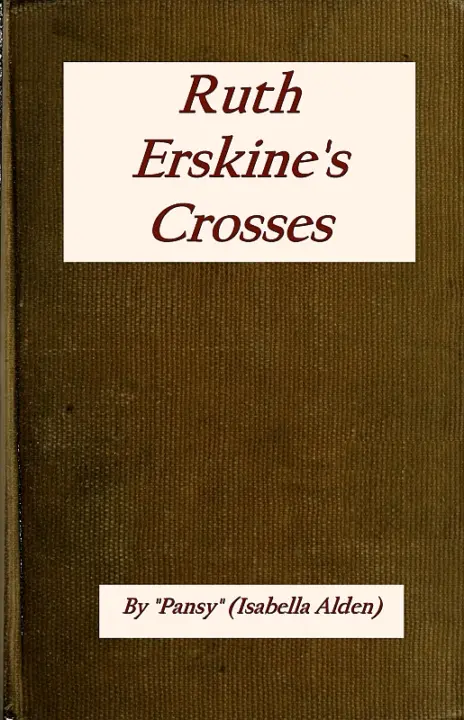
"Ruth Erskine's Crosses" by Pansy is a novel written in the late 19th century. The story follows Ruth Erskine, who is confronted with the sudden changes in her family life after her father, Judge Erskine, remarries, bringing a new wife and sister into their home. Ruth's struggles with her feelings of resentment, responsibility, and the complexities of her new family dynamic are central themes as she grapples with the emotional weight of her situation. The opening of the novel introduces Ruth at a particularly poignant moment; she is waiting anxiously to meet her new mother and sister for the first time. The narrative delves into her conflicting emotions, revealing her sense of betrayal and grief over her father’s unexpected decisions, which have disrupted her previously stable life. As she stands in the hall, contemplating how to greet these strangers who now claim a place in her life, the internal turmoil and bitterness of her situation become apparent. Her observations of her new sister Susan and their emotionally charged first interactions set the stage for the challenges and trials that Ruth will face as she seeks to navigate this complicated new reality.
Introduction adapted from the source catalogue; source summaries may be automatically generated.
Free to read · English · 82,586 words · No account needed
MAKE TIME FOR A GOOD BOOK
On by default. Untick to stop anonymous reading totals. Each page counts after 10 seconds in view. How this works.
Anonymous counting is on unless you have switched it off.
You do not need me to tell you that before the dawn of the coming morning filled the room a voice of power had spoken peace. The plans, and the subterfuges, and the rebellings, and the “ifs,” all were gone. “As thou wilt,” was the only voice left in that thoroughly bared and bleeding heart.
It was even then that the shadow fell the darkest. When the doctor came next morning, for the first time he shook his head.
“Things do not look so hopeful as they did, here,” he said.
And Judge Burnham, turning quickly toward his wife, looking to see her faint or lose her reason (he hardly knew which phase of despair to expect), saw the pale, changed face.
“Is there no hope, Doctor?” and her voice though low, was certainly calmer than it had been for days.
“Well,” said the Doctor, relieved at her method of receiving his warning, “I never like to say that. While there is life there is hope, you know; but the fact is, I am disappointed in the turn that the trouble has taken. I am a good deal afraid of results.”
Had Ruth spoken her thoughts, she would have said: “I have been awfully afraid of results for a week; but a voice of greater power than yours has spoken to me now. It rests with Him, not you; and I think he wants my darling.” What she did say was:
“Ought the girls to be summoned?”
“Well,” said Dr. Bacon, regarding her curiously, “if it is important that they should be here, I think I should telegraph.”
Then, presuming upon long acquaintance with Judge Burnham, he said, as they passed down the hall together:
“Upon my word, Burnham, you have the most unaccountable wife in the
world.”
“Comments are unnecessary, Doctor,” Judge Burnham said, in his haughtiest tones, and the next instant the front door closed with a bang, and the father had shut himself and his pain into the little room at the end of the hall. What was he to do? which way turn? how live? He had never until this moment had other than a passing anxiety. Now the whole crushing weight of the coming blow seemed to fall on him, and he had not the force of habit, nor the knowledge of past experiences, to drive him to his knees for a refuge. Instead, his fierce heart raved. If Ruth had been in danger of hating God, he felt, yes, actually realized, that his heart was filled at this moment with a fierce and bitter hatred. Can you imagine what the trials of that day were to Ruth? Have you any knowledge of what a shock it is to a torn and bleeding heart, which yet feels that the Almighty Father, the Everlasting Saviour, holds her and her treasure in the hollow of his hand, to come in contact with one who fiercely, blasphemously tramples on that trust? In this moment of supreme pain, it was given to Ruth’s conscience to remember that she had chosen for her closest friend one who made no profession of loyalty to her Redeemer—the Lover of her child. Why should she expect to rest on him now?
Your reading position is saved on this browser. Take it to another device with a library code. Reading pages adapt to text, rather than matching a printed edition.
Pansy
Pansy
Pansy
Pansy & C. M., Mrs. Livingston
BEHIND THE BOOK
This eBook is for the use of anyone anywhere in the United States and most other parts of the world at no cost and with almost no restrictions whatsoever. You may copy it, give it away or re-use it under the terms of the Project Gutenberg License included with this eBook or online at www.gutenberg.org. If you are not located in the United States, you will have to check the laws of the country where you are located before using this eBook. Read the source licence.
The original source file, including credits and licence, is retained by this library. Request an original-format copy at no charge. Please include the book title and Project Gutenberg identifier #54078.
KEEP YOUR CURIOSITY GOING
Coulson Kernahan

Maurice Baring
Frances Wright
Cécile Tormay

Frederic Jesup Stimson

W. H. P. (William Henry Pope) Jarvis